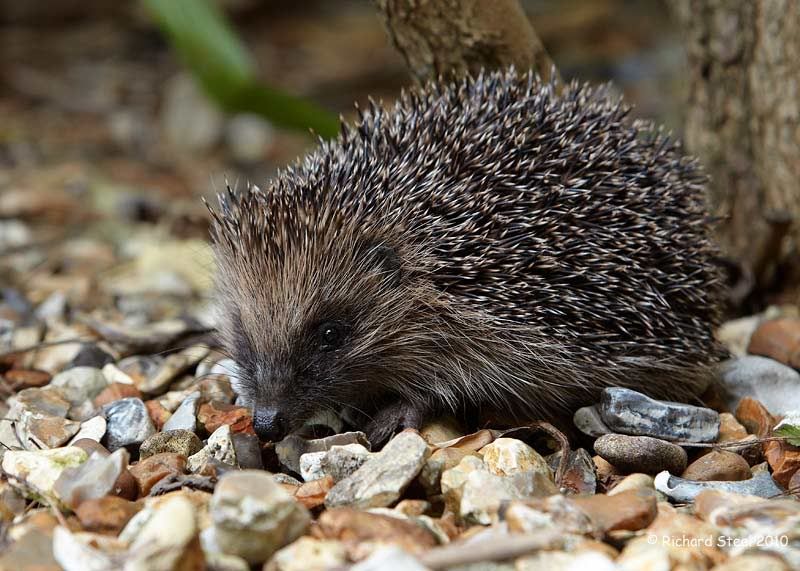
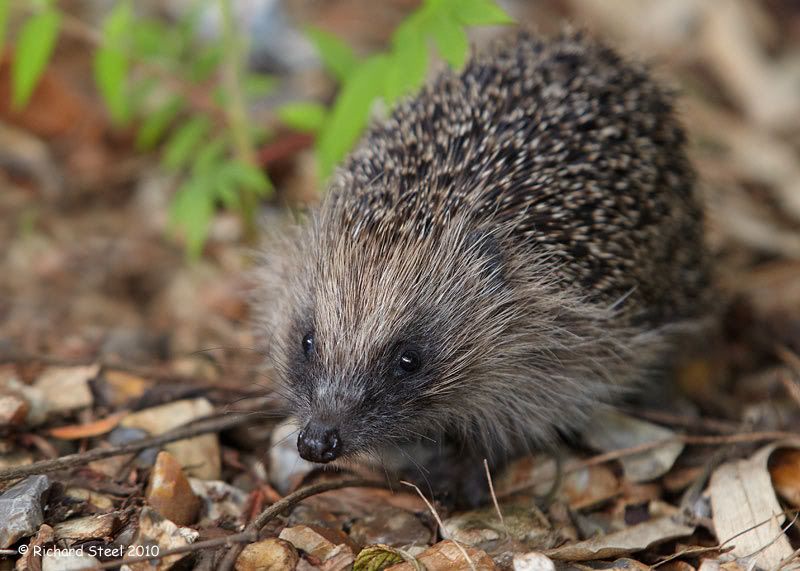
Thursday, October 14, 2010

Raucous Rooks

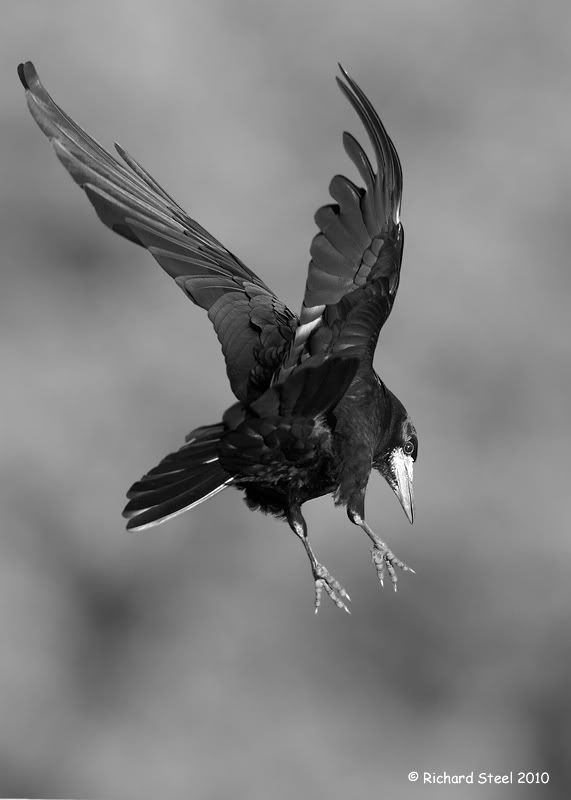
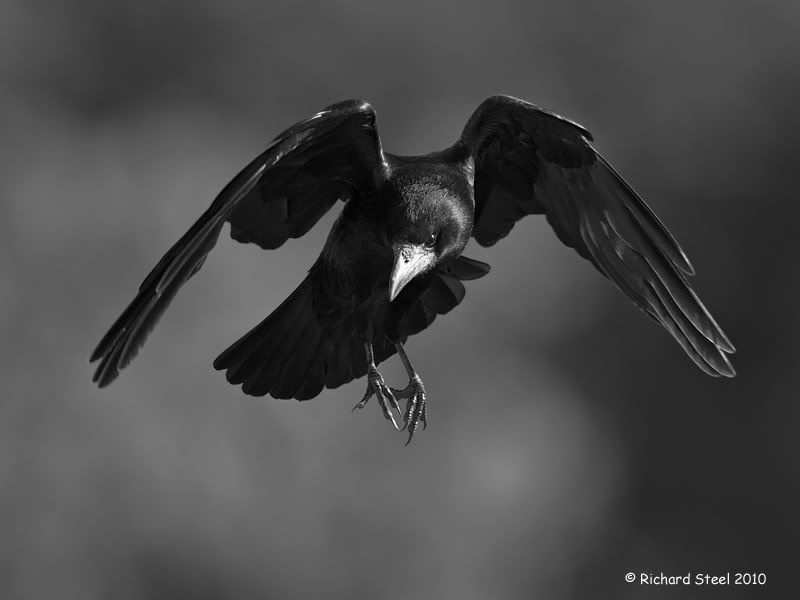
Rooks are a bird that in my opinion do not receive the attention they deserve. This is often the case for common birds but I think even more the case for crow species which have got a bad press 'thanks' to various horror films. When you spend some time with them you start to notice the subtle purple and blue metallic sheen to their plumage,the interesting vocal interactions and the hierarchy of dominance between these social birds.
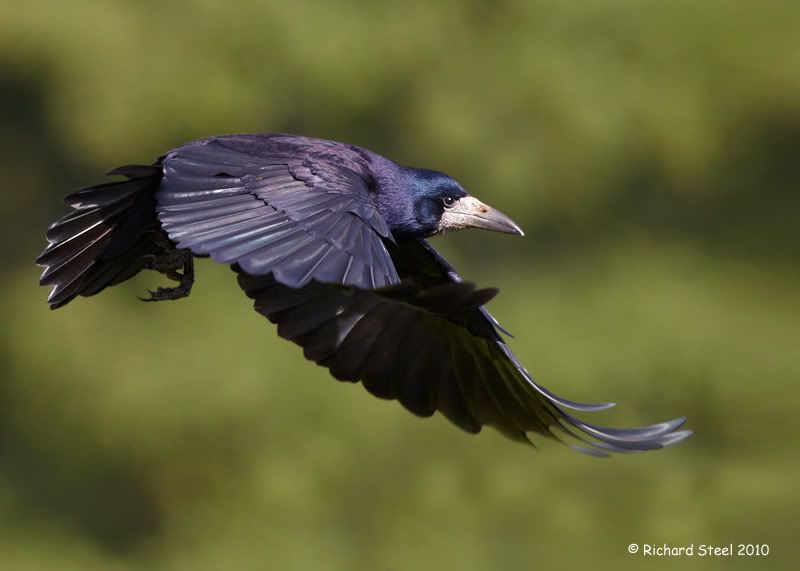
From a photographic point of view they present an interesting challenge as they are generally quite shy and it takes some good camera exposure control to try and capture the detail and colour within the blacks.
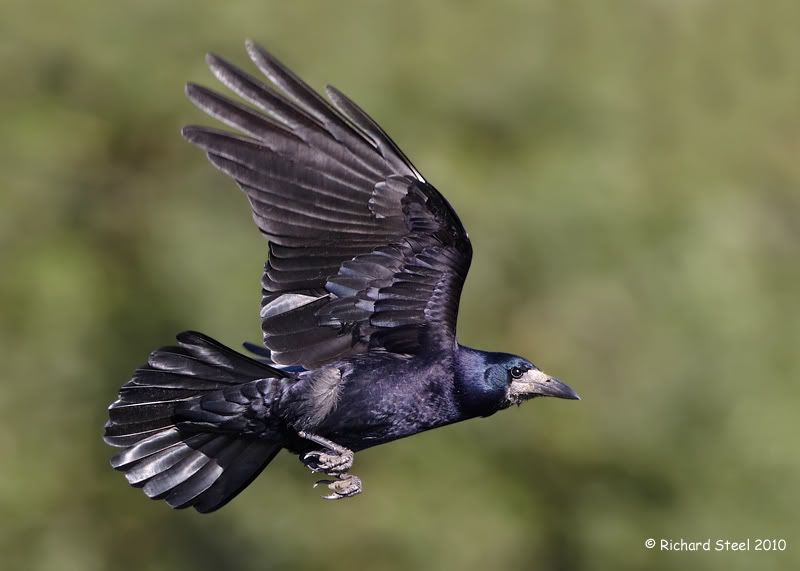
They are really at their best when in flight due to the interesting shapes they form as they twist and turn through the air, especially with those finger like feathers on the wing tips.
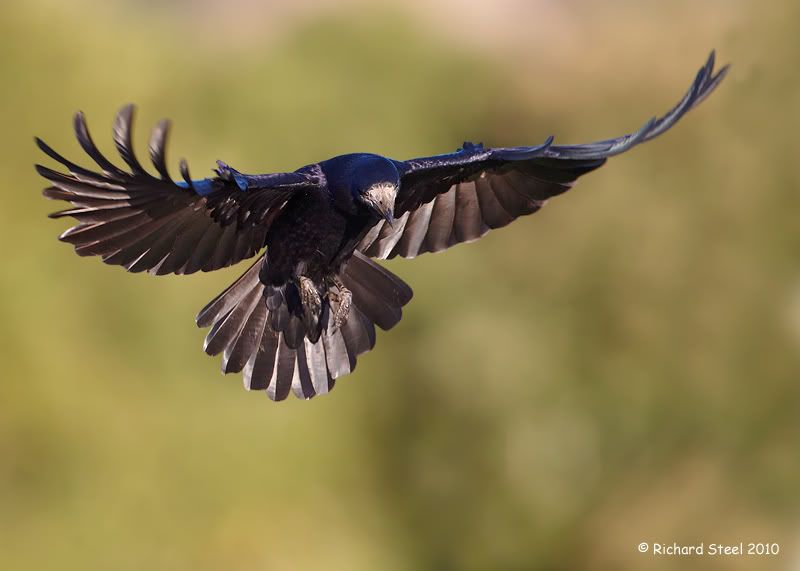
I have undertaken these short rook sessions as a lunch hour project, and occasionally after work, in the car park next to my office. The car park is fortunately surrounded by grazing fields and so there are good numbers of both rooks and jackdaws present. I can think of a better way to break up a working day than a 30 minute session with the camera.
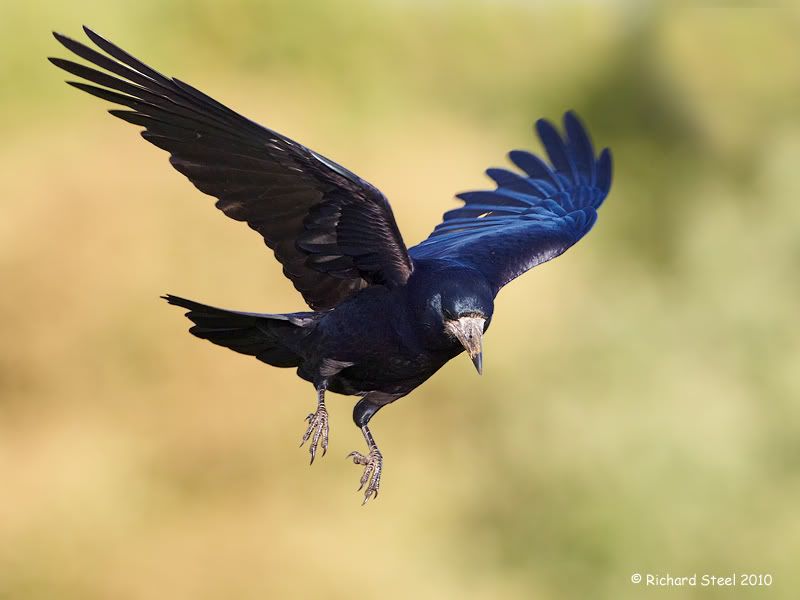
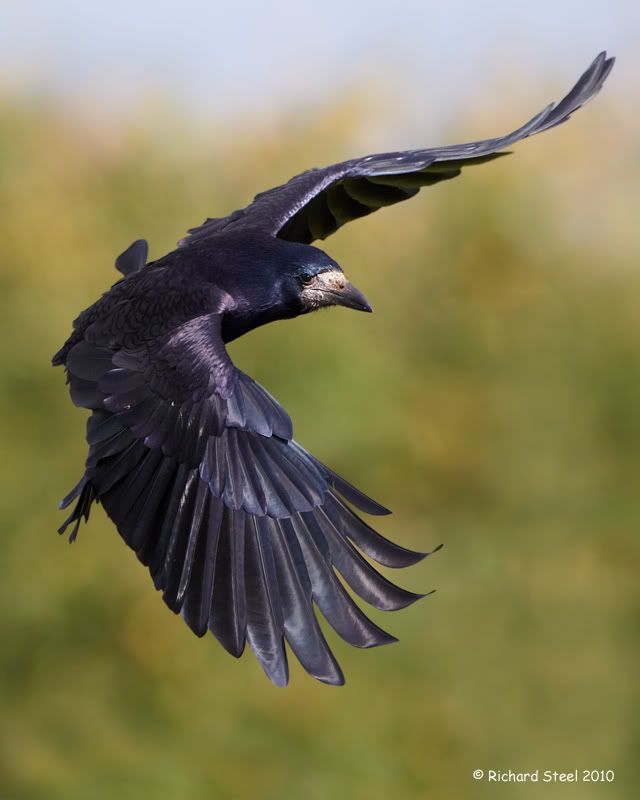
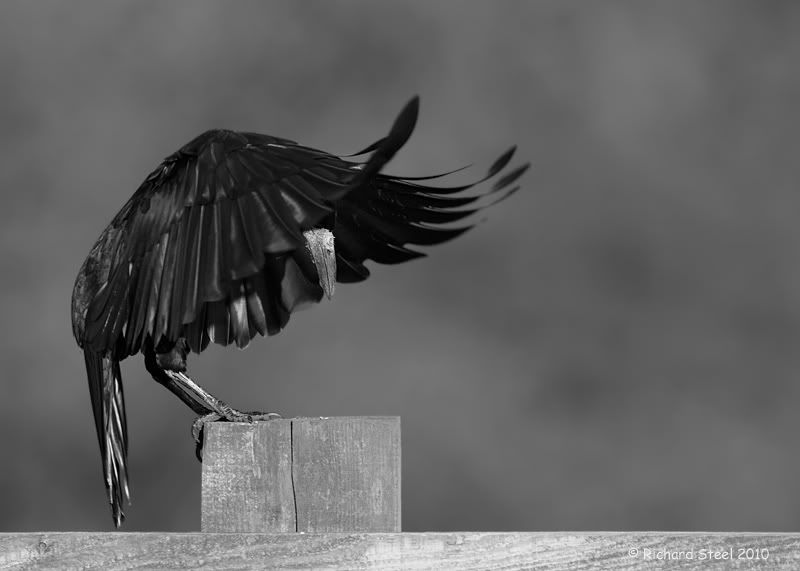
I decided to convert some images to black and white which tends to give them a darker atmosphere given that Halloween is approaching. However, this is just for fun and I do not wish to perpetuate the myth that crow species are sinister. They are, for those who take the time to watch, fascinating and wonderful birds.
Sunday, October 03, 2010

Dawn Egrets

I recently made a trip up the RSPB reserve at Leighton Moss hoping to photograph some Greenshank. However, the birds had different ideas and persisted in roosting or feeding out in the middle of the lake during my visit. So I had to change to Plan B and spent most of the visit photographing Little Egret.

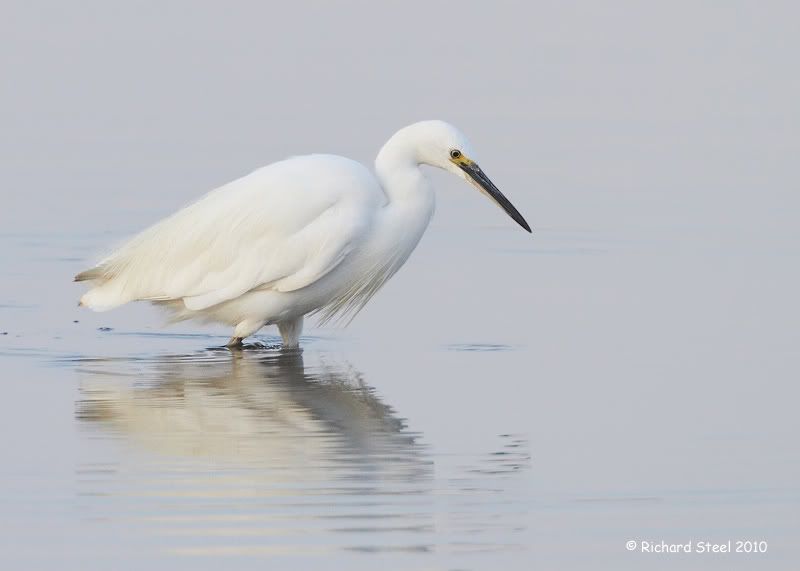
It was an early start from home as I made the 90 minute journey northward to try and arrive for first light. I was first to arrive in the hide and was greeted by approximately 40 Little Egrets just coming to life. This first photograph is before the sun had reached sufficient height to get above the low hill behind and with the lack of wind was a serene scene.
Photobucket

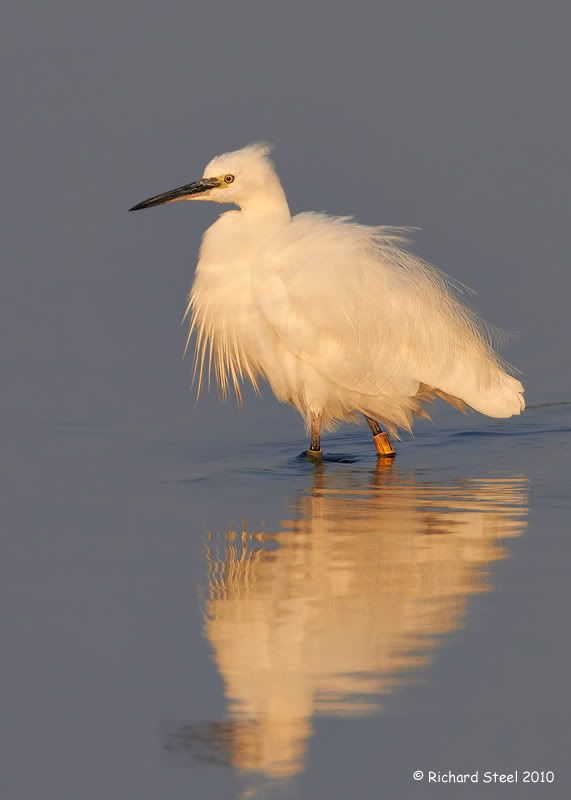
The sun slowly crept skyward and its first appearance bathed the lake in wonderful golden light.
Photobucket

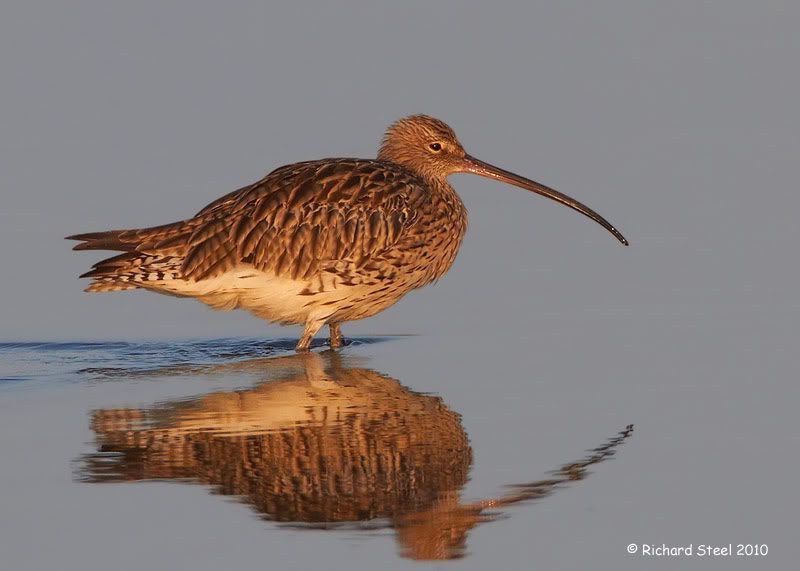
A solitary passing curlew was also caught in the orange glow.
Photobucket

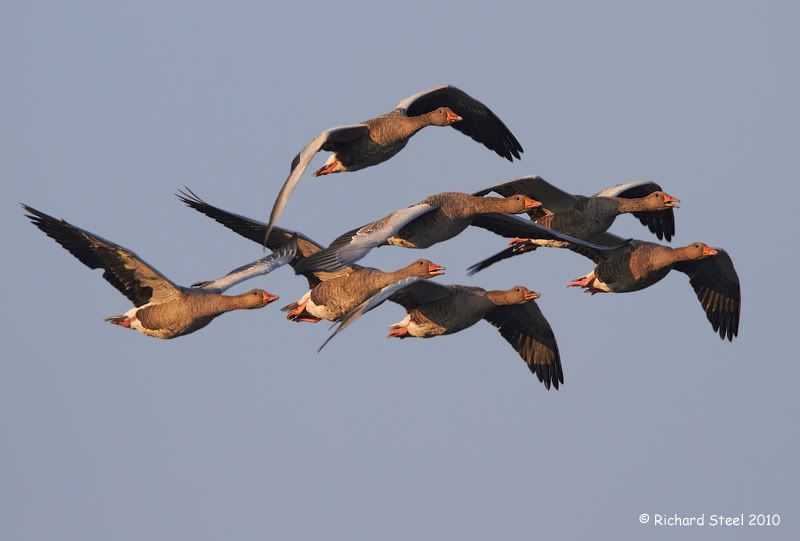
as were a small group of Greylag Geese.
Photobucket

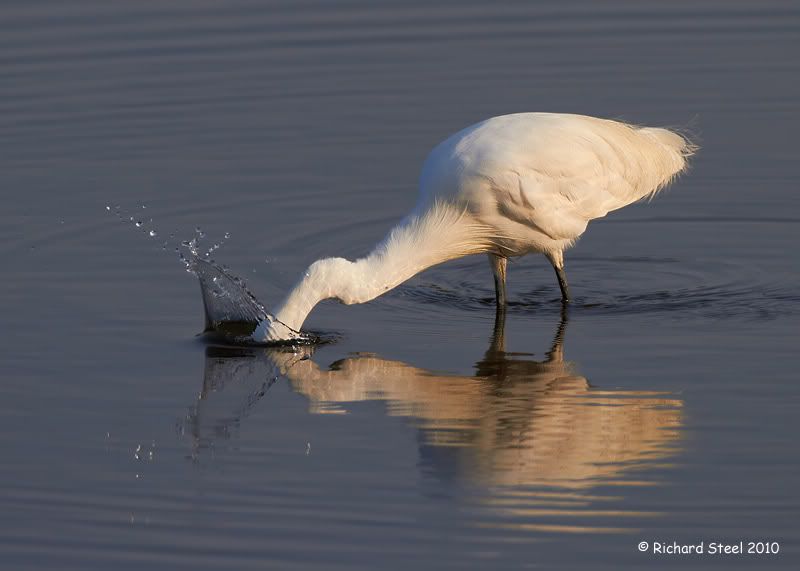
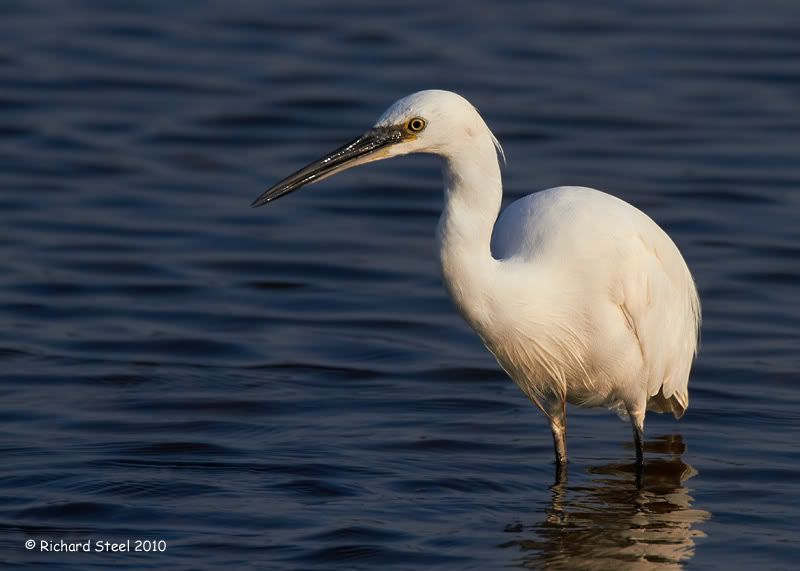
However, despite these passing distractions I stayed firmly focused on the Little Egrets. The rising success of this species in the UK is notable. The appearance of a single bird 35 years ago would have caused a stir amongst the rare bird fanatics and here was I looking upon a group of 40 on a single lake.
Photobucket

Photobucket

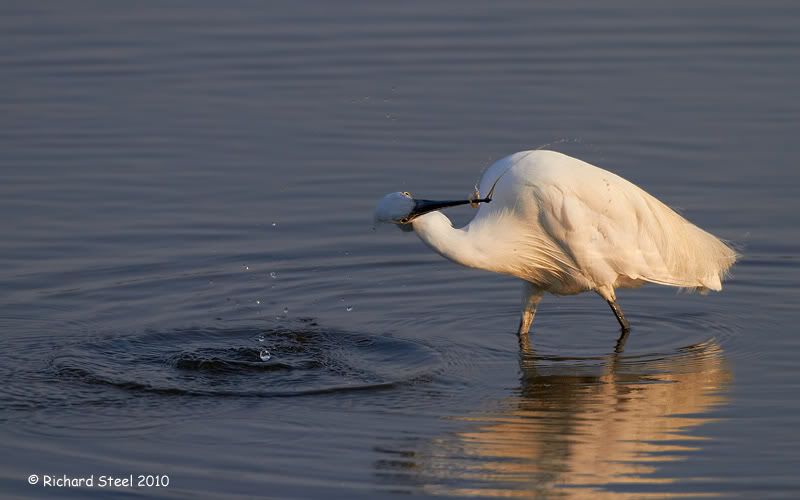
No fish is safe from the lightning accurate strike of an egret.
Photobucket

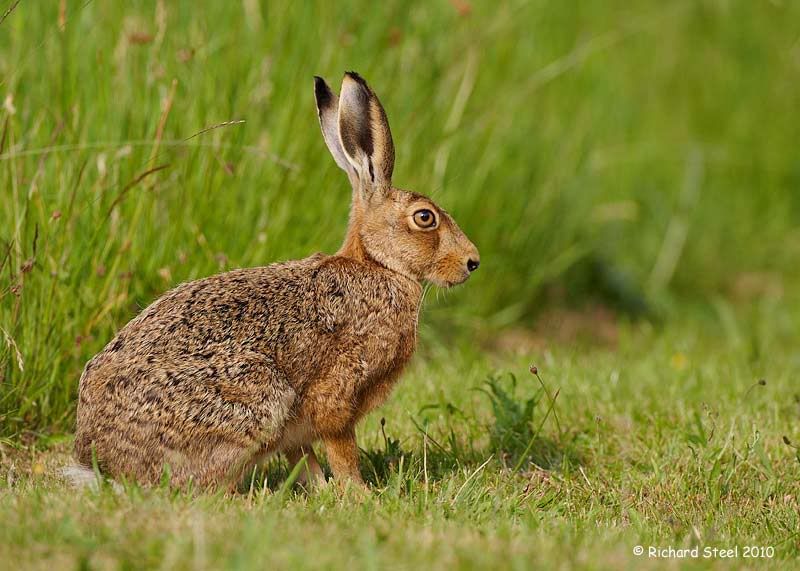
Unfortunately a small group of noisy people entered the hide which disturbed the birds are saw them flying off across the adjacent fields. For some peculiar reason many people seem to think that because they are rendered virtually invisible within a hide, they are also made inaudible to birds. To me and the birds, a happy hide is a quiet one.
Photobucket

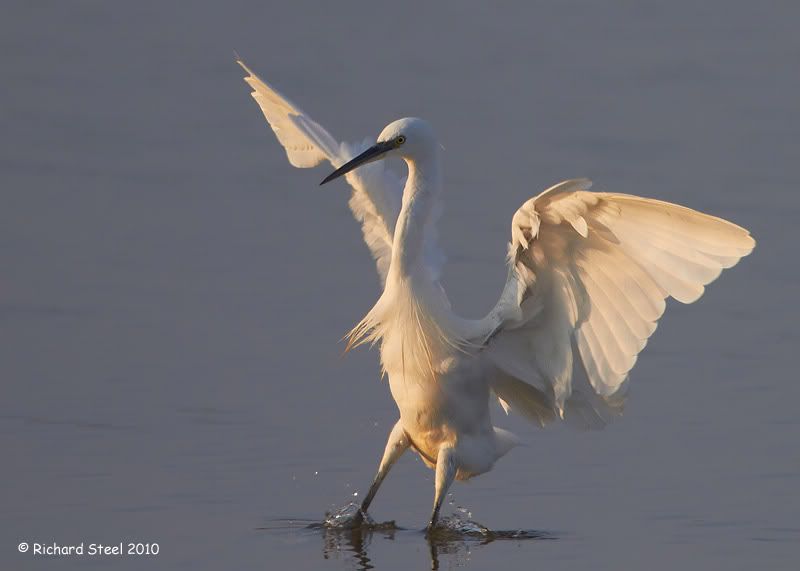
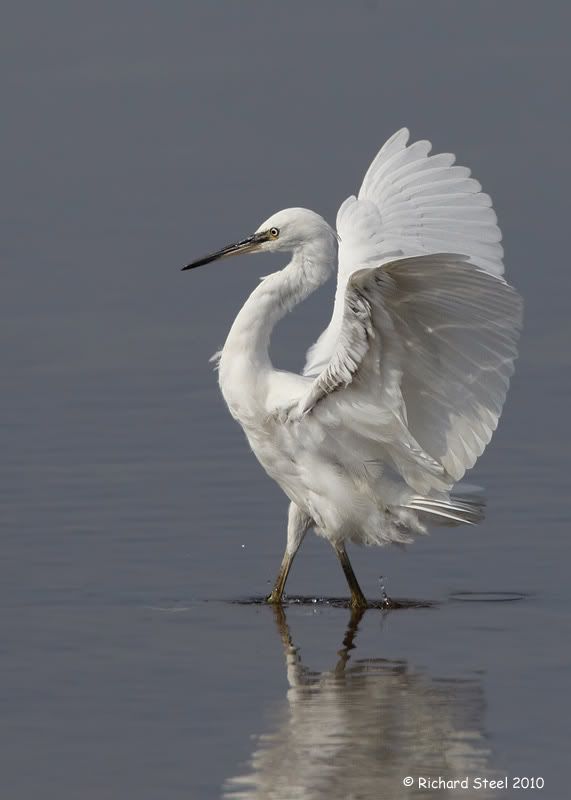
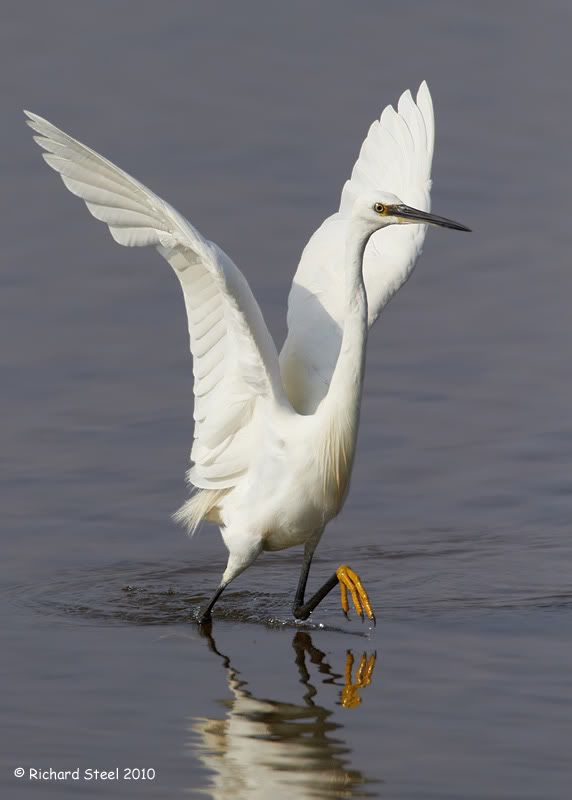
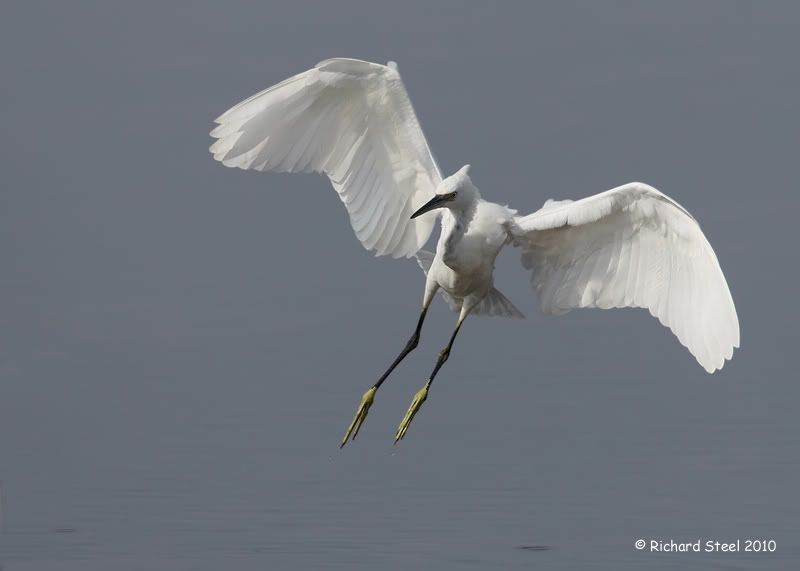
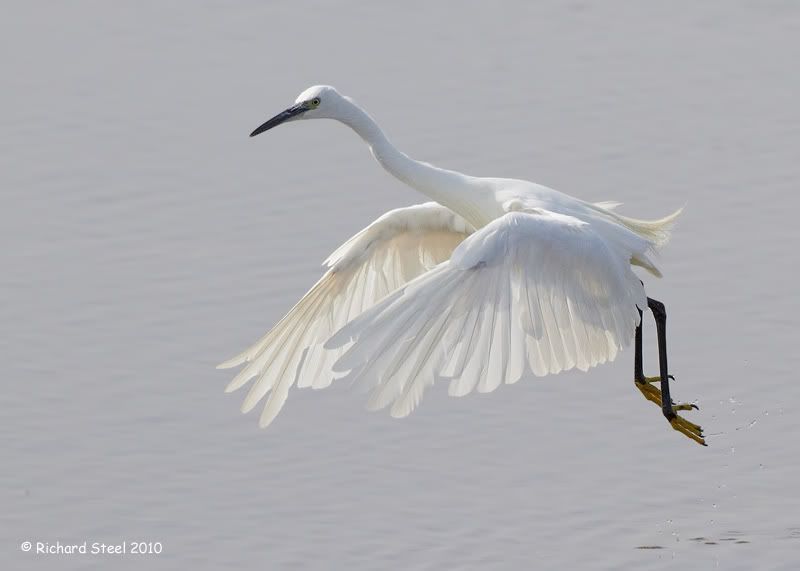
The birds did eventually slowly return but by this time the golden light had become more harsh with the ascending sun. The great enjoyments of photographing egrets is they are very elegant and active birds when feeding. So I will finish this post of with a selection of flight photos and generally dashing around in the shallow water.
Photobucket

Photobucket

Photobucket

Photobucket

Overall a really enjoyable session and obviously there was no disappointment on my part at having not managed to photograph my target species that day.

Saturday, September 25, 2010

The Curious Incident of the Purple Swamphen

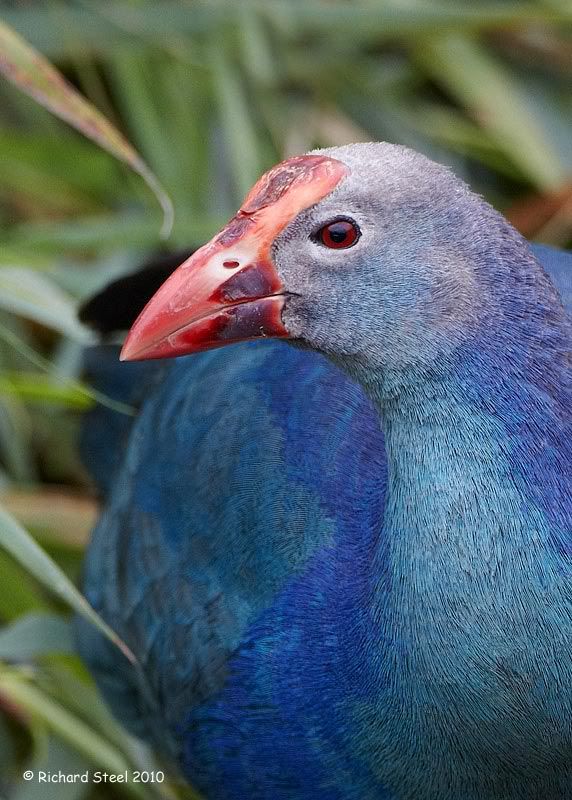
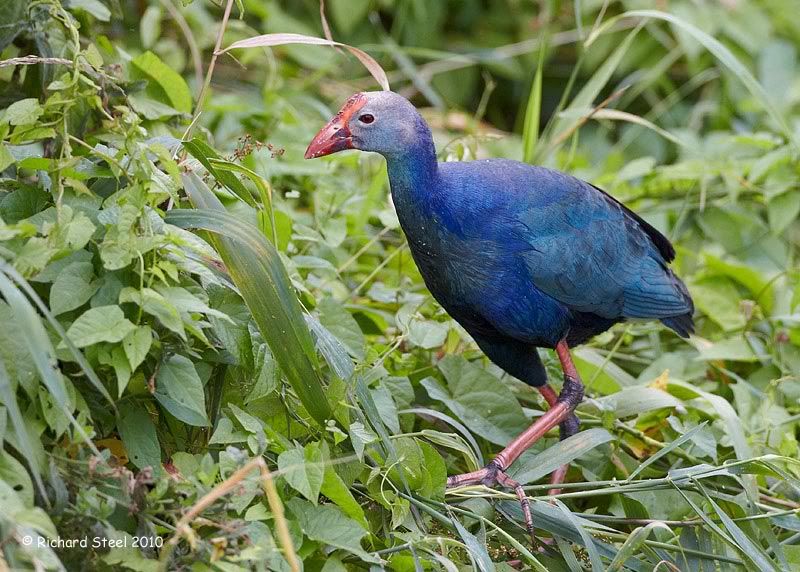
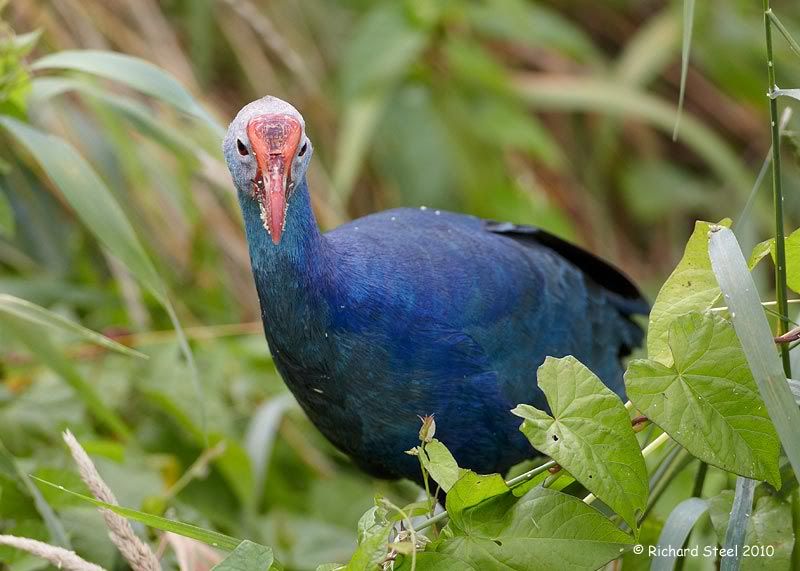
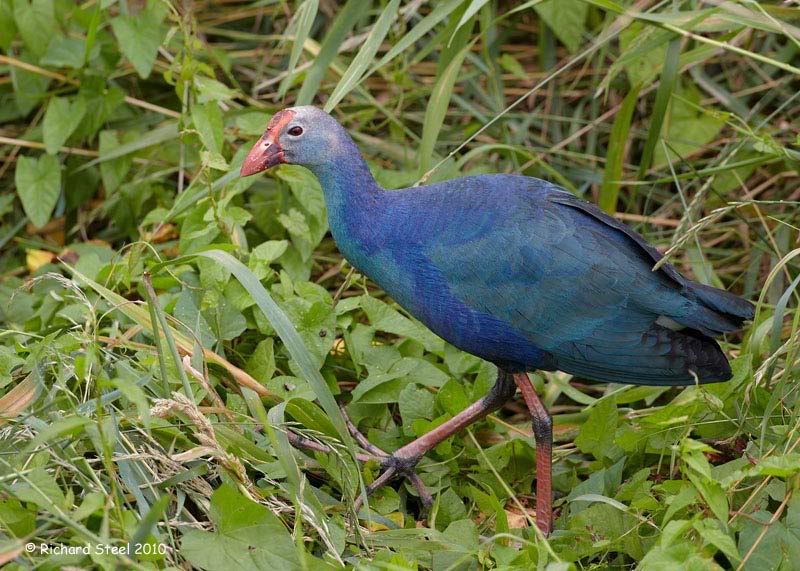
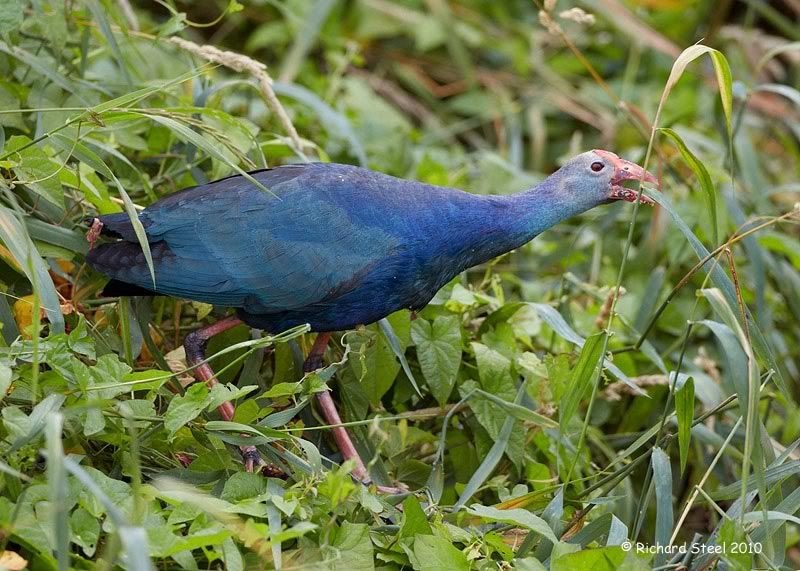
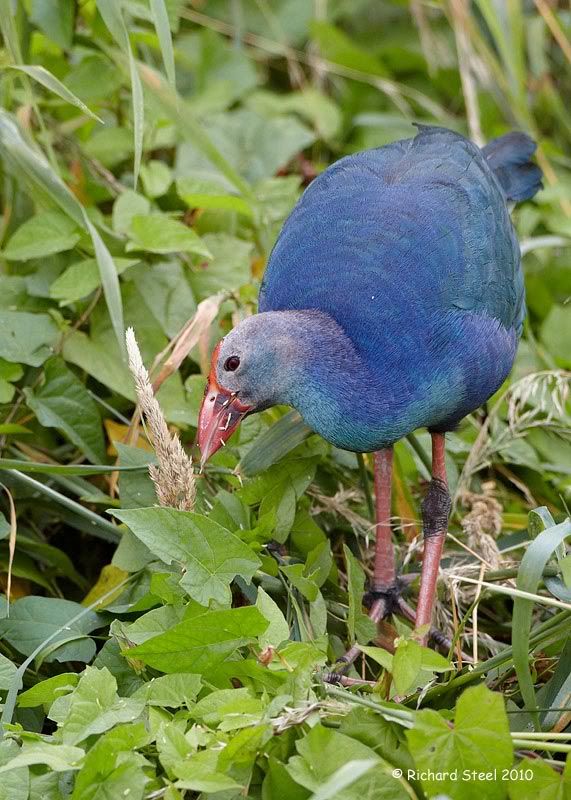
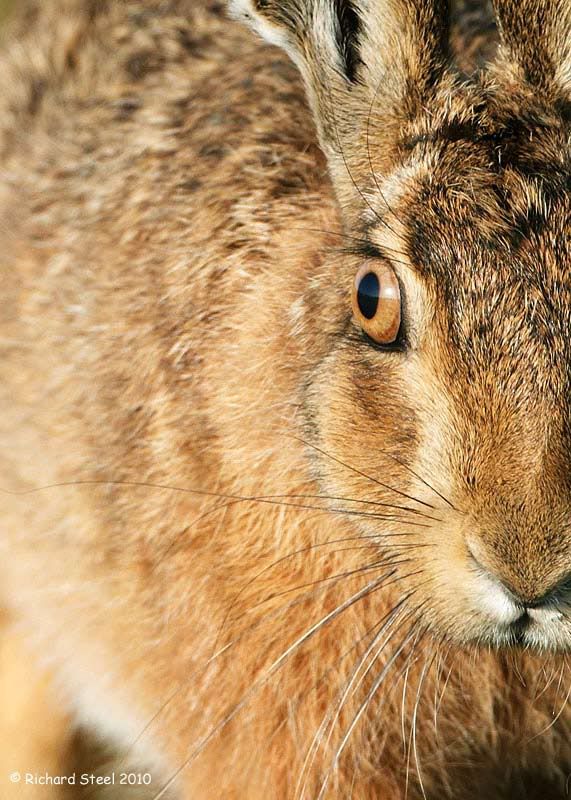
Back at the beginning of August a Purple Gallinule or Swamphen was being reported as being sighted in ditch near Chester. I must admit I do not usually go to rare bird sightings as I prefer to avoid the crowds. However, given the close proximity I thought I would go and take a look and hoped to avoid the birdwatchers by arriving at first light on a Sunday morning. The bird was quickly located and it had taken up temporary residence in a small steeply sided heavily overgrown ditch.
Photobucket

A dogwalker passed me and told me that the bird had been there for around 3 weeks and the unusual technicolour 'moorhen' had become well know to the locals. The birdwatchers soon started arriving and there was great debate over the origins of the birds which was un-ringed and free flying. Checks had been made with zoos and bird collections and none had reported any loses.
Photobucket

The bird was the grey headed race from Asia which is known to be highly migratory but it seemed unlikely that such a bird would undertake such an epic voyage. To me the origin (escapee or a lost wild bird) was irrelevant as the bird was free flying and in the wild. Such a beautifully coloured bird certainly brightened up a fairly dull Sunday morning.
Photobucket

It was a difficult bird to photograph given the situation and abundance of vegetation. The bird seemed to be very settled and was happily stripping off grass seed heads.
Photobucket

I stay for around 3 hours and decided by that time I had got enough photographs and the numbers of bird spotting scopes was rapidly increasing in to a mini forest of metal and glass.
Photobucket

Apparently after I left two looking locals arrived claiming the bird belonged to them and it had escaped from the back garden where they were kept as pets. This seems somewhat unlikely but you never know what is kept in back gardens of the UK! The report has it that they then went to considerable effort charging up and down the ditch with nets but were unsuccessful in capturing the bird. Subsequently I have heard that the bird flew off and is now residing on a fishing lake about 15 miles away where it is happily living with its diet supplemented by free handouts of sweetcorn from the anglers.
Photobucket

Saturday, September 18, 2010

Storm Walkers

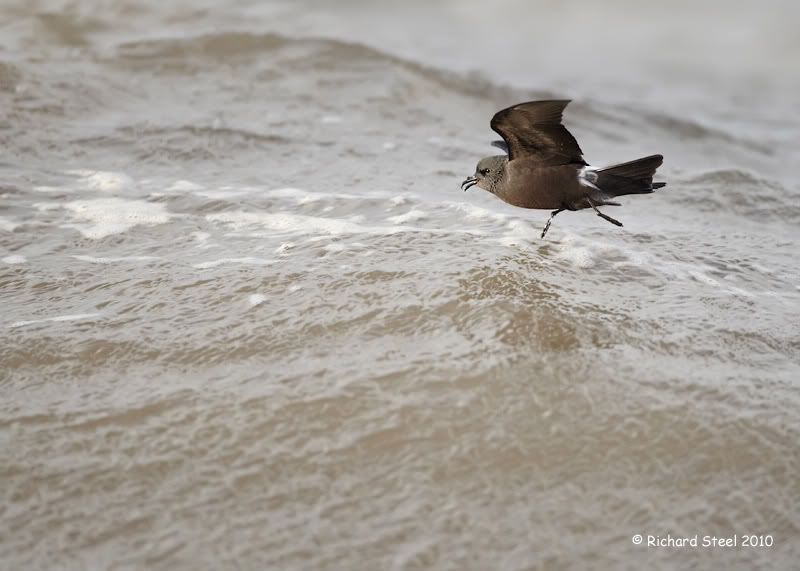
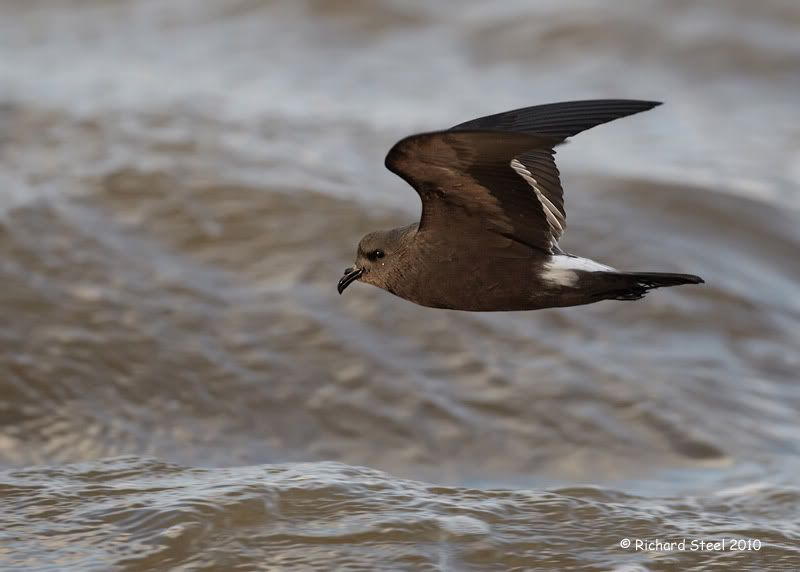
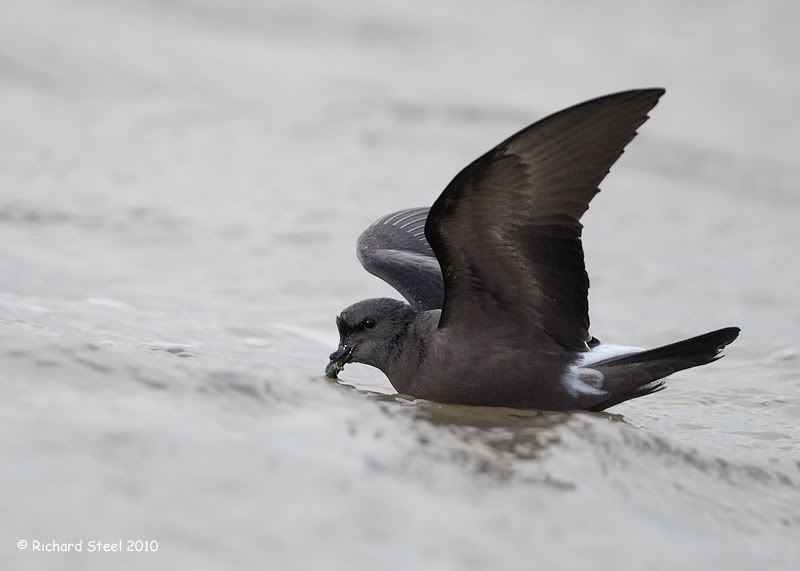
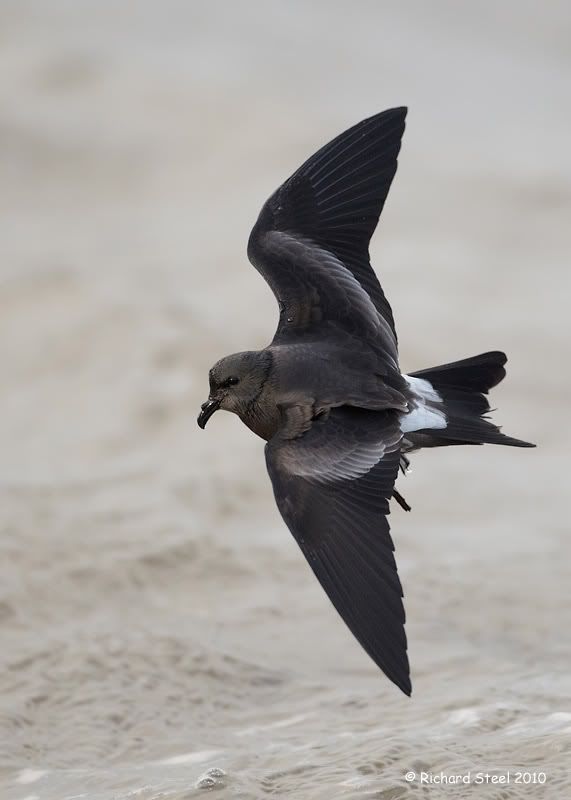
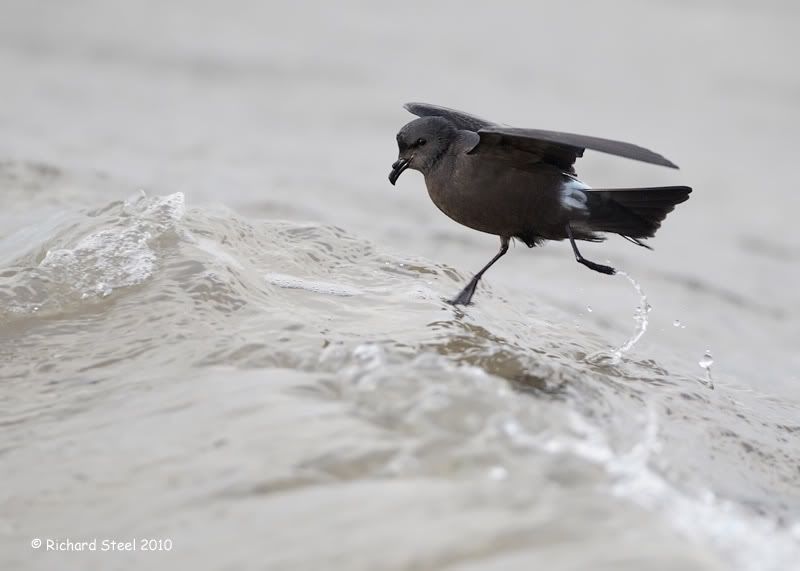
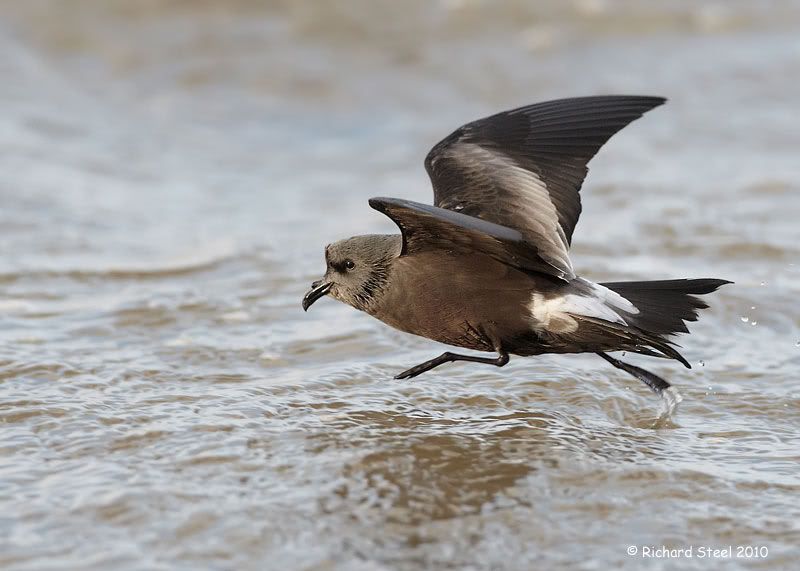
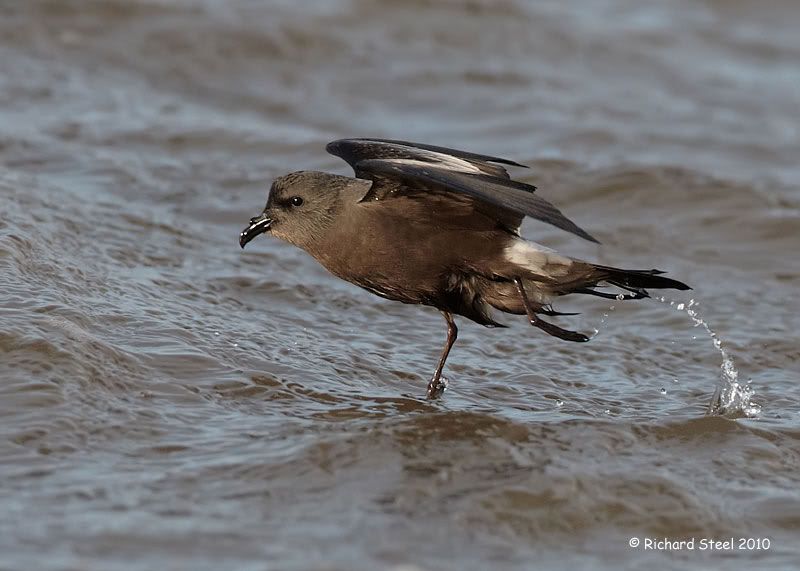
I always think I am very fortunate where I live to have such a wealth of bird photography potential on my doorstep. The anticipation increases in late September and the start of October when during prolonged periods of north-west gales, the Wirral peninsula is one of the best places in the UK to see Leach's Storm Petrels. This small enigmatic pelagic species is swept in to Liverpool Bay and a number usually end up lingering in the mouth of the River Mersey, before making their way eastward along the top of the peninsula on the ebbing tide. All the conditions have to be right, good sized tides and a very strong north westerly wind for several days. On some years the number of birds sighted can be counted on one hand however, during this last week they were driven in by the 100s by the pummelling winds.
Photobucket


Photographing the petrels is very difficult. I will try and paint the scene for those who have not experienced it. Basically you are stood facing the full force of the elements that includes a face full of gale force sand-laden winds and salt spray from the raging sea.
Photobucket

What are you are looking for is a small dark coloured bird about the size of a small thrush battling in a bat like fluttering flight through the crashing waves.
Photobucket

A significant problem faced is the difficulty focusing on the rapidly erratic flying object in the severe conditions.
Photobucket

It never ceases to amaze me how such a tiny bird can battle against such harsh conditions.
Photobucket

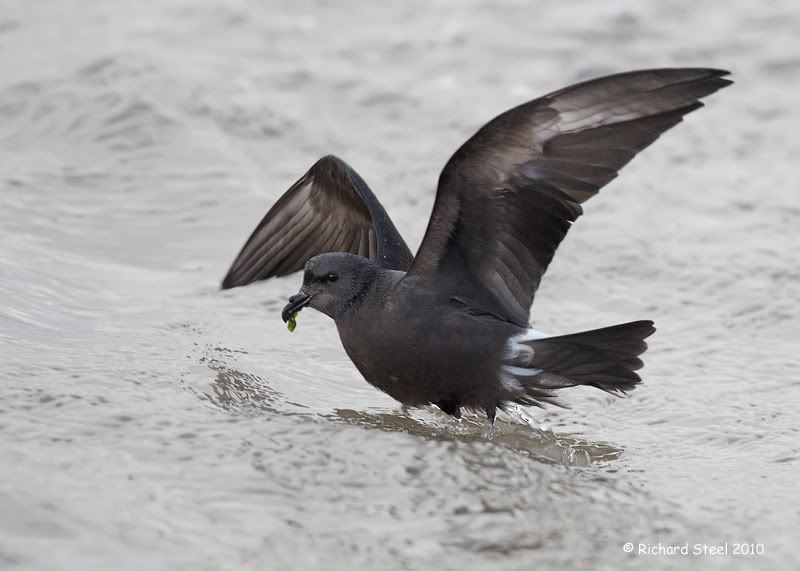
I was fortunate to have one bird temporarily pause in front of me to feed on some seaweed.
Photobucket


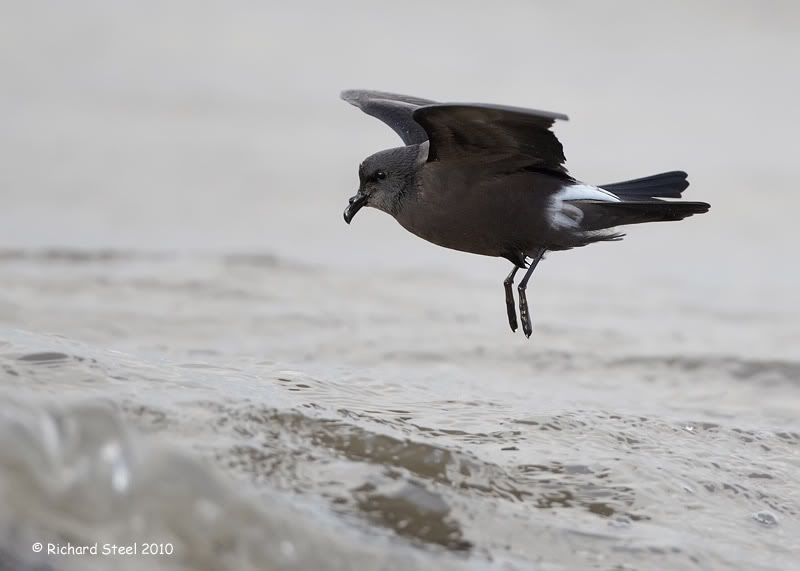
The birds as they struggle across the rocking sea show the delightful behaviour of walking across the water.
Photobucket

Photobucket

Photobucket

My brief after work sessions were a memorable experience that will stay with me for a long time. Hopefully we will get some further gales very soon which will let try and meet the challenge of photographing these wonderful birds once more.

As an aside and for those who may be interested in seeing the face behind the camera, I am due to appear on BBC Countryfile tomorrow (Sunday 19th) on BBC 1 at 6:30pm as I was involved in the long-listing of entries to their photographic competition this year.

Tuesday, September 07, 2010

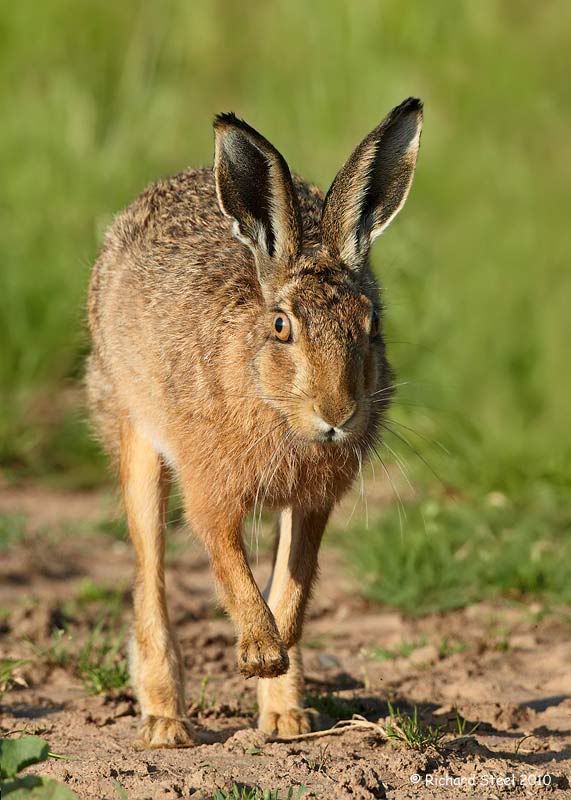
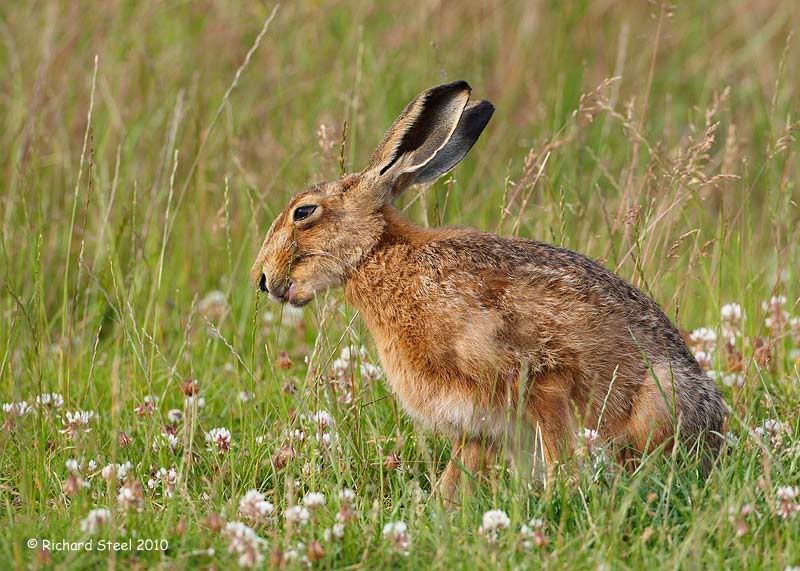
Summer Hares

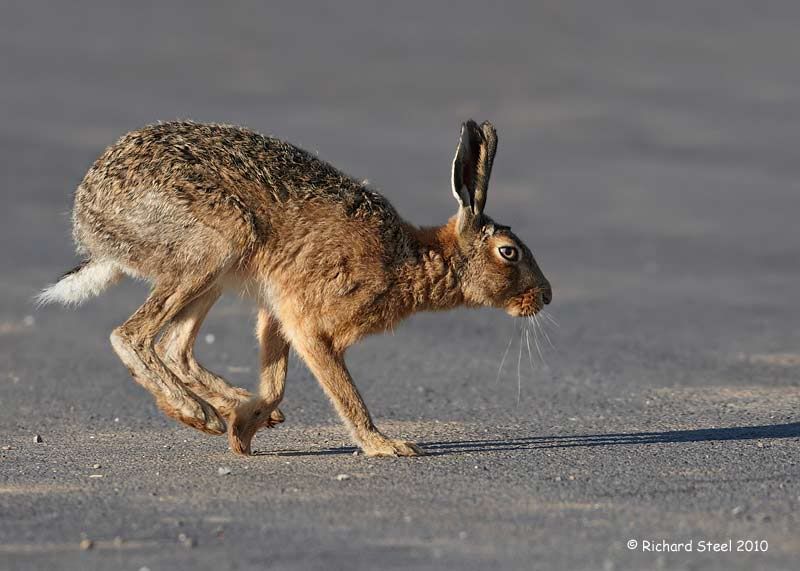
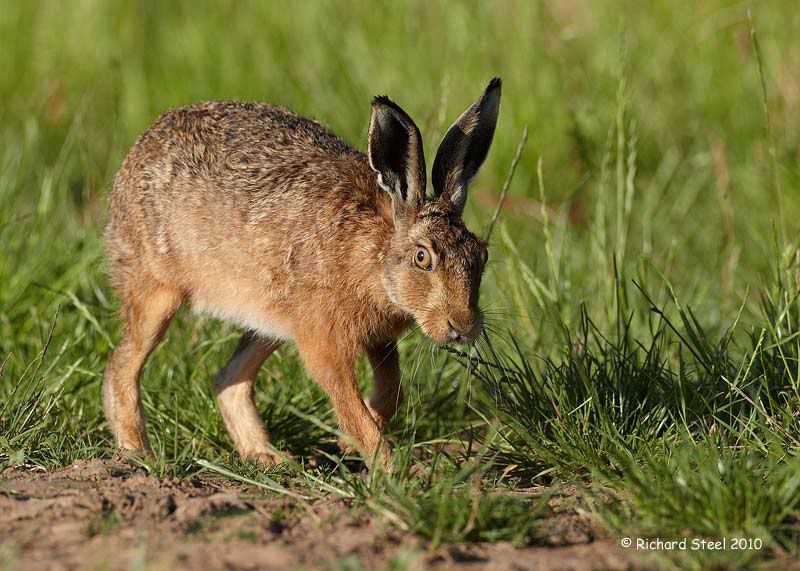
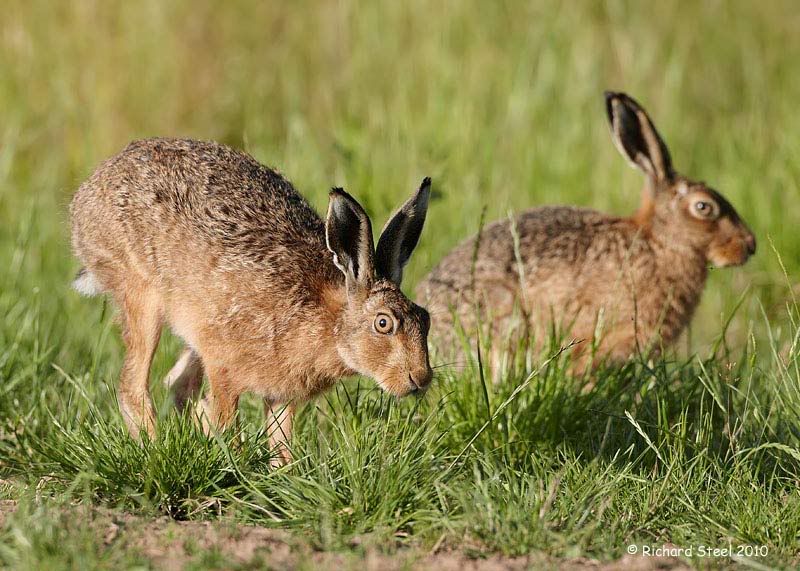
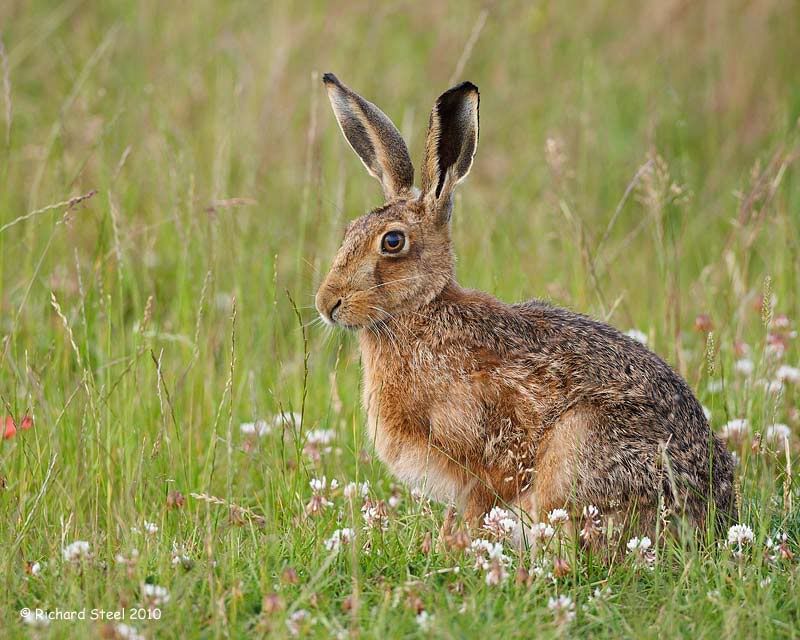
Many people would associate the hare with a symbol of Spring but I have found it can be very productive photographing them in the summer. At least it is at the site I usually visit. However, this is not the case for many areas well hares dwell as they are lost from view within agricultural crops. I usually undertake my summer hare photography during August when many birds are going through a moult and not really looking at their best and there is a good chance of encountering a leveret or two. However, this set were taken during a couple of visits in June.
Brown Hare

Most of my hare photography is done as a short pre-work session and so an early alarm clock and an hour or so with the camera before heading off to the office. Always a good way to start the day.
Brown Hare

As hares tend to be most active at the beginning and end of the day, these short session can be very productive.
Brown Hare

Brown Hare

On some occasions they can get a bit too close.
Brown Hare

At other times you can just get them in frame. A hare running towards you takes constant refocusing as it can play havoc with camera autofocus.
Brown Hare

Some days I may make a visit to the hares on the way home from work if it is a sunny evening. On these occasions the hares are generally much more relaxed and preoccupied with feeding and grooming.
Brown Hare

Brown Hare

What better way to unwind from everyday work pressures than in the company of these wonderful animals.

Wednesday, September 01, 2010

Prickly Visitor

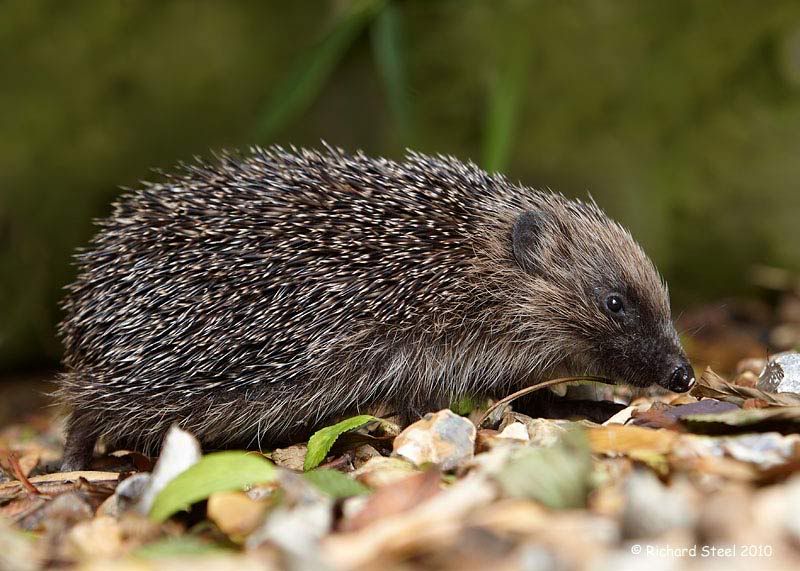
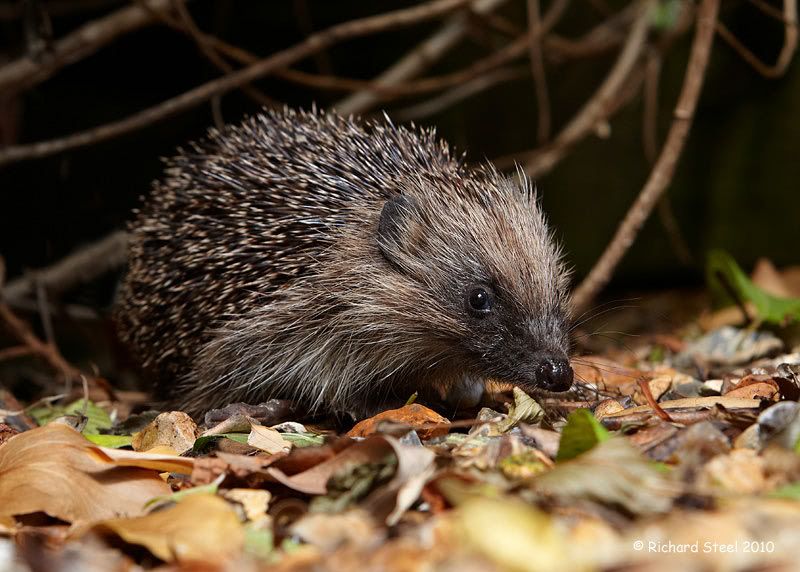
A few weeks back I was taking some rubbish out to the bin, when I heard a strange rustling in my tiny back garden. My first thought was that it might be one of the neighbours cats trying to catch a mouse in the dark. However, it was an unusual sound and curiosity got the better of me (impossible to shake off that zoology training). I decided to investigate with a torch but failed to locate the culprit. All was revealed a couple of weeks later when popping out in to the back garden one Saturday afternoon I was taken aback to find a hedgehog happily snuffling around.

Photobucket

I always knew there had been a good reason for neglecting the gardening for such a long time :). Actually this has just resulted from lack of time and a very busy work schedule but the build up of leaf litter had obviously proved attractive to the prickly visitor.

Photobucket

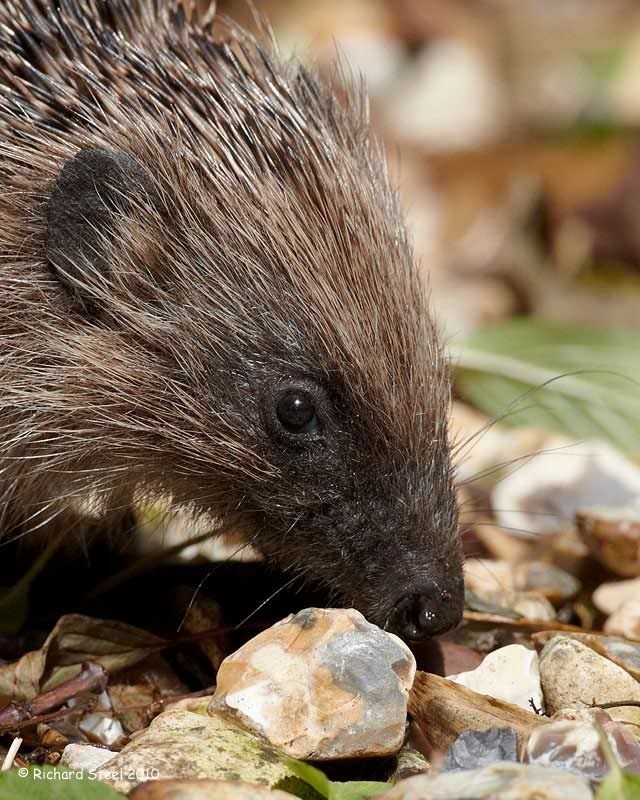
Having never had opportunity to photograph a hedgehog before I was quickly back in to the house to grab the camera and the rarely used 70-200mm lens. It was good fun lying down in close proximity, but out of flea jumping distance, to the hedgehog as it foraged through the gravel.

Photobucket

I was amazed to find the hedgehog in my tiny garden which is surrounded by a high brick wall. However, I subsequently learnt that despite their unlikely appearance that hedgehogs are very good climbers.

Photobucket

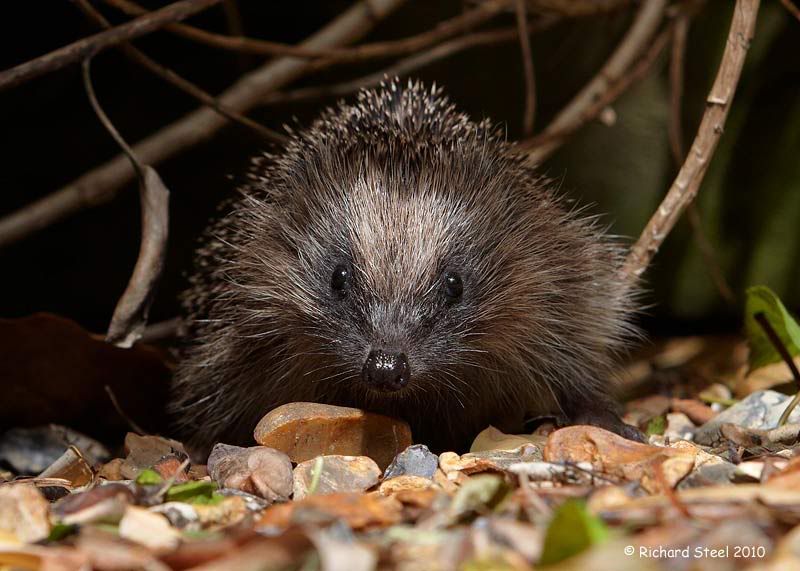
After about 15 minutes of snuffling around the hedgehog wandered off to the back corner of the garden to disappear in to an 'igloo' of bamboo leaves it had constructed.

Photobucket

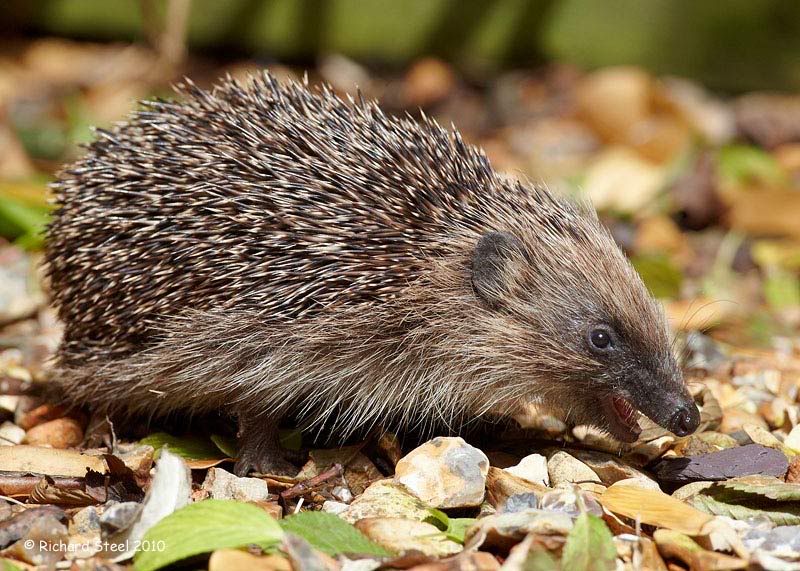
I have this habit on when I encounter a new species with the camera I like to turn to the books and find out more about them. 'Horace' as he was now known looked to be a young hedgehog so I decided to give him a bit of helping hand to reach his minimum hibernation weight. Apparently cat biscuits and a bowl of water would provide a good dietary supplement and so over the next couple of weeks I occasionally put out a few cat biscuits and bowl of fresh water. Both hedgehog and the neighbours cat seemed very happy with the free meal handouts.

'Horace' put in a few daylight appearances but only during one such outing did I decide to take a few more photos.

Photobucket


Photobucket

It appears the hedgehog has now moved on to another garden but it was a real pleasure to act as a temporary host. There are couple of interesting points from this experience which are that a bit of neglect in the garden can do wonders for attracting wildlife and I would urge all to dedicate a corner for this purpose. Secondly and more importantly with autumn rapidly approaching, piles of leaves and stick for bonfires will be very attractive to a hedgehog so please check before striking the match.

LinkWithin

Related Posts with Thumbnails