Showing posts with label Red Throated Pipit. Show all posts

Wednesday, June 22, 2016

Beyond 66.5 Degrees North - Day 3: Battling the Elements

Before we made our trip to Norway, both and Adam and I both made a list of species we wished to see and try to photograph. Top of both our lists were probably the most magnificent of wading birds, the Ruff. This was followed on our lists by Dotterel, a personal bogey bird of mine in the UK, and third on my list was Bluethroat. However, top priority was Ruff and we would be disappointed if we didn't manage to get some in front of us and the camera. So this species deserved a concerted effort.

Our plan  for the third day, was to rise early and explore the nature reserve at eastern end of Vadsoya Island where the hotel was located, before hitting the road and winding our way eastward along the north shore of the fjord. Our final destination for the day was to be a reconnaissance visit of a known ruff lek site which we planned to check out for hopefully our first session with the birds the following day.

As the blackout roller blinds zipped upwards, after an early alarm, the view out the window of the shaking scrub bushes showed a strong wind was blowing in from the north. The sky a mix of clouds, with the occasional blue clear patch, being whisked along quickly overhead by the brisk wind. Temperature outside was about 3 degrees C before taking account of any wind chill. Stepping out the front door of the hotel, the strong wind's sharp icy edge that cut right in to you, became very apparent. Any small birds would definitely be lying low in these conditions. Fortunately the forecast, which to be frank is not too reliable, showed that the wind would ease down the next day. We would just have to try and make the best of the prevailing conditions.

We headed out on foot into the biting wind onto the Vadsoya Island nature reserve. We decided to head off in opposite directions and meet up later by the pond. My first stop was near the entrance with a Hooded Crow hanging on to the top of some scrub in the wind.

I headed off round the island in a clockwise direction. It seemed very quiet for birds and during my wander I came across a group of half a dozen of the island's resident mountain hares in a tight group. Creeping up on single mountain hares is difficult enough but the problem is multiplied when there are six pairs of eyes on look-out duty. Fortunately between me and the hares was a line of scrub that I could use as cover to get close and a few photos of them. They varied quite a bit in colour as a result of their change from winter to summer coat.
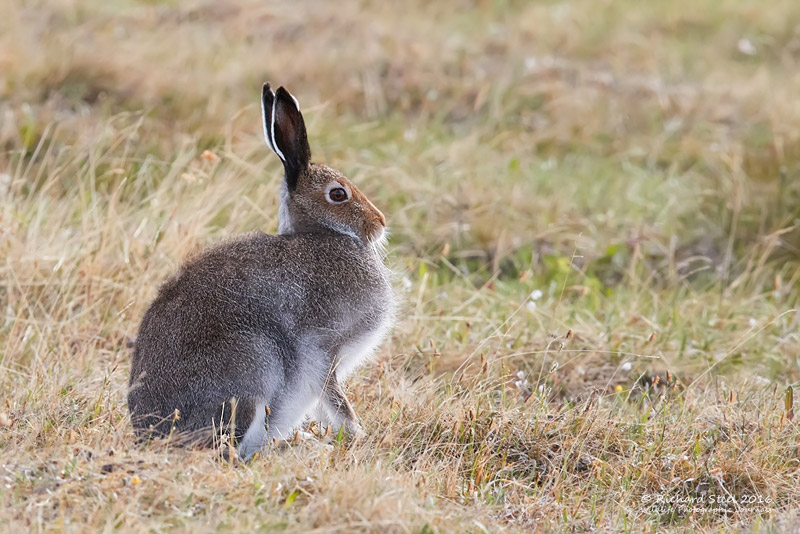
As you might know I do have a bit of a hare obsession so it was good to have some on the 'doorstep' of the hotel and I made a mental note to have another try for them later in the week.

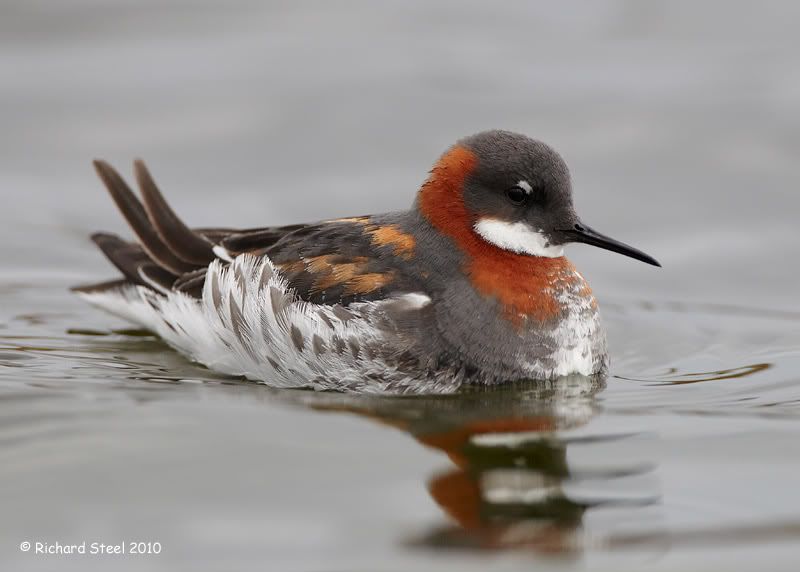
As I came around to the pond, I was surprised to find very low numbers of Red-necked Phalarope with only half a dozen female birds present. During my last visit the island supported good numbers of birds across a range of species but this seemed not to be the case now. The Arctic Tern colony at the eastern end of the island was completely empty and few birds were present on the beaches.

As the sun was appearing intermittently I thought I would spend a bit of time with the Phalarope. Typically oblivious to my presence, the photography of these hyperactive birds was made tricky by the large waves rolling across the pond. It felt a bit like trying to photograph a cork being tossed around on a North Sea storm. One moment it was there and the next it had gone over the crest of the next wave and dropped into the trough.
Thought the photo below would give some impression of the size of the waves rolling across the pond.
Adam had picked up a few birds in his wander around the other side of the nature reserve including the odd Knot, Oystercatcher and Turnstone on the beach and a Red-throated pipit on  a fence line post. We decided to head back to the hotel for breakfast. Over breakfast we started chatting with a couple of birdwatchers who had been in the area for a while and commented on the general lack of birds from what they had found on previous trips. There were two theories proposed over the continental style breakfast, either birds were very late arriving or had started breeding early. We would have to try and work it out.

After a long, slow breakfast, we left the hotel and into the sabre-toothed wind once more. This time we got in the car crossed the bridge into Vadso and headed along the coast road eastward to see what we could find. The first birds we encountered that could be put in front of the camera were some Red Throated Pipit. These are attractive birds with their brick red throat patch.


This location  we subsequently nicknamed 'Pipit Bowl'. I often find when abroad that particularly productive places are given nicknames as it easy to refer to them when making plans than using the local place name. With that said the next place we stopped off at became known as 'Temmincks Dunes'. We decided to stop off for some DIY lunch from our Finnish food supplies in the car boot, where the coastal landscape suddenly changed to sand dunes adjacent to the river estuary at Skallelv. I spotted a small bird fluttering up and down like a giant butterfly, despite the strong winds, accompanied by a rapid, loud and high pitched trill and immediately knew it was a Temmnicks Stint. This was Adam's first encounter with one and I think he was impressed with the aerial antics of this tiny wader. We found a very confiding bird and it was lovely to watch both on the ground and in the air  at close quarters.  Down at ground level you appreciate how tiny these birds are.
Brace position against the wind.

Time to move on, passing by some distant White-tailed Eagle loafing around the beach and a very long furred red fox heading over a ridge. By this time the sun has burst through the rushing clouds above. Its always good to have some sunlight for photography but in these cold climates it comes at a cost which it almost an instant development of heat haze. I have mentioned this before and the devastating effect it can on photography should not be underestimated.  Basically it makes it nearly impossible to get a sharp image and the only thing you can do is take a lot of photographs and minimise the wobbling air between the camera and subject. We suffered this problem with the next pair of birds we tried to photograph which was a pair of dark phase Arctic Skua. We spent a very brief time with them, as the red mist typically descended with these birds as we approached and they initiated their characteristic swooping attacks. This meant the female had got up off the two eggs on the ground and we were concerned the effect that the bitter wind may have on them if left uncovered for any period. We backed off rapidly and she quickly returned to incubation duties. Of the  photographs taken, I only kept one which was just about passable, with the rest ruined by heat haze.
Finally we reached the track that cuts in land leading to the ruff lek site. This is a 7.5km dirt track in poor condition and took quite a while to get the hire car along in one piece. The progress along the track was slowed by a couple of birds we encountered. By now the sun had departed and drizzle had started. Rapid changes in weather conditions are common at these latitudes but the one persistent feature that was constant was the driving cold wind. I decided for this solitary Skua to do the 'Skua crawl'. This is basically doing a commando crawl up to the bird which seems to work well with these birds. I was soon getting full frame images with the main problem being getting a decent composition which is always tricky for birds with long tails.

We continued our bumpy and uncomfortable journey along the track and soon came across a Golden Plover for which we stopped to take a few photographs. The short tundra vegetation always makes for a colourful and attractive setting.

Eventually we came to the end of the track and the ruff lek site next to a medium sized lake. There were ruff present but mainly as heads popping up through the vegetation of a marshy area at the southern end of the lake. Across the lake we could see a distant nesting Black-throated Diver with the male holding station in open water close by. Occasionally they would let out their wailing call which is one of my favourite bird sounds as it seems to encapsulate the essence of these remote places. It was difficult to say with any certainty where the ruff lek was going to be but a relatively flat area of short vegetation close to where we were parked looked like a strong possibility. We would find out when we returned the next morning.

We made our way back along the bumpy track and picked up a solitary Whimbrel to photograph before we reached the main road.
Time was moving on be now and we decided we would start to make tracks towards our hotel in Vadso. However, before heading there we thought we would check out another dirt track heading in-land from the coast.  We saw a few Golden Plover  along this track but all remained distant occasionally piping out their plaintive call note. The occasional Ruff was seen flying over. Just before we got back to the main road I spotted a solitary male Ruff. A fine looking male with a ginger orange collar. This was our first opportunity to put one in front of the camera and as this was the last bird of the day to be photographed, then hopefully its was a good omen for a successful Ruff session the following day.

We headed back to Vadso. We had worked hard that day in the the challenging icy wind and it had produced a good variety of interesting birds species but all in low numbers. There just strangely seemed to be relatively few birds around. Back at Vadso,  and with it being Sunday evening , we struggled to find any food and ended up having some weird kebab made with a folded nan bread stuffed with meat and sauce from a take away at the back of the Indian. More fuel than food really. This seemed to be the only place open in town that was selling food. Back at the hotel the daily battery charging, photo downloading and back up ritual was gone through before hitting bed relatively early. The alarm was set to stun mode at 3:30 am with the exciting prospect of attempting to photograph Ruff on a lek. This was the main objective of our trip but would we succeed?

Saturday, July 24, 2010

Inside the Circle Day 6 - Arctics in the Arctic

Encouraged by my previous success from checking out one of the side tracks off the main coast road, I decided I would take some time on the morning of day 6 to investigate some more. From the map there looked to be a promising track that lead up to two upland lakes and before I knew the trusty hire car was bumping along an unmade road. As I pulled up next to the lakes the sun but in a rare appearance. The lake looked fairly devoid of bird life with the exception of a pair of Long-tailed duck circling around in the center and way out of camera range.

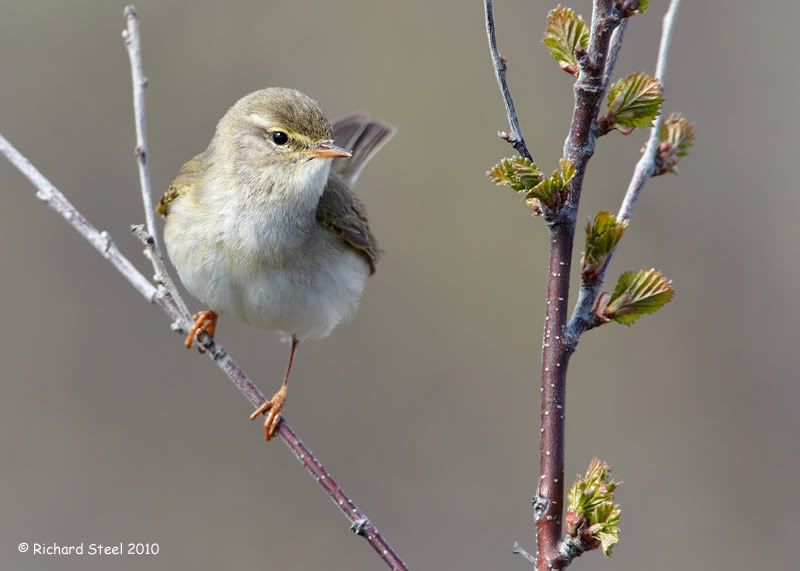
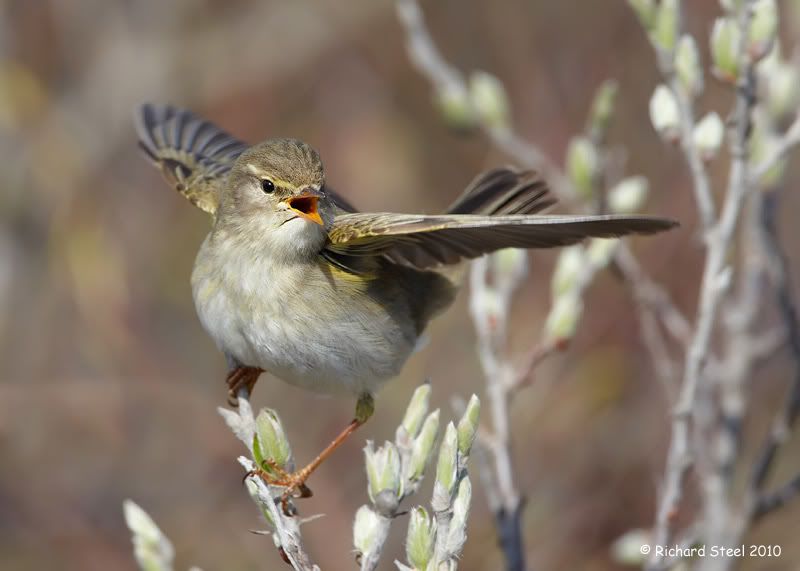
A unfamiliar bird song drift up the track from a silhouette of a bird sat of an overhead wire. It took a while to work out what it was but finally I caught a brief better view of a Bluethroat. I spent a long time to get a photograph of the bird but complete failed in my mission. The bird was covering a wide area, occasionally singing from the top of a low bush but nowhere regularly of close to where I was expectantly waiting. Instead I consoled myself with a very obliging Willow Warbler in some low scrub.
Photobucket

Photobucket

It is odd how some years you seem to end up with lots of photos of a particular species which you have struggled with previously. This year I seem to have end up with a large number of photos of Willow Warbler.
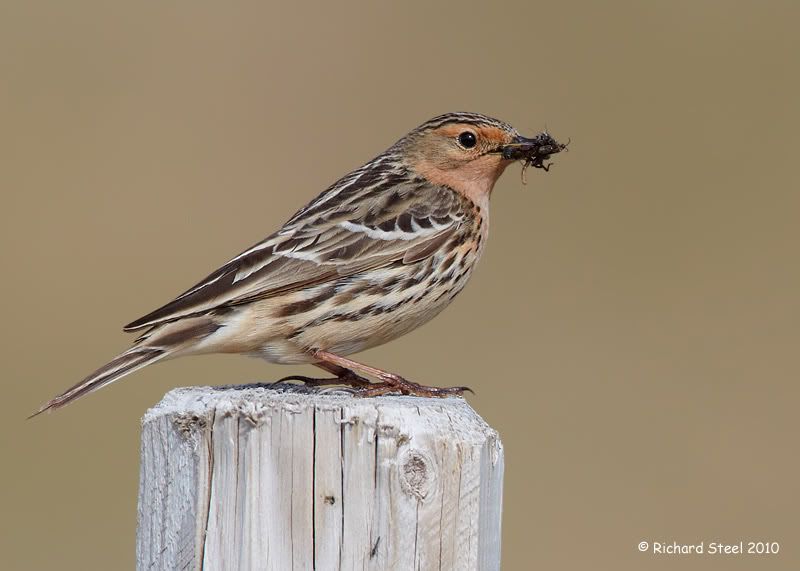
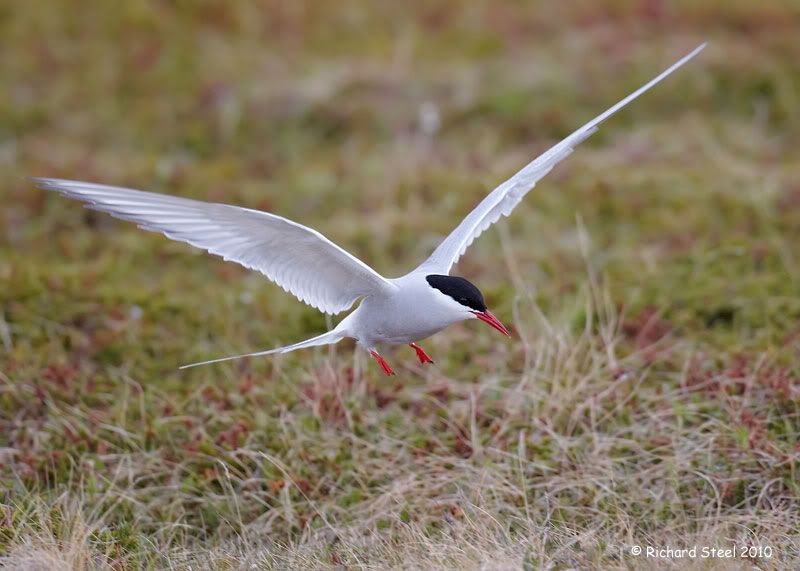
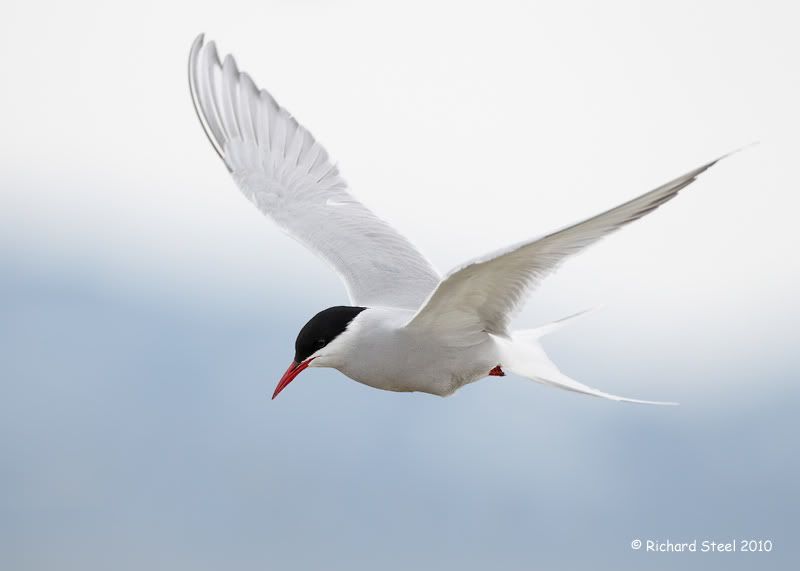
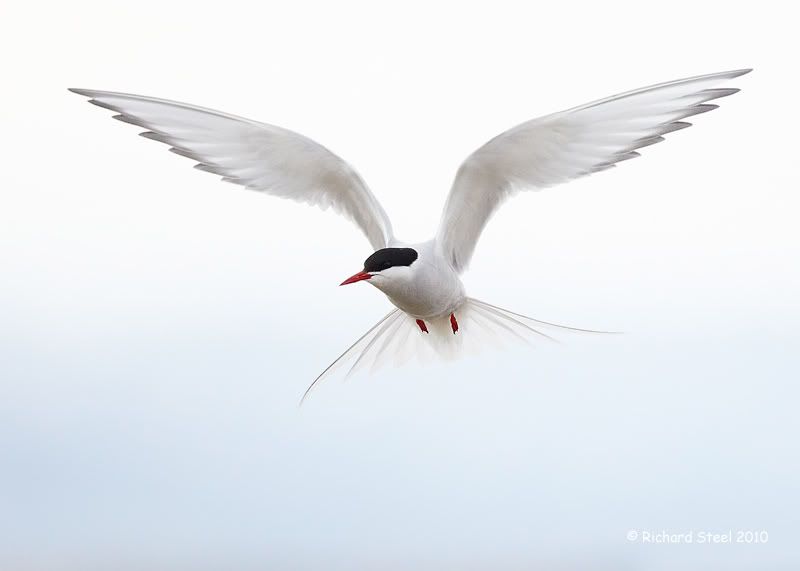
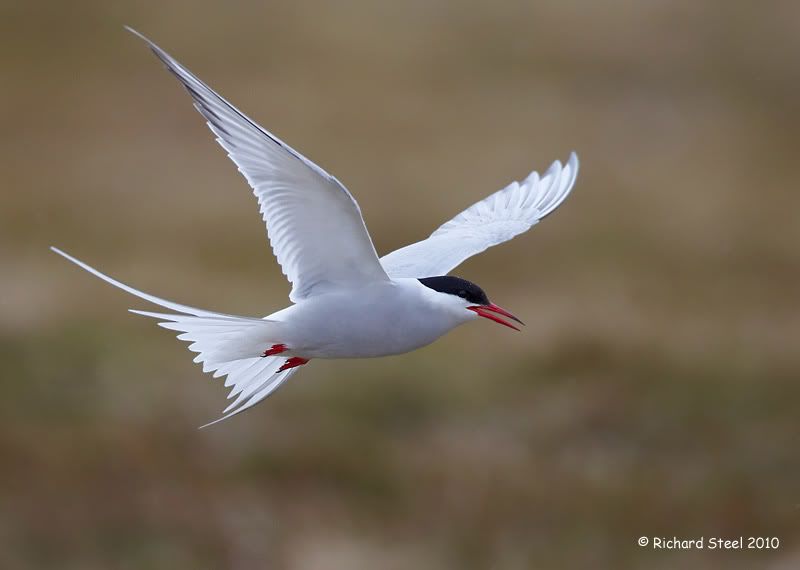
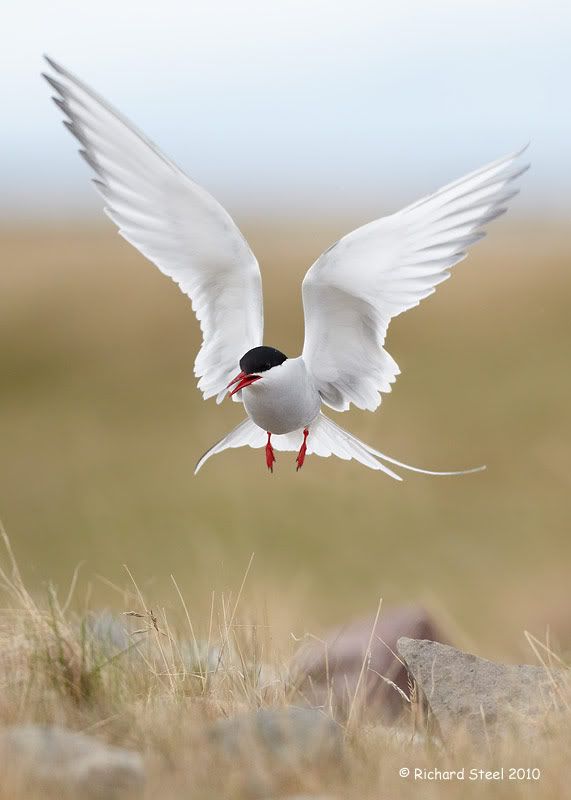
The morning quickly passed in to afternoon as I explored another track but with no success. By this time I was close to Vadso and remembered the Arctic Tern colony I had found on the first day out in Norway. It seemed appropriate that I should photograph some Arctics in the Arctic. As I walked along to the tern colony, a Red Throated Pipit with a beak full of insects for its hidden brood, appeared on the fence post. It was good to get another new species on to the camera.
Photobucket

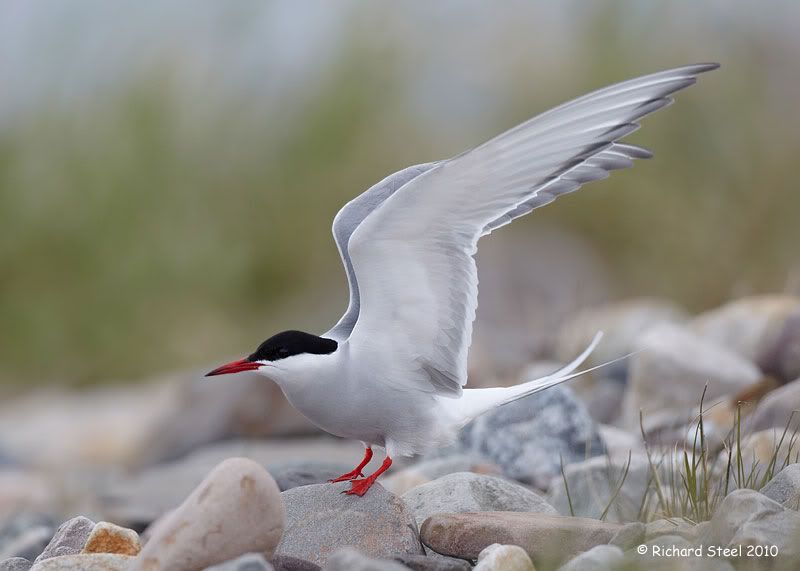
Typically the sun disappeared and the light took a turn for the worse as I reached the edge of the tern colony, carefully watching my step for any eggs or young on the ground. I love Arctic Terns which are such graceful birds and great fun to photograph.
Photobucket

I decided I would do some flight photos despite the light not being ideal.
Photobucket

Photobucket

Photobucket

Photobucket

This was my favourite photo of this mini session.
Photobucket

On the way back to the car I decided to check out some Red-necked Phalarope at a pond. It seems that a day was not going to pass without the daily phalarope photo.
Photobucket

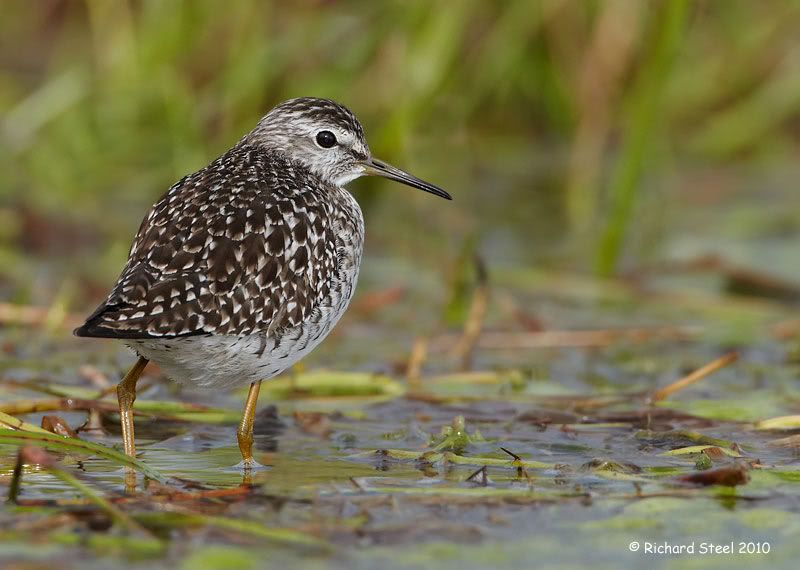
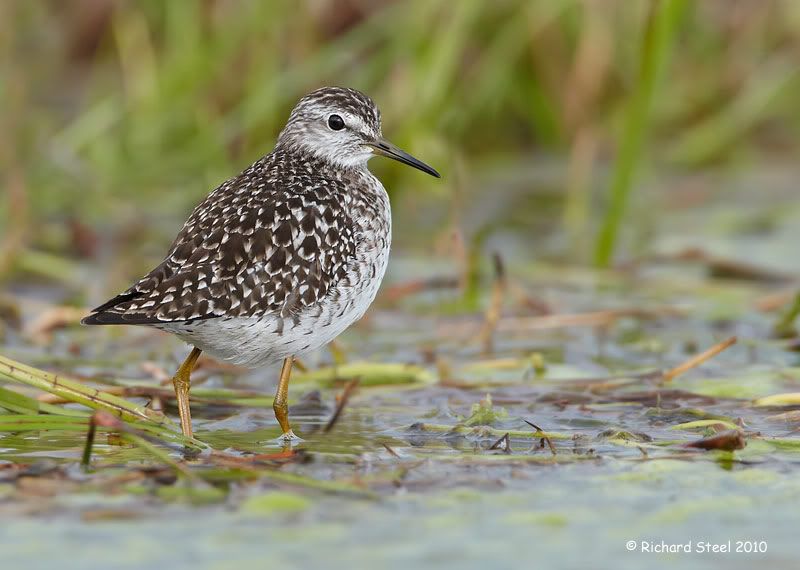
While sat in a reed bed photographing the spinning waders there wa a rustling to my left side and a Wood Sandpiper popped in to view at close range.
Photobucket

Photobucket

This was a welcome bonus, as its a species I have not photographed before, at the end of a relatively unproductive day. However, a quieter day and more relaxing day was needed in advance of what was likely to be a hectic following day which was to start with a trip out to the seabird colonies on the Island of Hornoya.

LinkWithin

Related Posts with Thumbnails