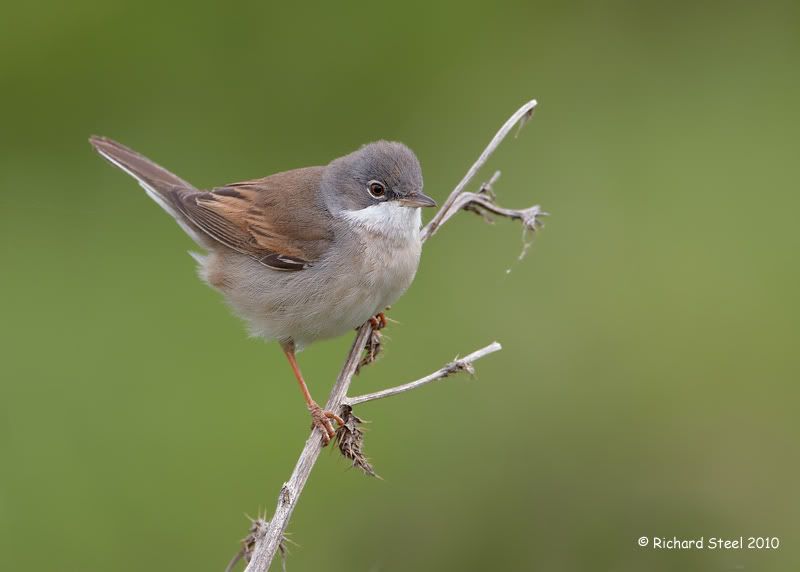
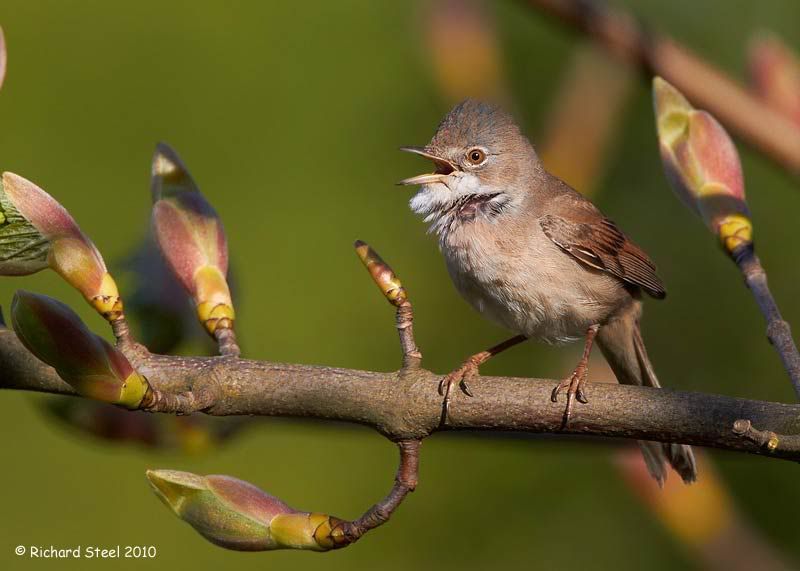
Showing posts with label Common Whitethroat. Show all posts

Saturday, October 06, 2012

A Taste of Spring

As the autumn winds start to swirl outside and the chlorophyll drains from the leaves turning the trees to their rusty and golden hues, my thoughts go back to the Spring. I love Springtime, a time of renewal and hope for the warmer months to come after the long dark days of winter. However, this year the UK climate had other ideas and cool days and torrential rain predominated and nature's calander was perturbed. The usual arrival of migrant birds seemed to be delayed by about a fortnight and then all the summer visitors suddenly seemed to arrive at once. So this post is about some of those Spring birds, the photographs of which have sat on my hard drive gathering dust.

One of the first arrivals each year are the Northern Wheatear, usually touching down around the end of March. They are welcome addition of warm colour against the be-draggled vegetation ravaged by the winter weather. An energetic bounding bird species that pause briefly along the local coast as they head northward during their journey from Africa to northern breeding areas.  The females are attractive but for the photographer the male birds in their smart and bolder spring colours are the real prize
Amongst the Wheatear, the Skylarks battle it out for breeding territories. Many fast acrobatic chases between males occur low over the rough grassland before one of the birds will soar upwards in liquid song until it becomes a mere speck in the sky.  There it will hang in fluttering flight, often for many minutes, before rapidly descending back towards earth.
For those of you who have never had the fortune to be very close to one.
They will also occasionally sing from low perches on the ground. This bird would often use a particular boulder.
However, it would take exception to any other bird landing on its rock. This was the response received by a House Sparrow that landed just out of frame.

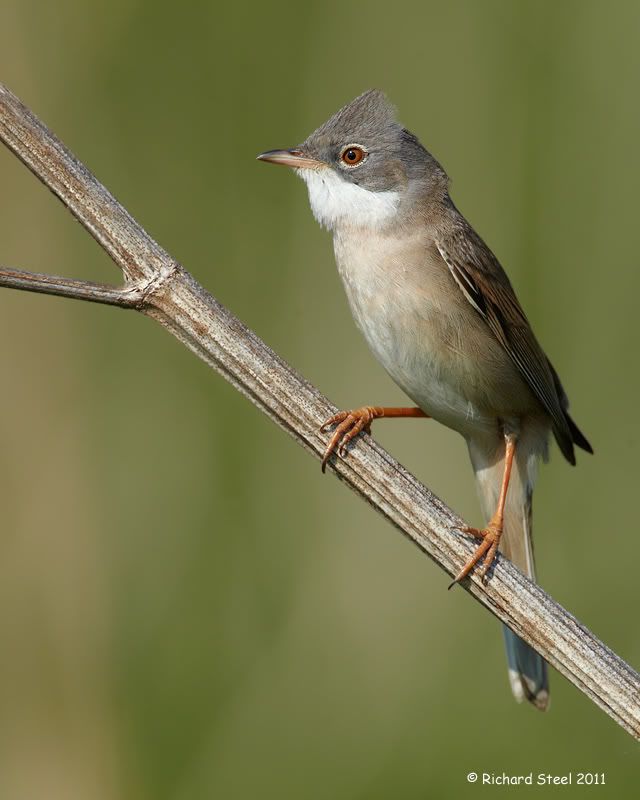
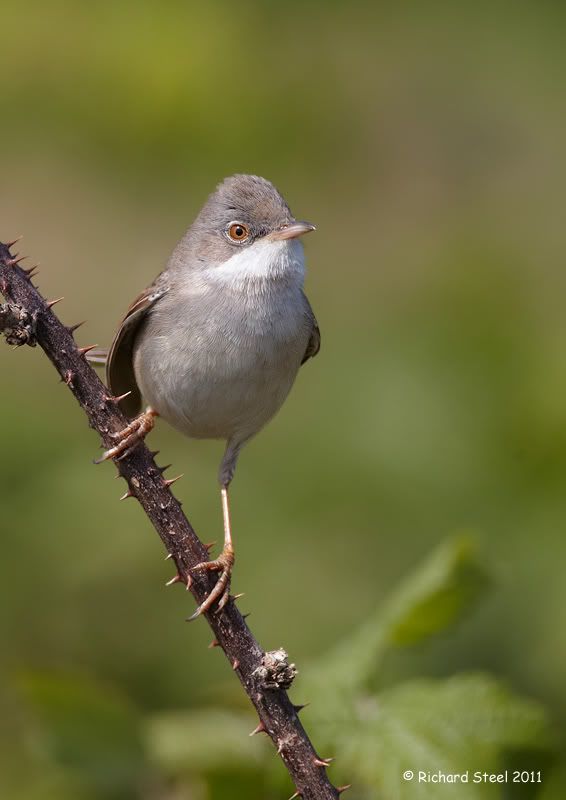
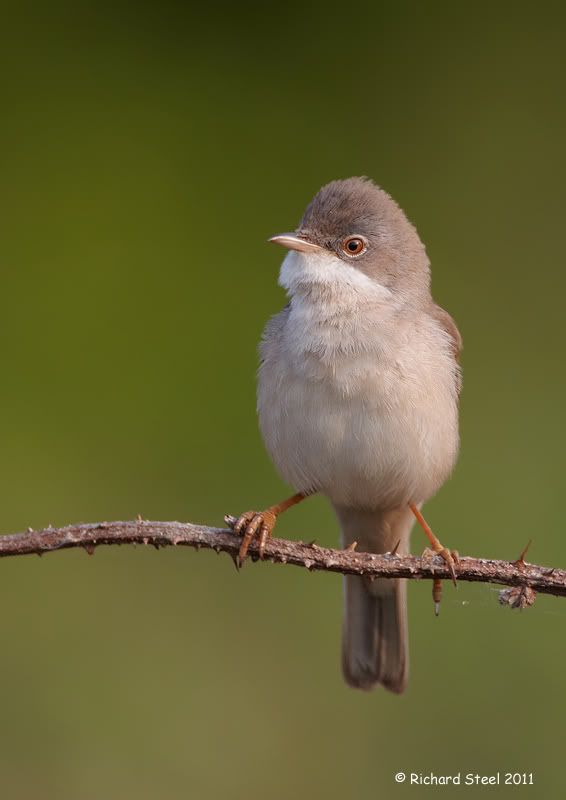
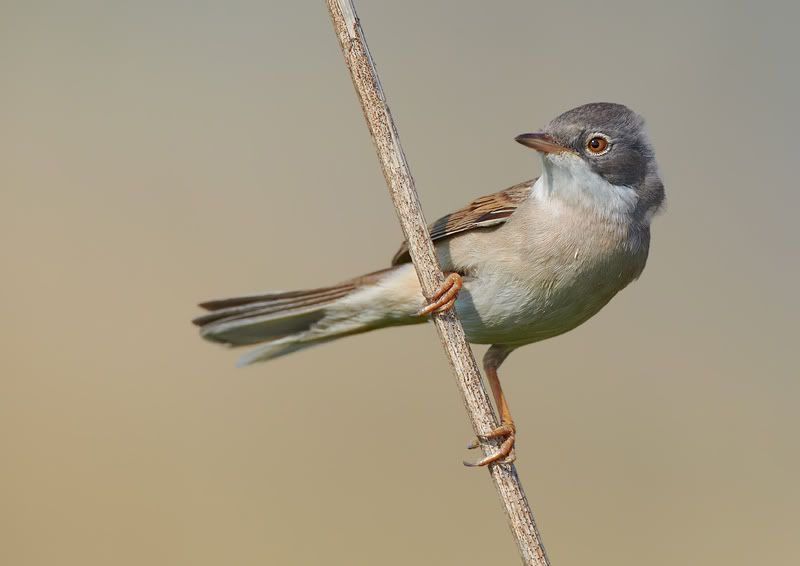
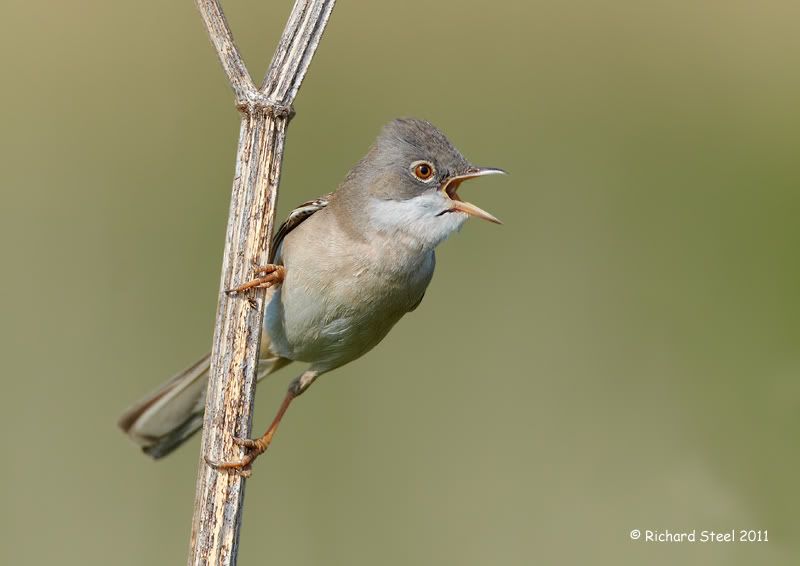
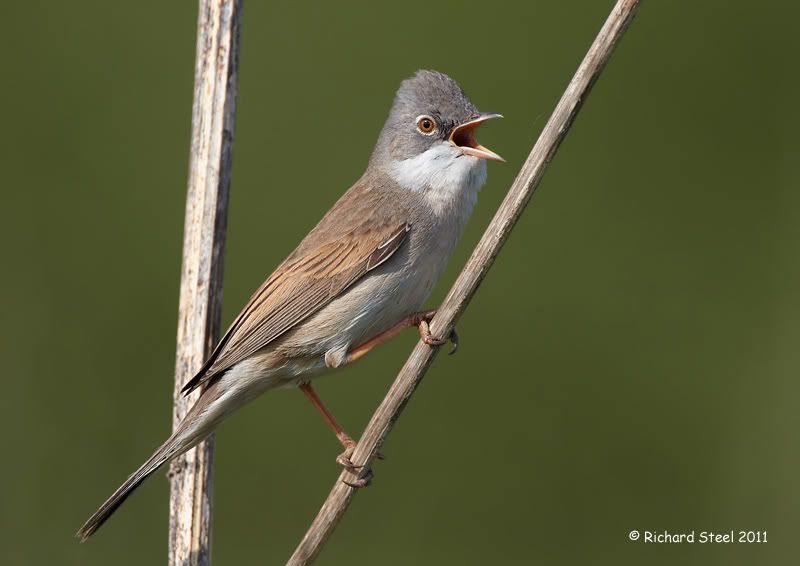
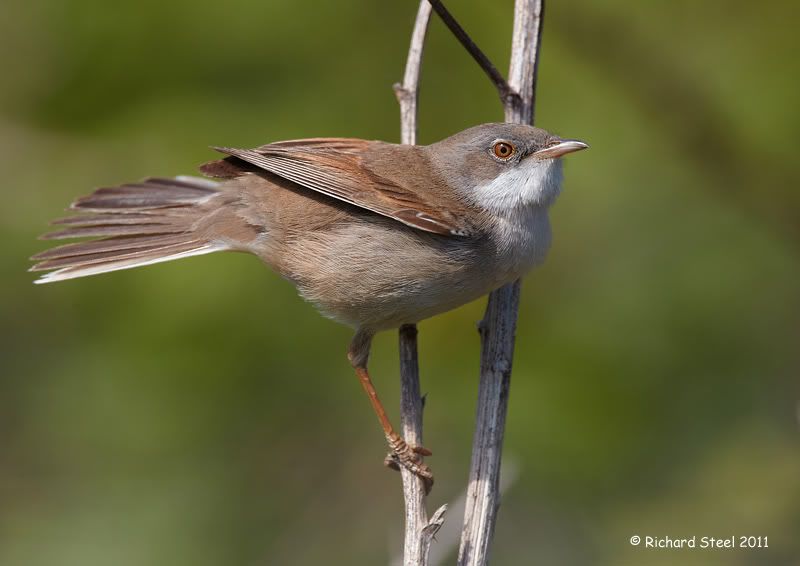
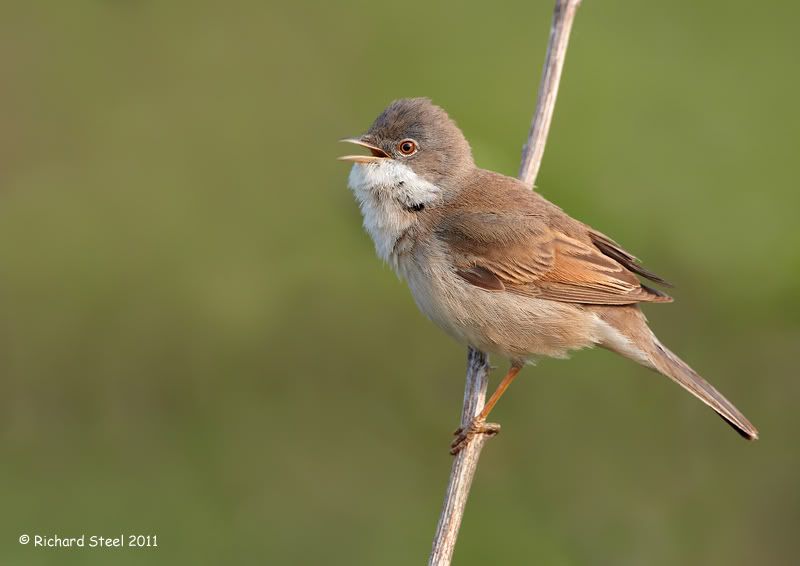
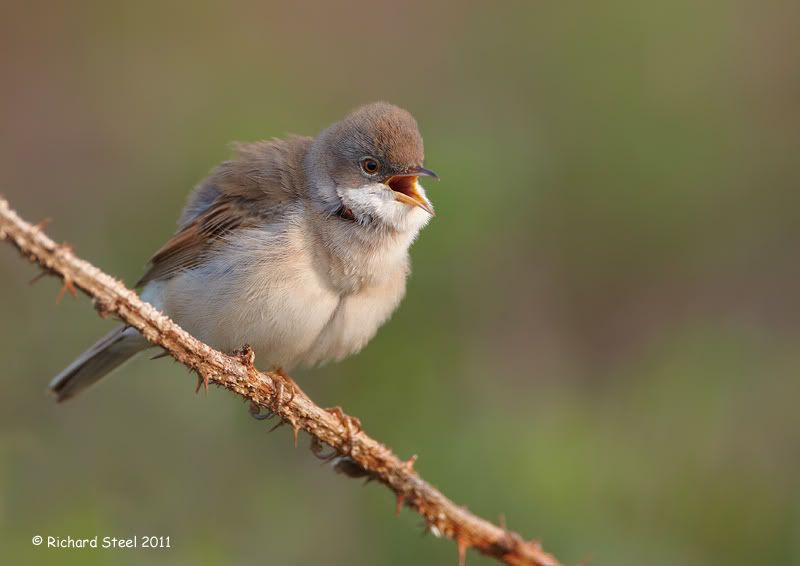
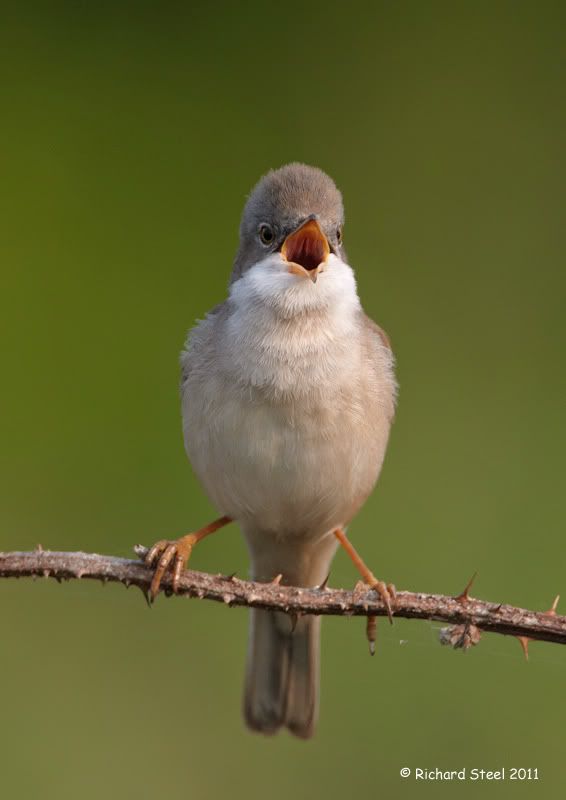
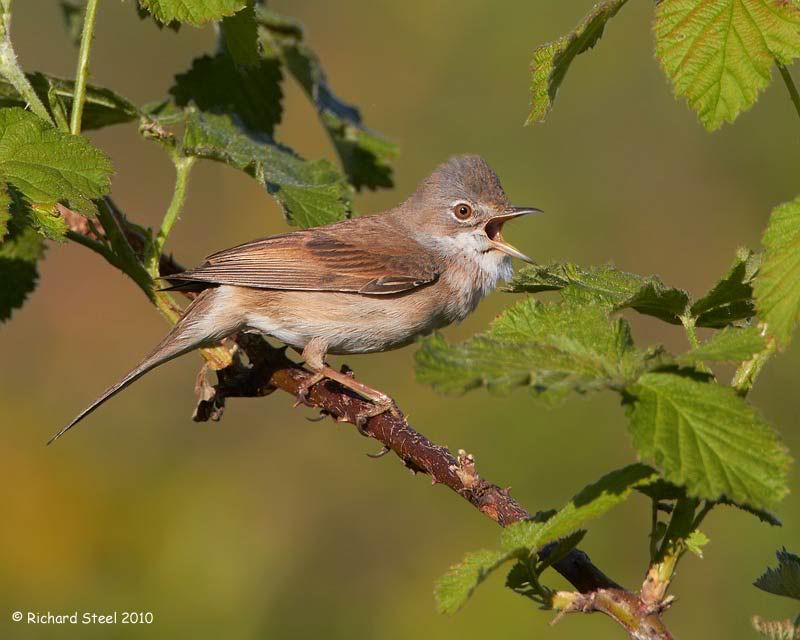
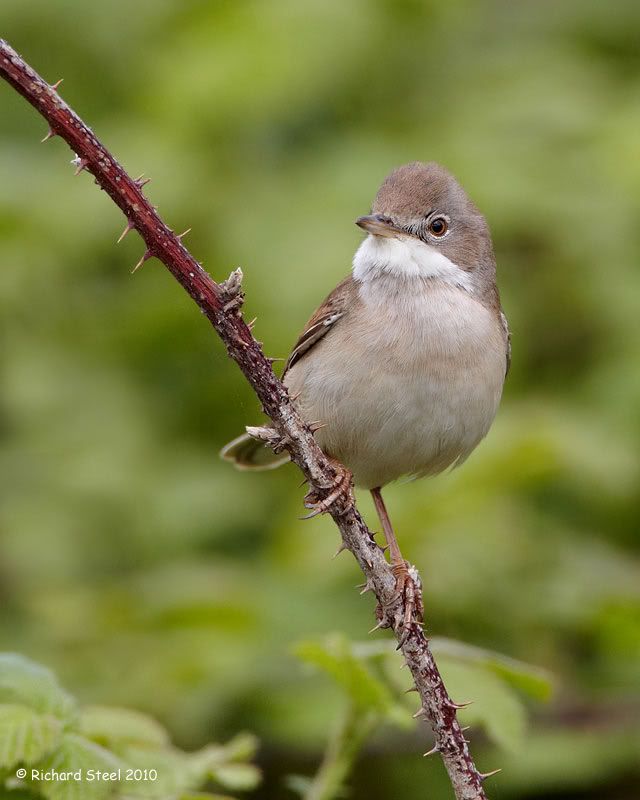
During mid to late April the scrub, reedbeds and low lying bushes come to the life with the churring, click, grating sounds of warblers. First the Grasshopper Warblers but closely followed by the Sedge and Reed varieties and the Whitethroats. Not wishing to become too anthropomorphic but Common Whitethroat always seem to be a slightly 'angry' and 'impaitent' bird. They are always fun to photograph and relatively easy with the right approach.

At the beginning of May Yellow Wagtails arrive brought, on the warming winds from the south. A brilliant splash of yellow and green amongst the rapidly growing vegetation. The first encounter with one of these birds each year always brings a smile.
You normally hear the birds before you see one as their characteristic high pitch 'jeet' calls emaniate from a field of low crops and penerate the dawn chorus. They absolutely glow golden when hit by the early low sun.
This bird caught by a sudden gust of wind from behind was having a 'bad feather day'.
Much as I like the Spring, I always look forward to the winter. The daylight may be limited but when the sun does put in appearance the low light can be just stunning. Lets hope we are not in for a gloomy wet winter.

Friday, July 08, 2011

Spring Whitethroat

As working through my Mallorca images took so long I am now working through a very large backlog of photos I have taken since my return. Therefore I need to wind the clock back to the early morning of late April when the spring migrants were arriving in numbers and the bushes and scrub took on those all too familiar songs of the summer visiting warblers.

Common Whitethroat were once a species I really struggled to photograph but I have done well with the species over recent years which has mainly resulted from getting more accustomed to their behaviour. This has resulted in some very close encounters. Sometimes too close in fact and inside the minimum focusing distance of the lens and on these occasions all that can be done is to sit back and enjoy watching the birds go about their daily routines. I must admit I have a bit of soft spot for the Sylvia type warblers which always seem to have a slightly 'angry' disposition.
The key to their photography is patience, the knowledge that they will routinely use the same perch for song and their apparent insatiable curiosity.
Once you appreciate these traits all the Sylvia types of warbler suddenly become much easier to approach and photograph.
From a photography perspective I always try to aim for singing images of the birds. They are warblers after all!
This requires some study of an individual within its its territory, locate its preferred song perches and waiting. Sometimes you may wait a considerable time but eventually the bird will return to burst into a scratchy warble.
These are really fun birds to photograph and its a very enjoyable way to spend a few hours at first light on a Spring morning. No doubt my lens will fall upon them once more next year.

Saturday, April 23, 2011

A Feast of Spring Warblers

Those of you who have been out and about in the UK during the last couple of weeks, will have found it difficult not to notice the bushes have become alive with the songs of recently arrived warblers. These range from the reeling cricket-like sounds of the Grasshopper Warbler to the hesitant scratchy song of the Whitethroat. I have a great fondness for warblers and always admire these tiny birds and the epic migration passage they have undertaken from Africa to reach our shores.

From a photography point of view these birds create quite a challenge due to their tendencies for skulking in dense undergrowth and often only giving fleeting appearances. The best opportunities usually occur when the birds first arrive and sing to establish their breeding territories. My main objective when trying to photograph these small birds is try and capture the birds on an uncluttered background when they visit the edge or tops of low bushes. However, this photography requires a good deal of patience and can be a frustrating business. Anyone who has tried photographing warblers will know what I mean when I say there always seems to be one small twig in the way! There is also a limit with what you can achieve with these birds as flight photographs are usually out of the question and therefore the best that can be achieved is a bird in full song.

For this post I have decided to post three images of five species from a series of recent short sessions. I will start off with the Chiffchaff which is usually one of the first to arrive and often a first sign of spring.


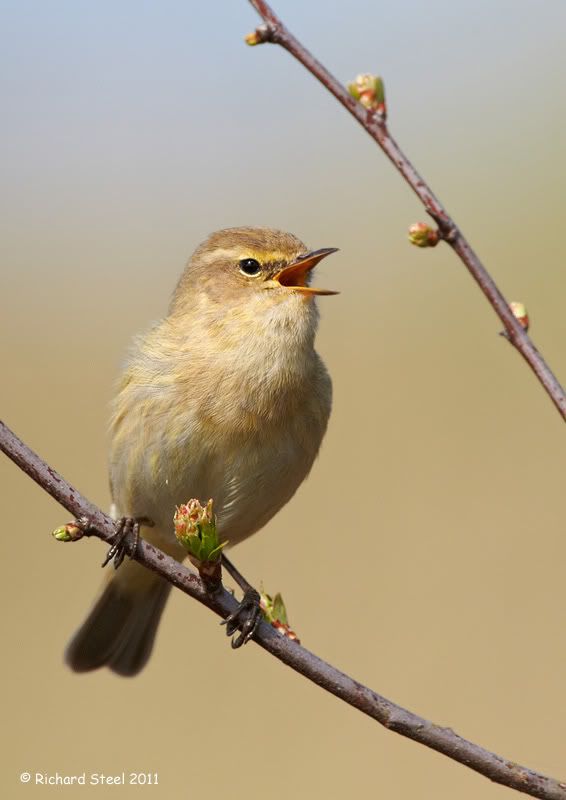
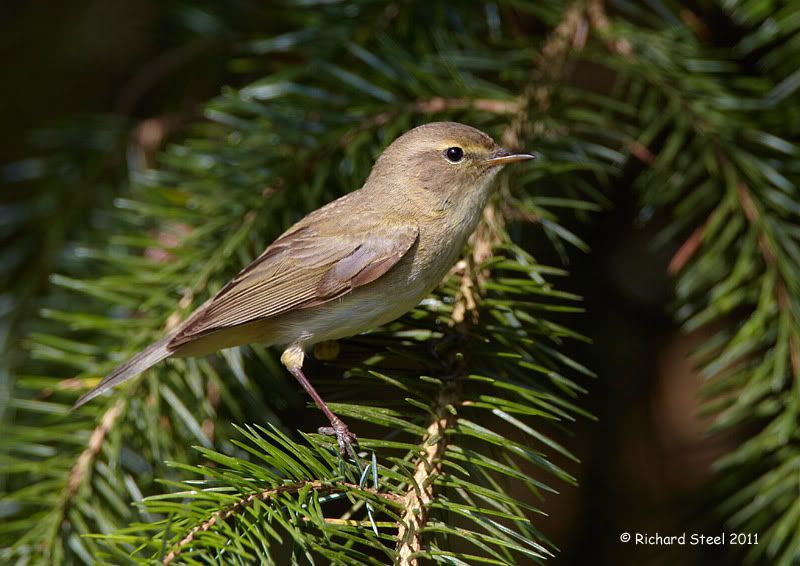
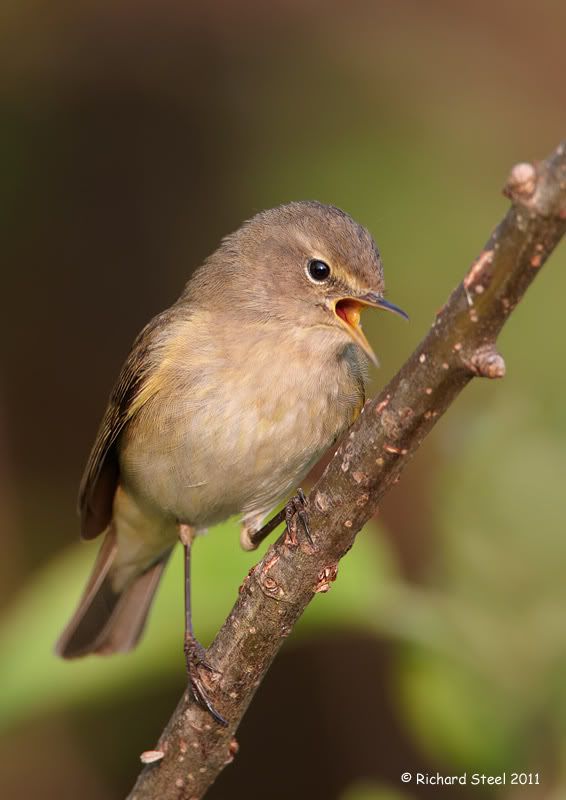
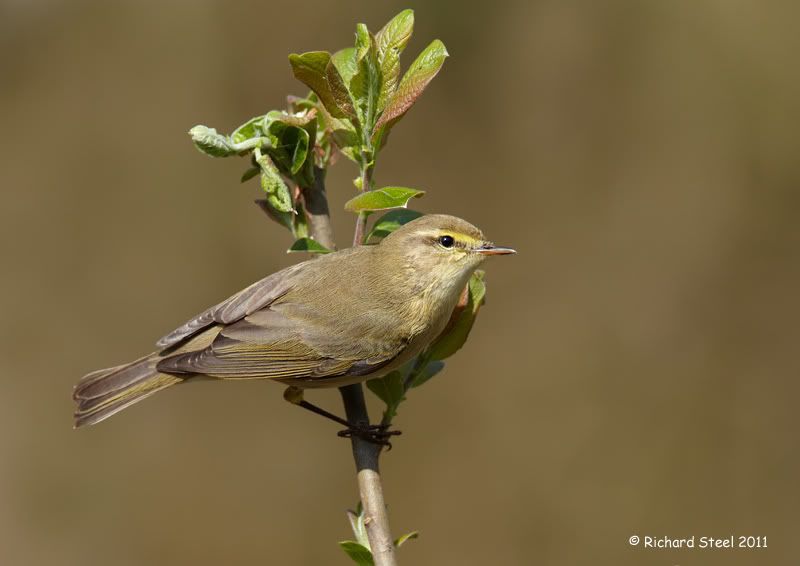
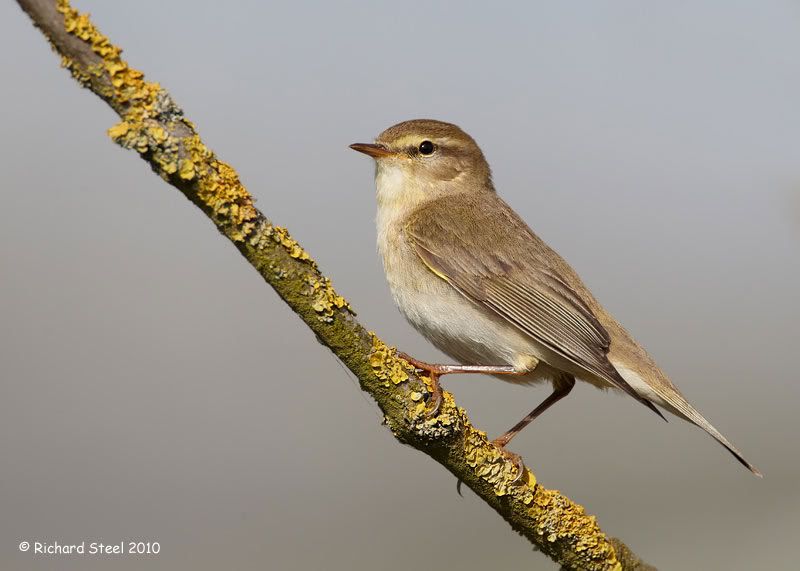
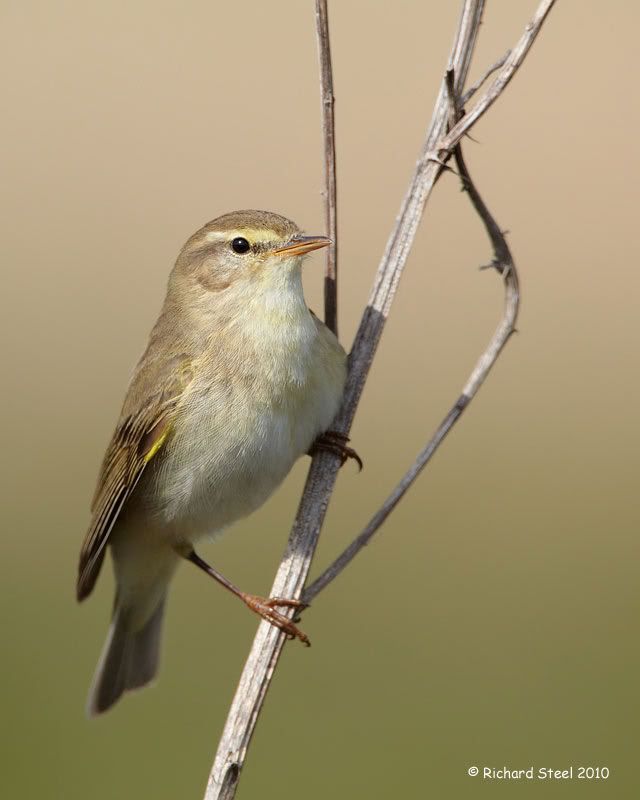
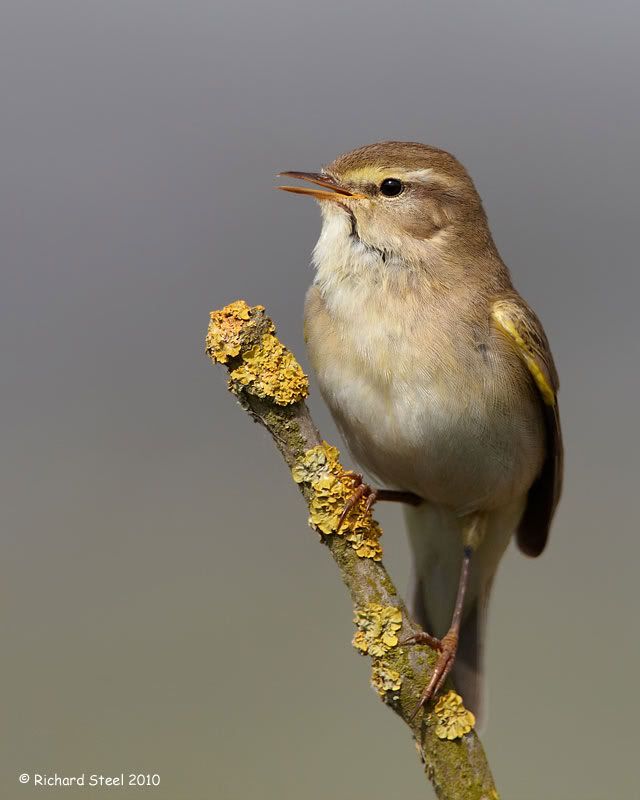
Chiffchaffs bear a very close resemblance to Willow Warblers but tend to have darker legs and less yellow - green colouration.


The main identifying feature however is their unmistakable rather monotonous song from which they derive their name.


The Whitethroat usually arrives in mid April and can easily be located from their rather angry sounding hesitant warbling song. They also tend to give their location away by the males going up in an occasional parachuting song flight.


From a photography point of view there are two features of the birds behaviour that can help with capturing images. Firstly once a male has set up a territory it will tend to use the same perches to sing from and secondly they seem to have an insatiable curiosity and usually will pop up out of a bush to take a look at you.


These are wonderful birds and always seem to be slightly 'angry'.


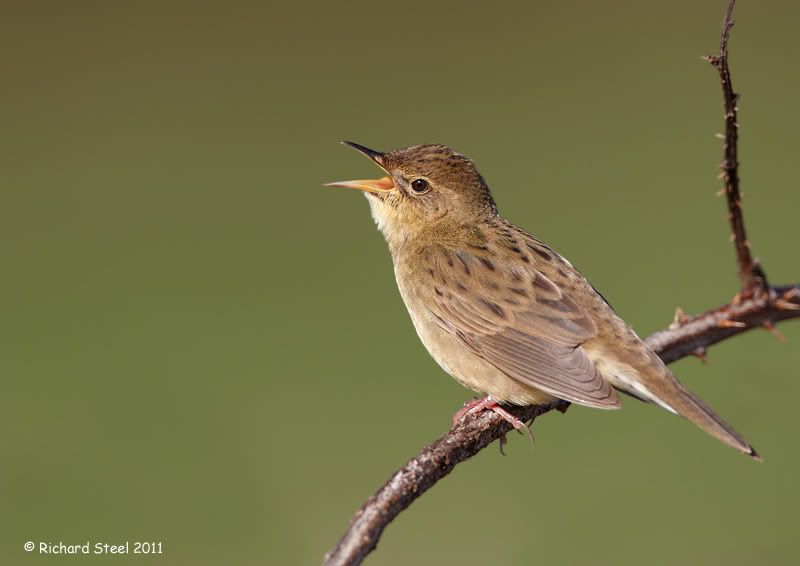
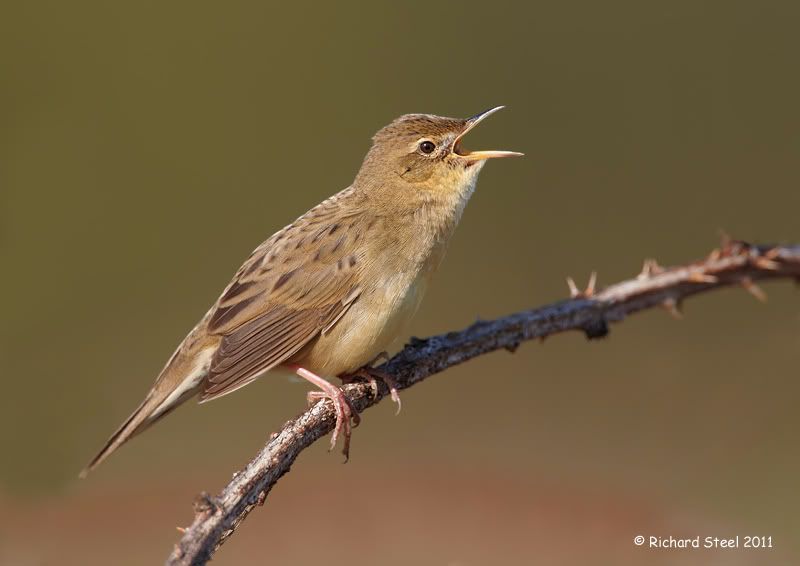
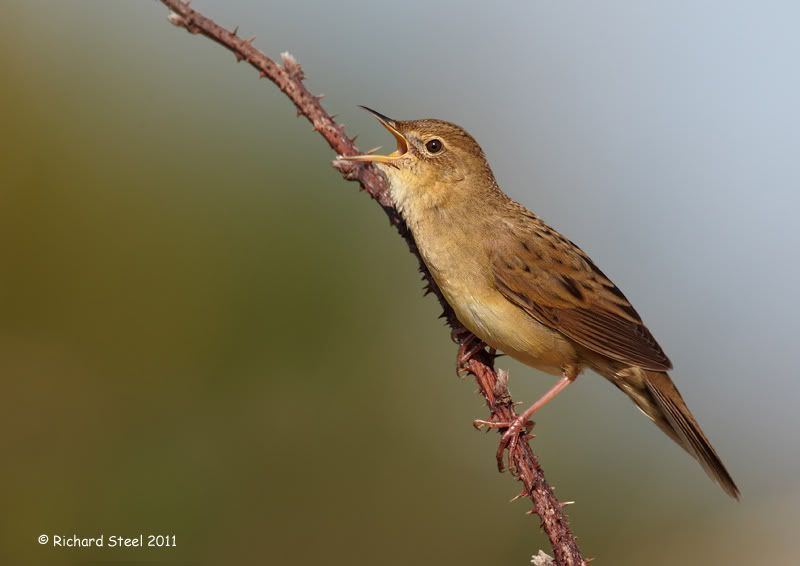
There seems to have been a big influx of Grasshopper Warbler into the UK this year. An early morning session is essential for these birds as often their insect like singing can be over by 8.am.
These are a particularly skulking species and the best time to see them is usually after they have just arrived following migration when the birds will appear on top of brambles to burst in to song.


The whirring song can last for several minutes while the birds turn their heads to project the sound whilst their whole body vibrates. However, I am often surprised by the number of people who are unable to hear their high pitched song.


There are two colour morphs of this bird a yellow and a brown version although the differences are quite subtle and is probably best left to the warbler identification experts.


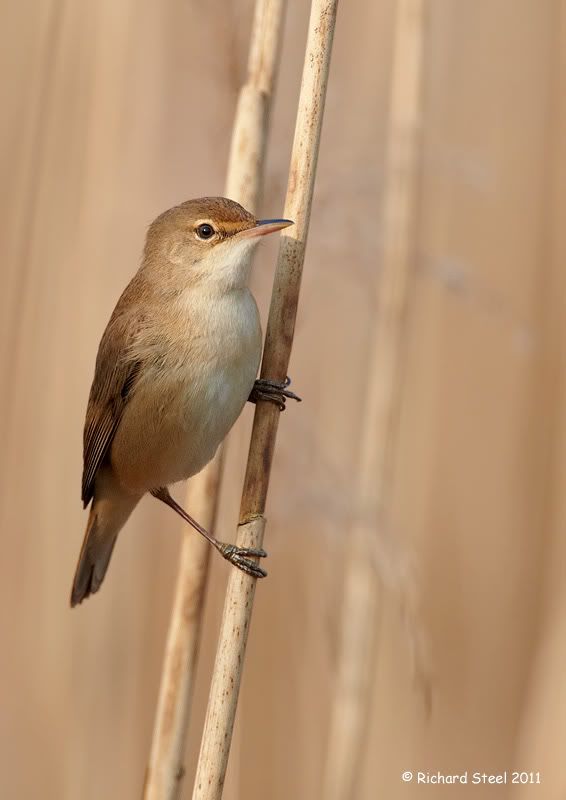
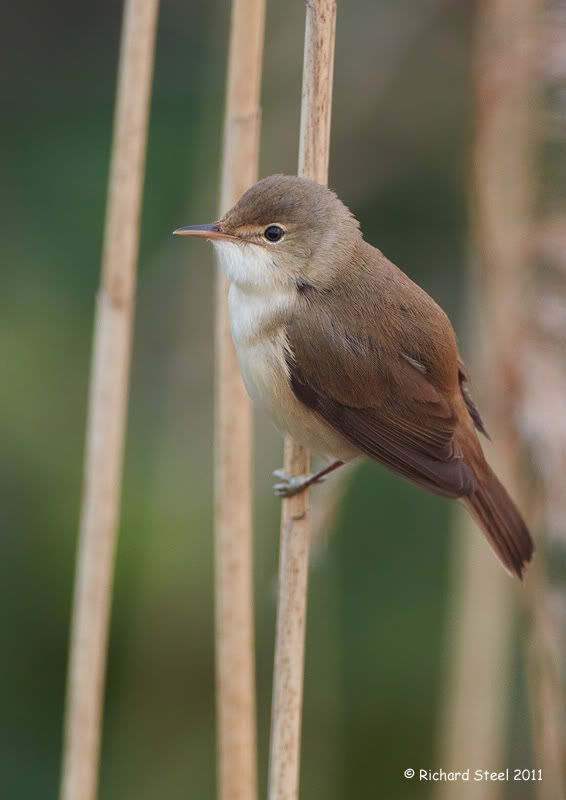
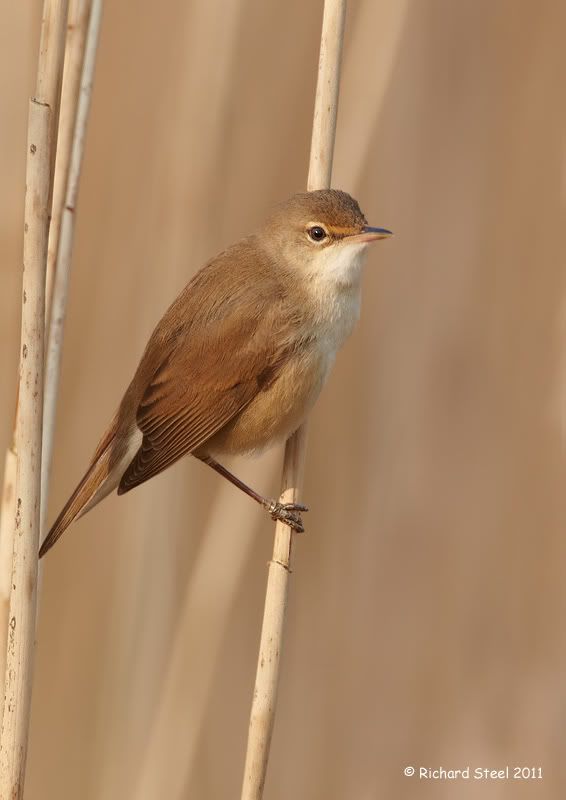
The Reed Warbler is a species I am hoping to spend more time on this year. It is a bird that can provide a rapid route to baldness as it can have you tearing your hair out with the frustrations of trying to get an unobstructed view.


They look quite a different colour under overcast skies or in this case before the sun had risen. Not the most colourful bird but they have looks that are appealing but difficult to define why.


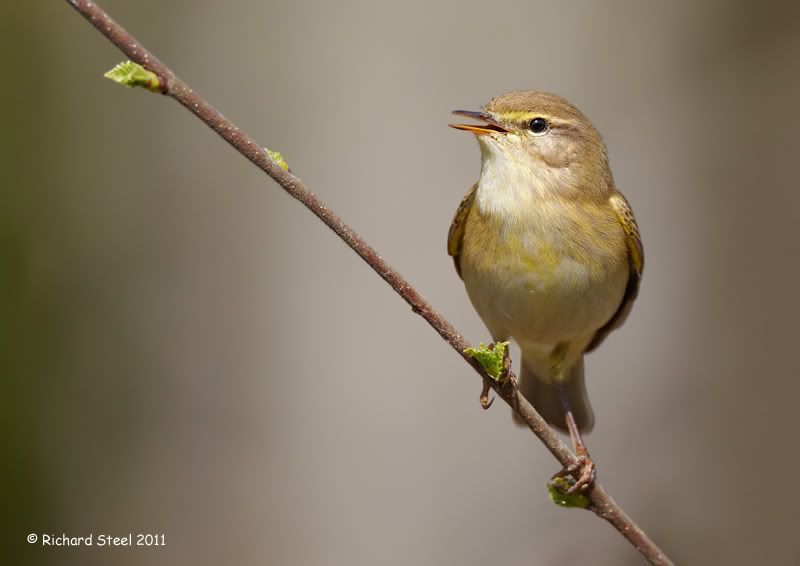
I will finish off this rather long post with the Willow Warbler. A bird that bears a remarkable resemblance to the Chiffchaff.


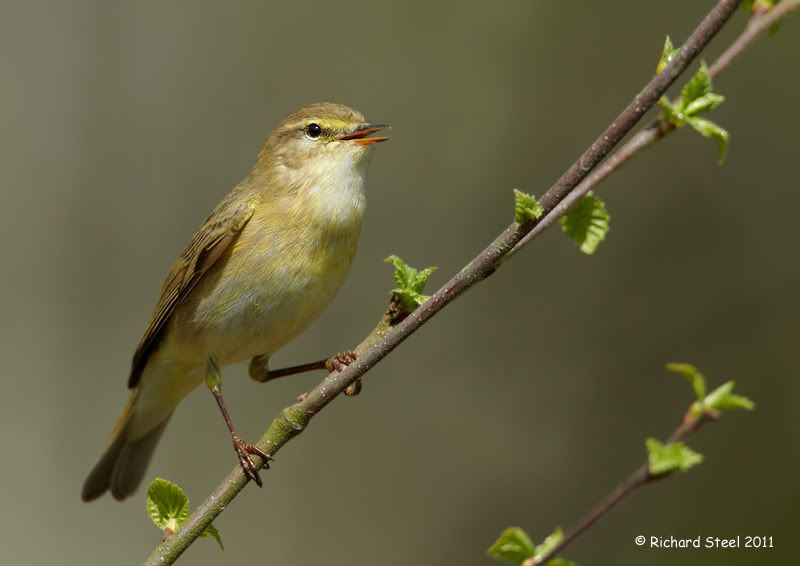
The song is very distinct on these birds, as they flit around in the trees catching insects, which is a gentle warble of descending notes.


I know the song of these birds well as I had one singing continuously through the perpetual daylight of 'night' outside my bedroom window in Arctic Norway last summer.


There is plenty more time ahead for warbler photography as they seem to arrived early this year. They may not be the most colourful birds but certainly make up for this in character and I look forward to many more happy hours in their presence in the coming weeks.

Tuesday, May 11, 2010

Dawn Warblings

For those of you brave enough to face the 5 a.m alarm clock call and head out in to some countryside, you will be greeted with a beautiful dawn chorus at the moment. If your wanderings take you near areas of scrub and reed bed then the warblers add to the musical mix as they sing to claim their territory and attract a mate.

From a photography point of view, warblers are tricky birds with their tendency to lurk in dense vegetation. The brief period of singing before nesting offers some of the best chances to get some photos. However, I love to photograph these birds and in can be very rewarding when it all comes together. Here are some of my recent efforts.
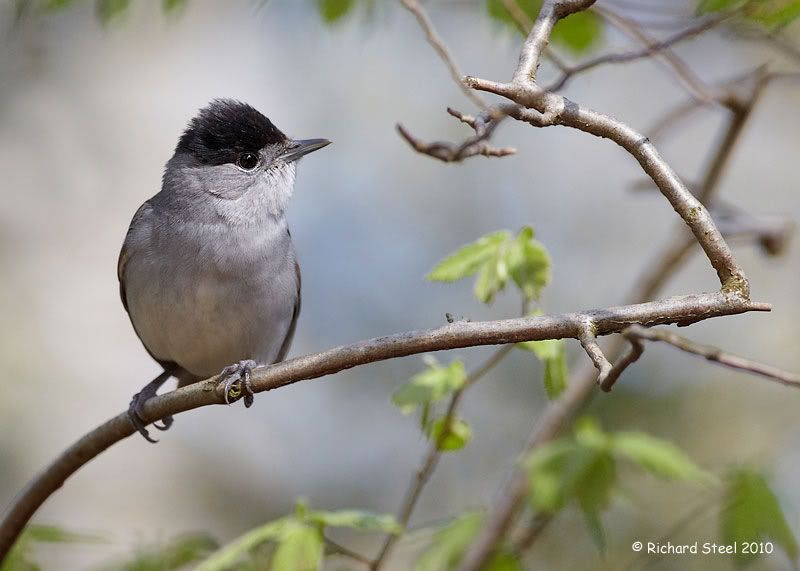
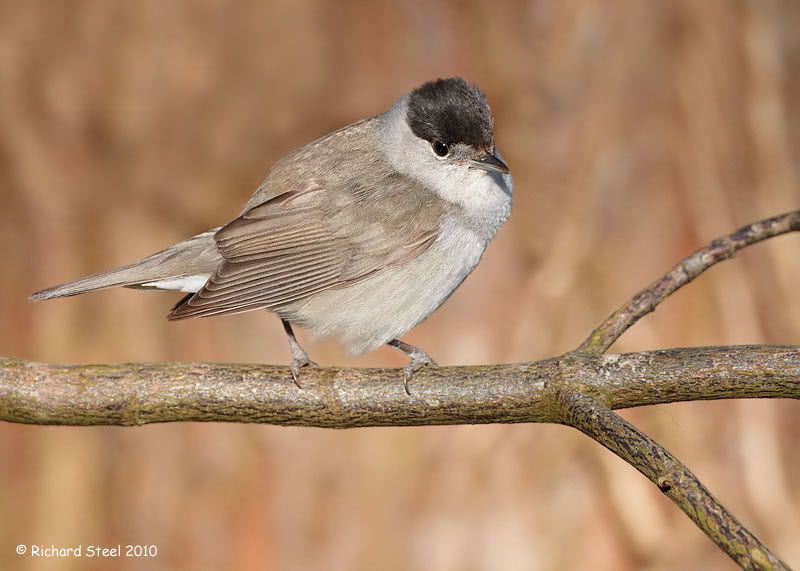
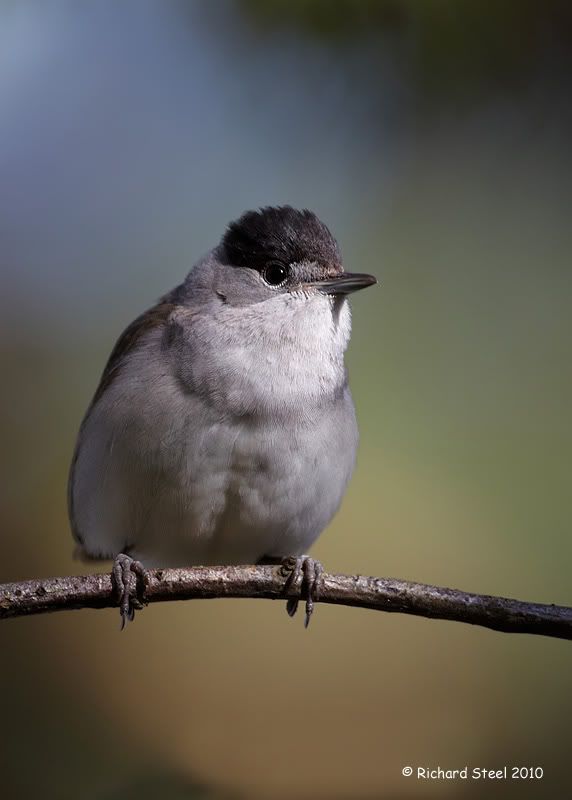
The first bird of this Blog post is the Blackcap, of which there seems to be good numbers around this year. They are usually relatively easy to locate with their characteristic clear, loud and fluid song that sounds a bit like a blackbird but with some extra 'warbles'. However, they are notorious for singing deep with in a shrub and so catching them in a clear area to photograph is a game of patience.
Photobucket

Photobucket

Photobucket

Another good target for the early spring mornings is the Willow Warbler. Visually this is a bird that is easily confused with the Chiffchaff but the lighter coloured legs are a good identification starting point. However, they are easily separated by their songs. The willow warbler song tends to be a series of fluid descending notes that always sound slight sad to me. They tend to stay out in the open more than Blackcap but their very small size and hyperactive nature creates it own photography challenges.
Photobucket

Photobucket

Photobucket

To finish this trio of warbler species, the Common Whitethroat. This species is characterised by a slightly scratchy hesitant song that usually emanates from a bramble or gorse bush.
Photobucket

This is another vegetation skulking bird but it seems to have an endless curiosity and will often come to investigate a person watching with the patience to wait, although its appearance may be brief.
Photobucket

Photobucket

Photobucket

Saturday, May 10, 2008

More Local Wanderings
I always consider myself lucky to have such a great variety of bird habitat on my doorstep, which gives me plenty of different birds to go and photograph. My only wish was that my back garden was of a bigger size and better location to attract a wider variety of birds. The main stay of the visitors are the constantly squabbling Goldfinch which are a welcome and colourful addition to the garden.I have been recently concentrating on some warblers, although the grasshopper warbler have remained elusive. The warblers present a real challenge to photograph mainly due to their preference for lurking deep in vegetation. Here are a few recent photos.
Sedge warbler
Reed warbler, unsurprisngly in some reeds!!Common whitethroat
and Willow Warbler at first lightI am still coming across the occasional migrant wheatear on passage. For this bird I was lying in full camo gear on top of a limestone outcrop close to where a few of these nervous birds were feeding. Fortune shined when one came and landed on a rock right next me.

To finish off this post I found a treecreeper nest the other day. This is a species I have not photographed much so was not going to pass up the opportunity of photographing the birds on their approach into the nest site with beaks full on insects.

LinkWithin

Related Posts with Thumbnails