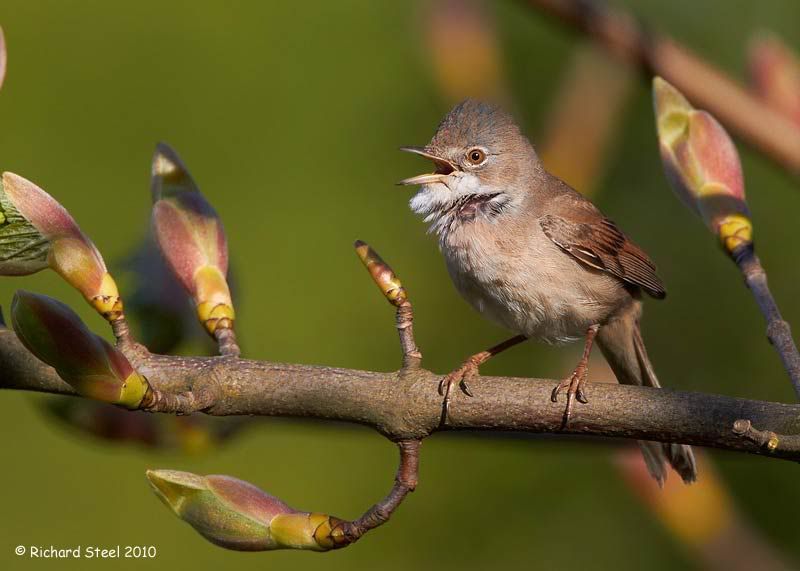
Showing posts with label Blackcap. Show all posts

Friday, July 06, 2012

Hungary for Birds - Day 3: Reflective Bathing

We returned to the hotel after our productive first day in the Tower Hide and the plan was made for the following day's photography. Given that some rain was forecast for the day after the next it seemed sensible to try the Bathing Pool Hide. After a good meal we made our preparations for the next day. When you are on a photography trip the day does not end when you get back to hotel as there are images to download and back-up, batteries to charge, lens to clean etc. I certainly slept well that night.

An early start the at dawn saw us heading further east to an area of woodland just outside the second largest city in Hungary, Debrecen. In the UK we tend to use food to attract birds but in dry areas water can be equally if more attractive for the birds to drink and bathe in to keep their feathers in good condition. The quick draining sandy soils of eastern Hungary makes water a premium and an established pool in the right location can attract a large number of birds from a wide range of species.

I will just take a moment to describe the hide which was accessed down a short track in to the forest. The hide itself was set in to the ground in front of a slightly raised pool of around 5.5 metres in length. This effectively puts the photographer at water level. The pool tapers in width from the hide to the narrower far end, where water spills over like an infinity swimming pool. The sides of the pool were vertical with logs placed on top to create a significant height above the water. The effect of this design is to concentrate all the bird activity in to a small area at the end of the pool. A small clearing was present in the forest beyond the far end of the pool to provide clean backgrounds to the resulting photos.  Such a set up can provide perfect reflections although on the day these were disrupted by a slight breeze rippling the water surface.

Before we settled in to the hide, we made some adjustments to the set-up and laid some moss covered bark at the far end. Within 10 minutes the first birds were arriving. Like a feeding station, the birds came in waves  and as soon as the first appeared it would be joined by many others, no doubt on the basis of safety in numbers from predators like Sparrowhawks.Quiet periods in the day were therefore punctuated by frenzied photography.

The sun beamed down for most of the day creating some quite tricky light conditions as it filtered through the canopy of the forest behind the hide, keeping both us very busy adjusting camera settings to keep a grip of the constantly changing exposure values. So having given you all the background I guess its time to show you some photos of the birds which include some species that were new to me. Given the variety of birds that came through the day I will only show one of two images of each species, and I will not show all of them or this will turn into a very, very long post.

The first birds to arrive were Song Thrush which wasted no time in getting down to the important job of bathing.

The small and highly energetic Blackcap. This was a bird I was going to concentrate on this spring but never got round to it.
Taking a dip.
Usually Blackcap photography is frustrating due to the birds love of lurking in undergrowth so it was good to have them out in the open and I also managed to get my first photos of the brown-capped female.
A female Collared Flycatcher visited regularly but we only had one visit from the black and white male, which had worn  plumage and not looking its best. The male also visited late in the day when the light had become particularly tricky, especially when trying to a pied bird.
Some more familiar birds were amongst the new. These included Jay.
Yellowhammer and Great Spotted Woodpecker.
I will move on to what for me were the 'star' birds of the day. We had a brief visit from a pair of Turtle Dove, which obviously had not been given away to some true love last Christmas ;).These beautiful birds are now sadly a rare sight in the UK.
Throughout the day, we could see a Red-backed Shrike perched in the a tree at the edge of the clearing at the far end of the pool. We were both willing the bird to come in to the pool which it only did once, and very briefly, and landed along the raised side of the pool. Its not the greatest photo, and I will obviously need to return to Hungary to improve upon it :), but my first of the species which is now extinct as a breeding bird in the UK.
A bird which arrived quite late in the day was the beautiful songster, the Nightingale. A bird which I have only previously caught fleeting glimpses but know its liquid song well.

To finish off this post, I have saved one of my favourite birds of the day until last, the Hawfinch. I have wanted to photograph this bird for a long time but it is a difficult and scarce species in the UK with only a couple of distant sites where there are some possible photo opportunities during the winter. We were spoilt with young, females and males all visiting the pool regularly throughout the day.

A young bird.
Female drinking.
The more colourful males.
Sun bathing birds often look slightly strange but this is particularly the case for Hawfinch.
As this is only a small selection of photos from the day, you can see we had a very busy time. The day also brought our only very close encounter with a mammal in Hungary which I will save for the next instalment.

Sunday, December 04, 2011

A Few Along the Way

With my photography I do try and concentrate on sessions aimed at a particular species. Inevitably whilst waiting around or during my wanderings a few other species tend to appear in the viewfinder. Often you may just get one of two photos of these chance encounters and therefore as the year progresses I tend to end up with a small collection of bonus images that I can use for a compilation blog post which is exactly what this one will be.

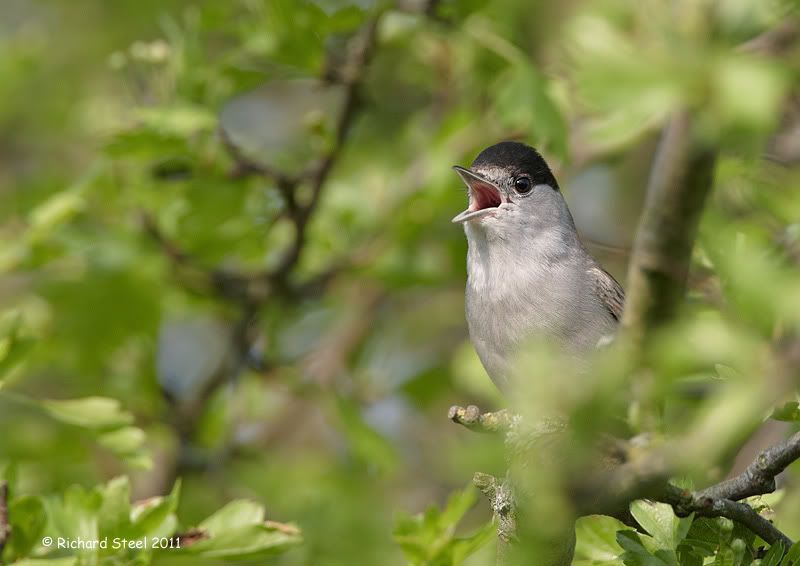
I will start of with spring and whilst walking down to a small reed bed to try and photograph reed warbler, a male Blackcap poked out of a bush and launched in to its loud blackbird like warbling song. I quite liked bird partially obscured by vegetation in this image as this a good representation of a typical view.
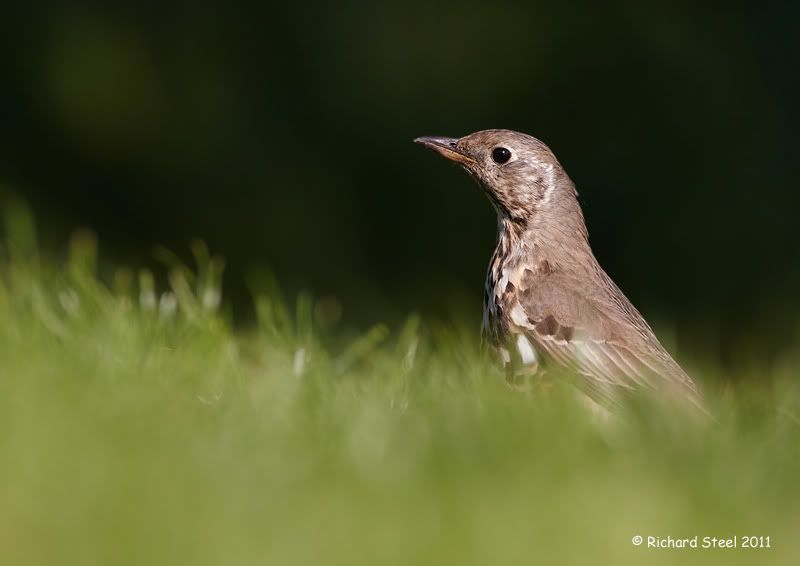
I live on the road which has the tidal River Mersey at the bottom and whilst walking down the hill to look for some wading birds on the beach, I cut through the park where there are some very approachable Mistle Thrush. Fortunately the maintenance people leave some areas of longer grass to allow some interesting low angle photos to be taken
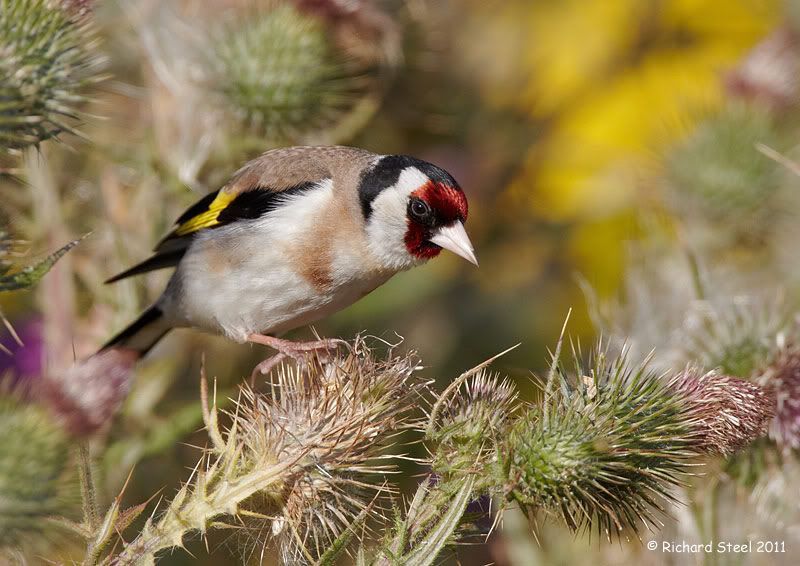
During a session looking for some hares I came across a large clump of thistle which the local Goldfinches were doing their best to strip of all it seeds.
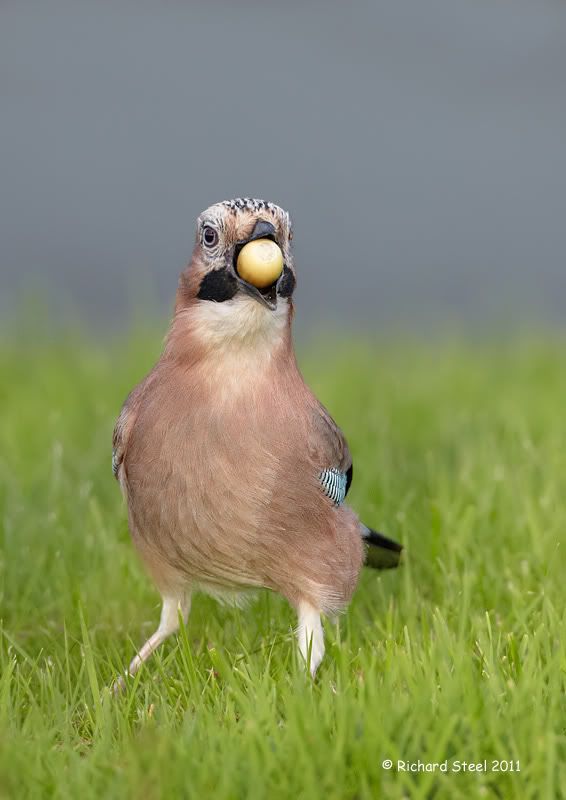
Another bird encounter during my search from hares, a Jay in the process of taking on board an acorn to go and bury somewhere for the winter.
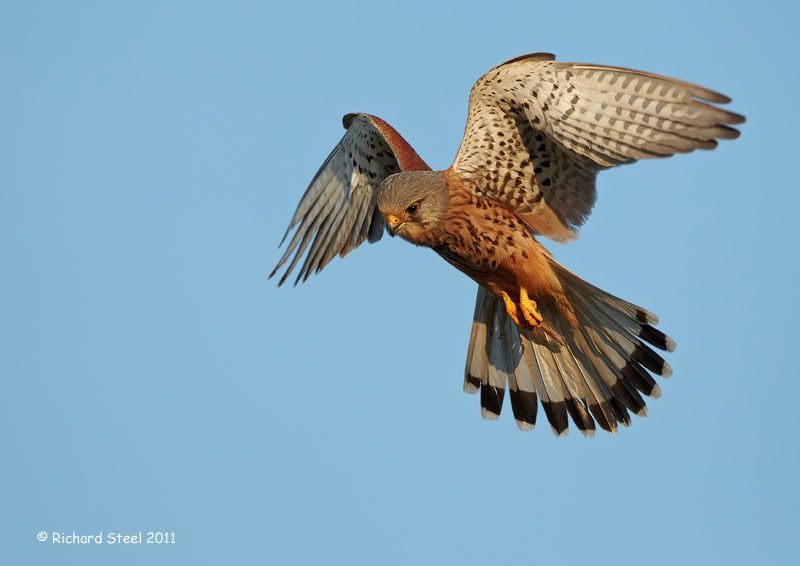
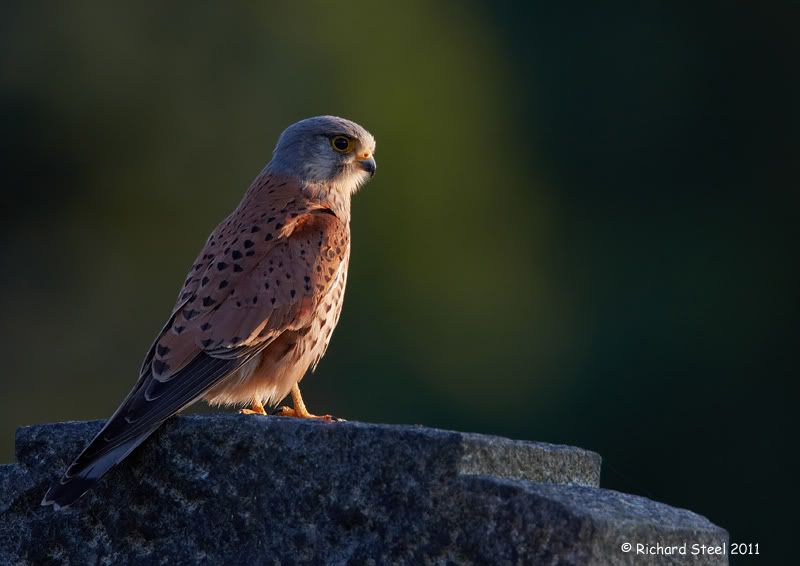
I occasionally visit a graveyard where there is usually a relatively 'friendly' female Kestrel. On this occasion there was no sign of 'Mavis' as she is fondly known, but I did manage to get a couple of images of a male bird in some late in the day light.
Perched on a gravestone
Hovering low looking for worms and voles.
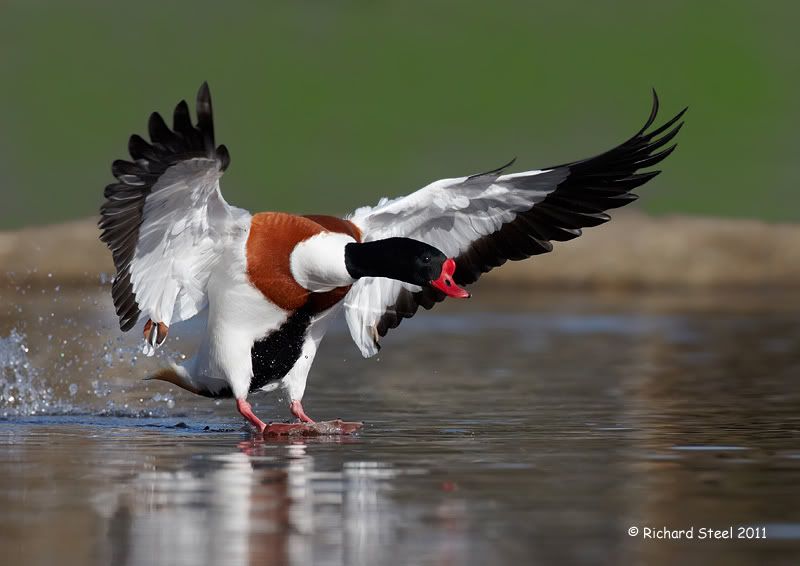
I also keep an eye on one of the local duck ponds as sometimes something more unusal the the flocks of mallard will arrive. A Shelduck unexpectedly 'crash' landing.
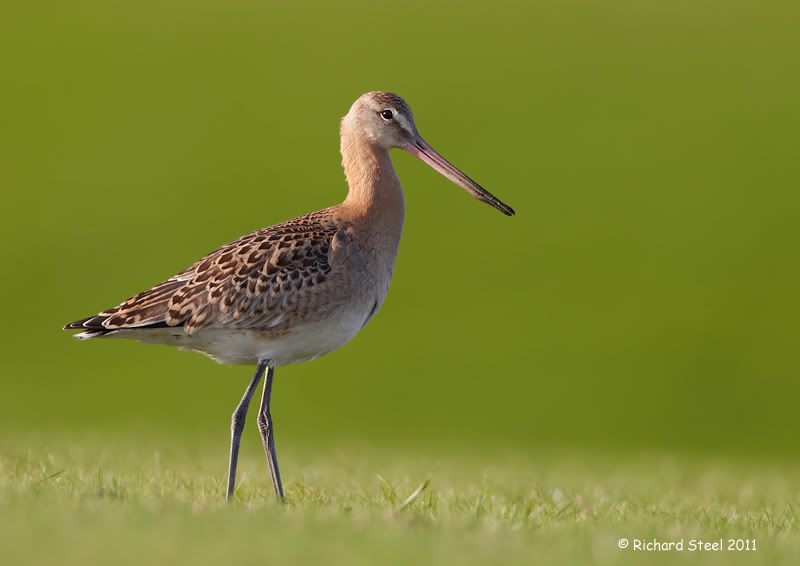
I try and keep my camera by my side as often as possible for unexpected moments. While driving to work one morning, I spotted a young Black-tail Godwit feeding on the fields behind the local promenade. Well it would have been a crime to drive by with out taking a few photos. It is fortunate I always tend to leave early for my trip to the office in case of such events.
Obviously these are just a few of the 'extras' I have encountered during this year but each one has been a welcome and special moment.

Tuesday, May 11, 2010

Dawn Warblings

For those of you brave enough to face the 5 a.m alarm clock call and head out in to some countryside, you will be greeted with a beautiful dawn chorus at the moment. If your wanderings take you near areas of scrub and reed bed then the warblers add to the musical mix as they sing to claim their territory and attract a mate.

From a photography point of view, warblers are tricky birds with their tendency to lurk in dense vegetation. The brief period of singing before nesting offers some of the best chances to get some photos. However, I love to photograph these birds and in can be very rewarding when it all comes together. Here are some of my recent efforts.

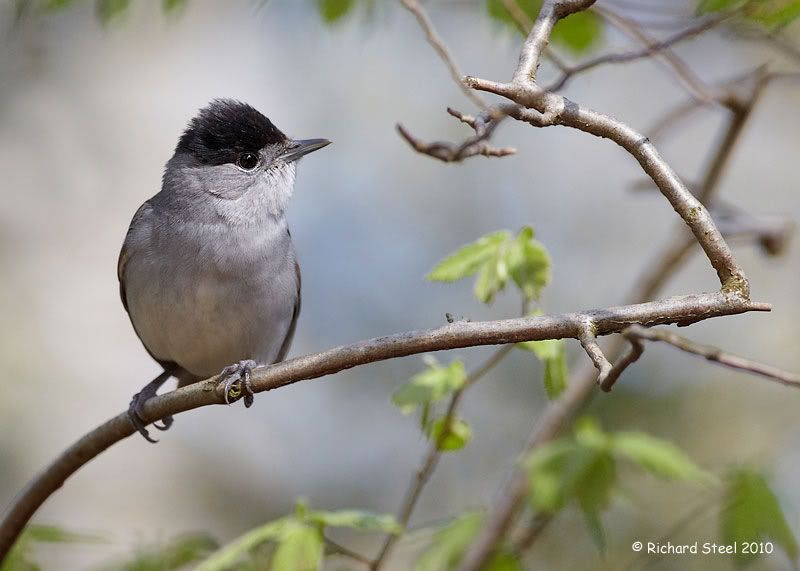
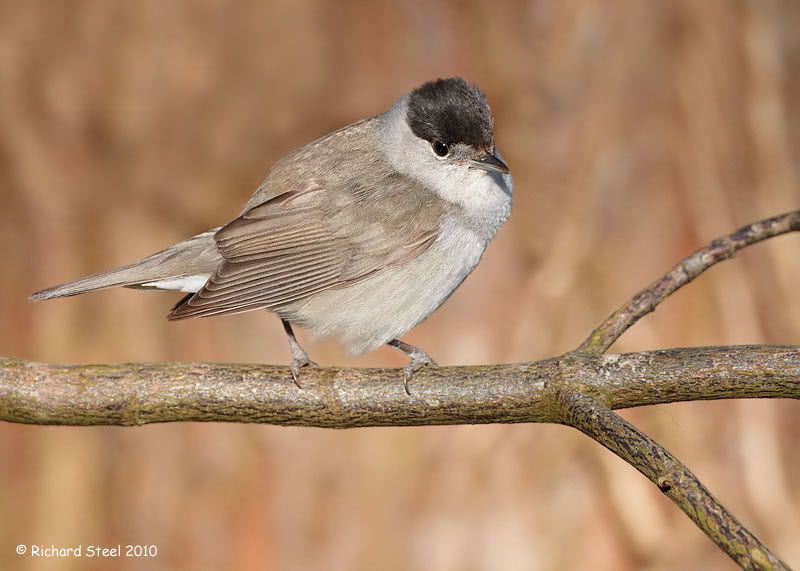
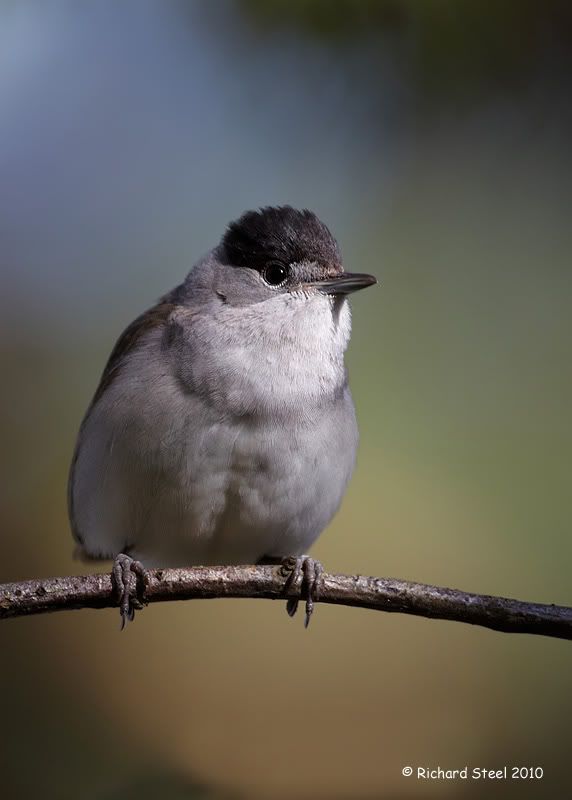
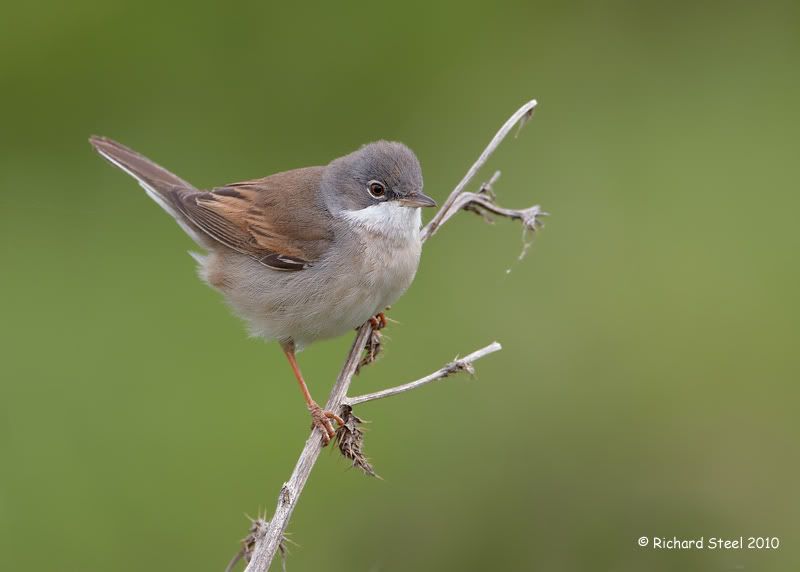
The first bird of this Blog post is the Blackcap, of which there seems to be good numbers around this year. They are usually relatively easy to locate with their characteristic clear, loud and fluid song that sounds a bit like a blackbird but with some extra 'warbles'. However, they are notorious for singing deep with in a shrub and so catching them in a clear area to photograph is a game of patience.
Photobucket

Photobucket

Photobucket

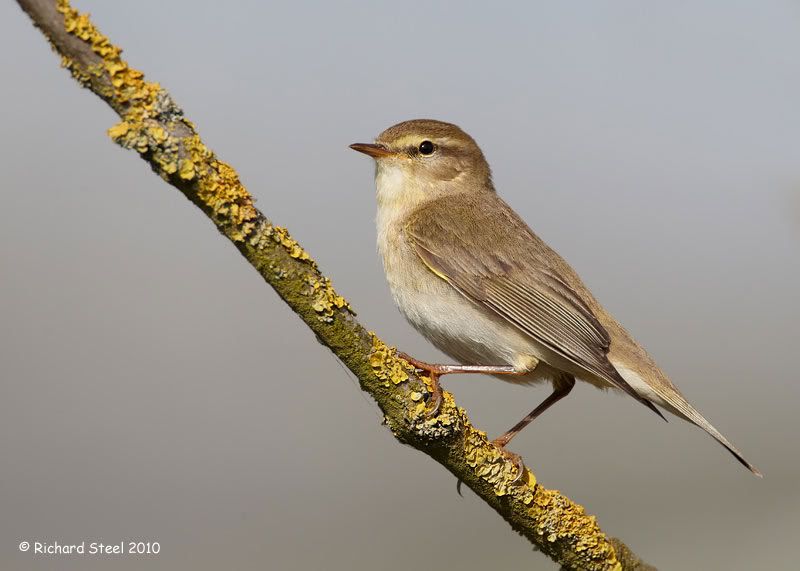
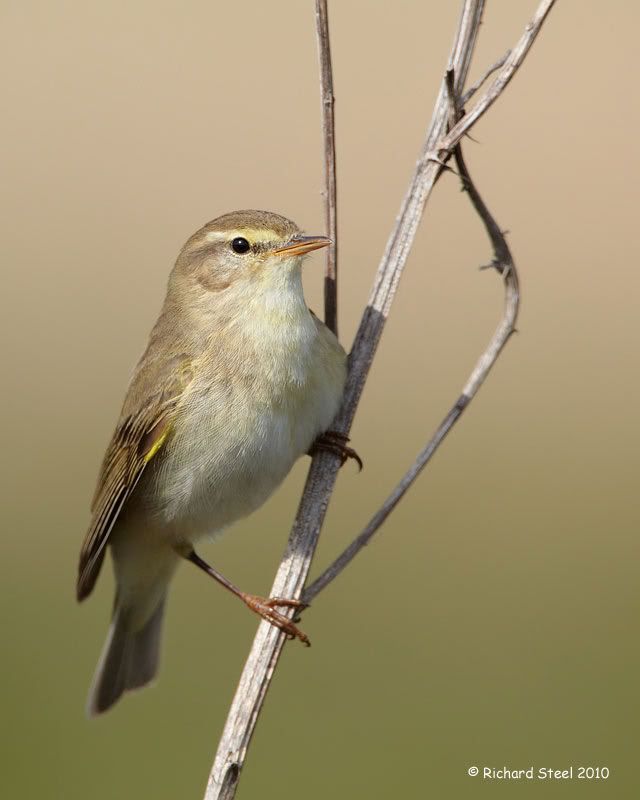
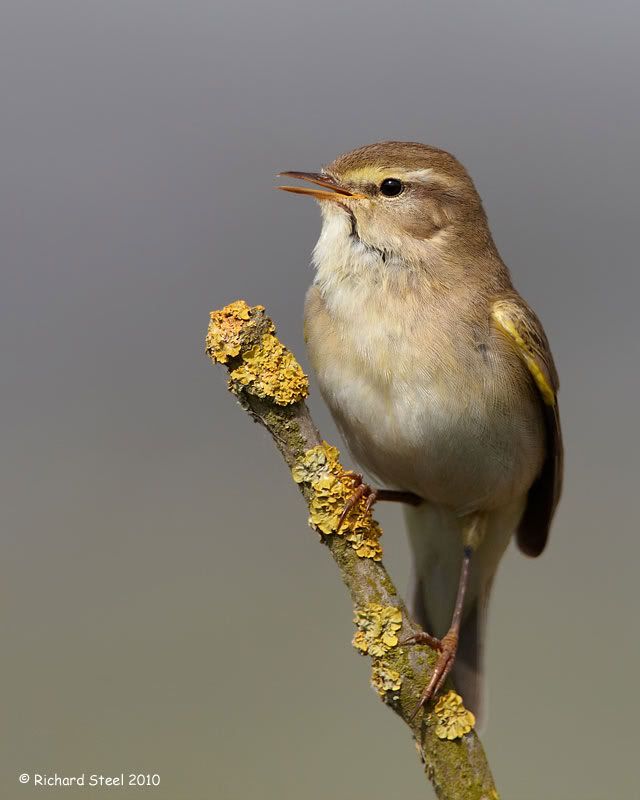
Another good target for the early spring mornings is the Willow Warbler. Visually this is a bird that is easily confused with the Chiffchaff but the lighter coloured legs are a good identification starting point. However, they are easily separated by their songs. The willow warbler song tends to be a series of fluid descending notes that always sound slight sad to me. They tend to stay out in the open more than Blackcap but their very small size and hyperactive nature creates it own photography challenges.
Photobucket

Photobucket

Photobucket

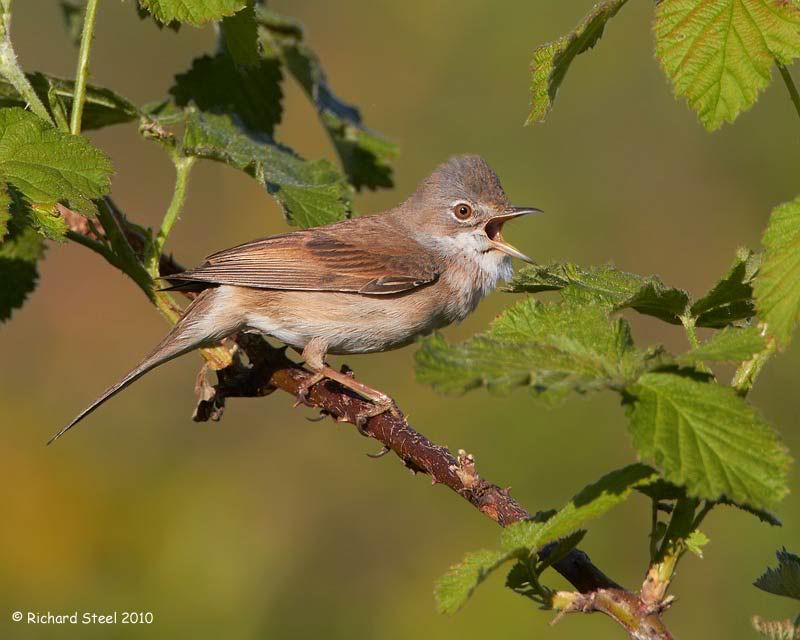
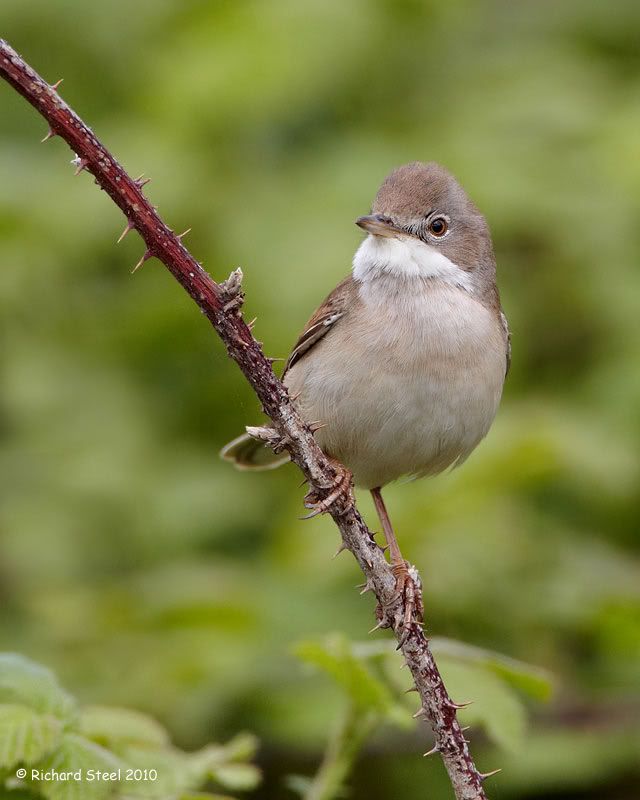
To finish this trio of warbler species, the Common Whitethroat. This species is characterised by a slightly scratchy hesitant song that usually emanates from a bramble or gorse bush.
Photobucket

This is another vegetation skulking bird but it seems to have an endless curiosity and will often come to investigate a person watching with the patience to wait, although its appearance may be brief.
Photobucket

Photobucket

Photobucket

Monday, April 23, 2007

Dunnock and Blackcap

I had a session in some local woods recently and there were a few dunnock that kept hopping up on to perches and bursting into full song. I was not going to waste the oppoetunity as normally the shots of them are when they are scurrying around the ground looking for food.
Blackcaps have always remained elusive to be. I have seen many of them but never been in the right place for a shot. They are normally easy to find from their song but their skulking behaviour which usually see them deep in undergrowth normally results in any photographs having the bird partially obscured by vegetation, like this singing male.

However, on this session I finally managed to get a couple of shots of birds out in the open.

LinkWithin

Related Posts with Thumbnails