
Swallowing Swallows
I have not had much time with the camera lately as I have been very busy in work. As I pulled in to my office car park yesterday, I noticed a row of recently fledged swallows lined on along the fence of the adjacent field. I had about 20 minutes left of my lunch hour so decided to put it to some use.
Adult swallows feeding their young is great fun to watch as the usually do it on the wing, swooping in and dropping off the food before carrying on their hunt for more. In terms of photography you are provided with an early warning of an approaching adult by the young birds.
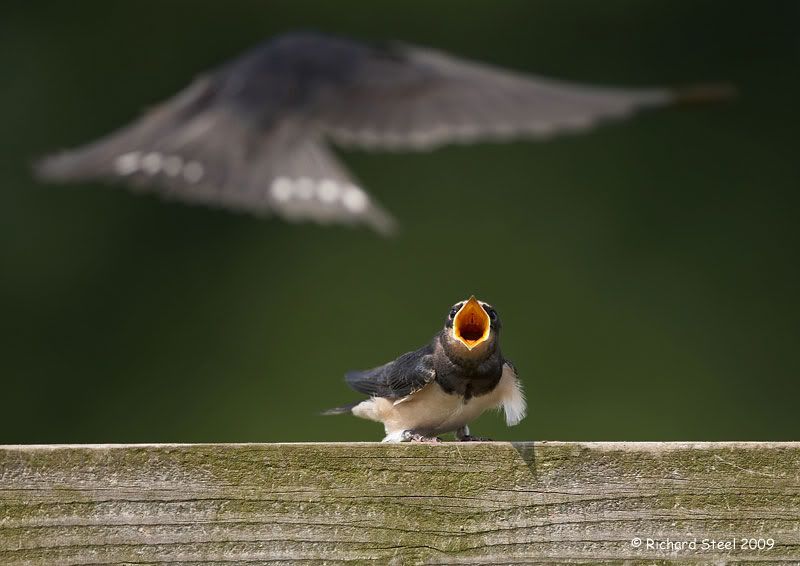
The fluttering wings and gaping mouth a sure sign that food is en route and its time to get ready with the shutter finger.
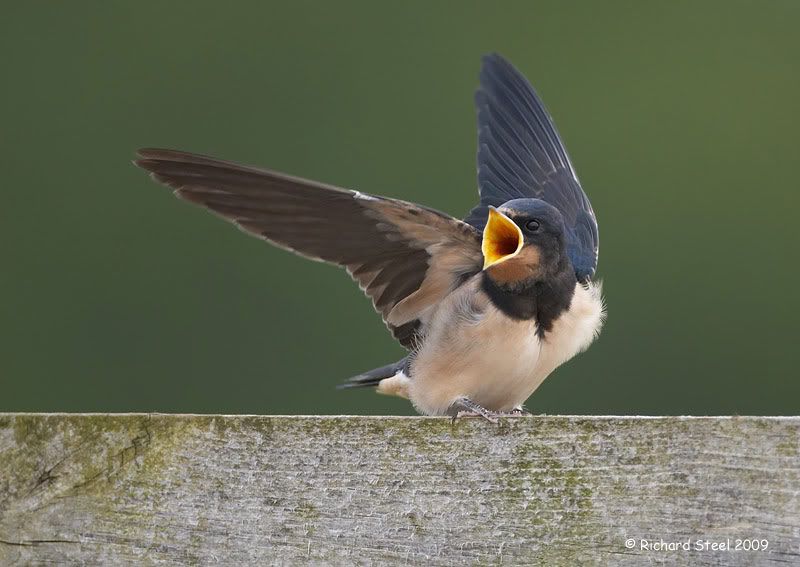
The flying skills of the adults to deliver their food payload with such accuracy has to be admired.
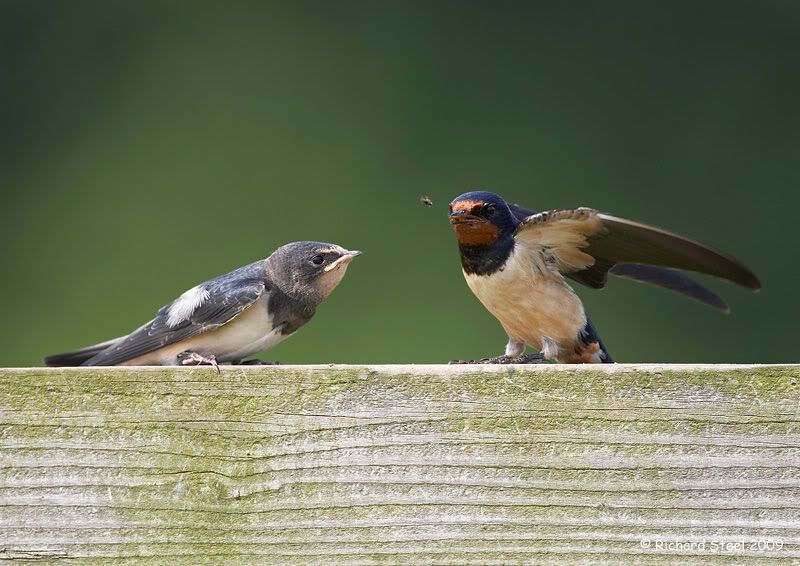
However, this adult landed next to the young bird and released a live fly which was then watched flying off by the fledgling whose reactions where too slow.
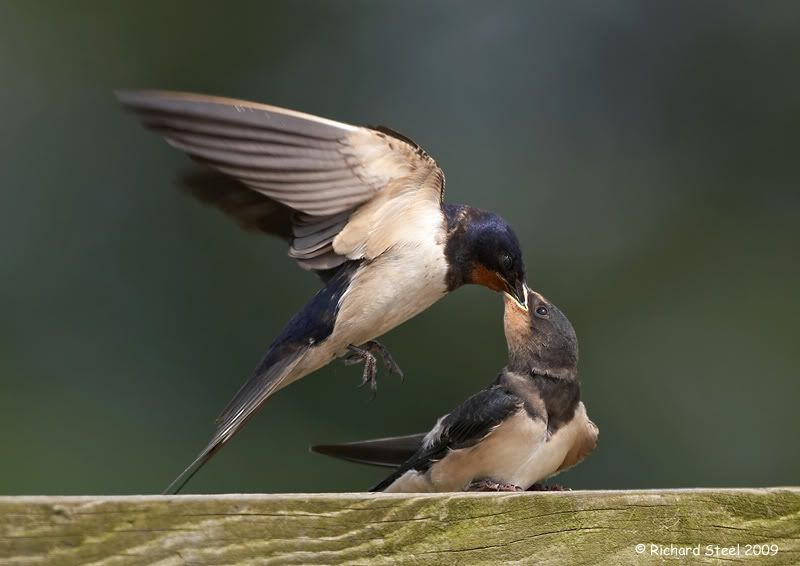
Precision hovering in front of the young one
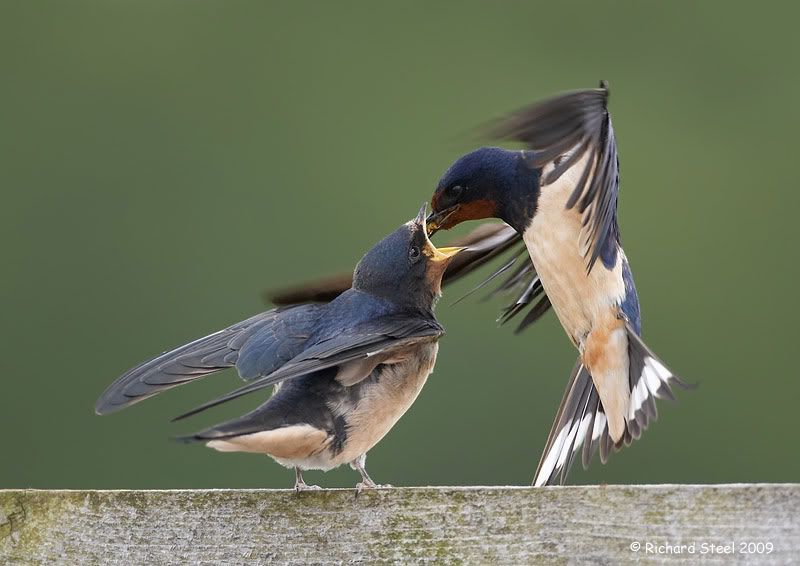
Is this why they are called swallows?
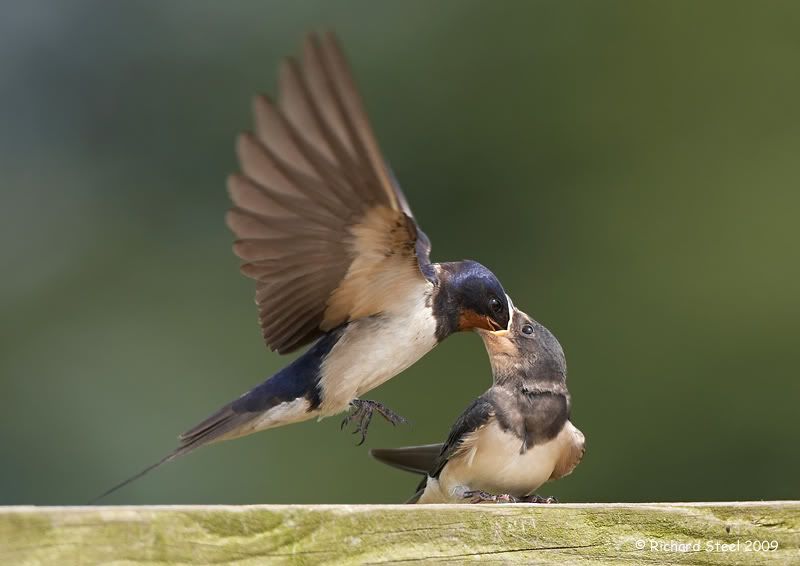
The fifteen minutes was over all to quickly and I returned back in to the office to carry on working through some spreadsheets. I had a quick scan through the photographs and did not get the image in my head that I wanted to capture so thought I would give it an hour when work had finished. Unfortunately during the course of the afternoon the clouds gathered overhead which by the end of work had turned into a steady downpour of rain.
I have not had much time with the camera lately as I have been very busy in work. As I pulled in to my office car park yesterday, I noticed a row of recently fledged swallows lined on along the fence of the adjacent field. I had about 20 minutes left of my lunch hour so decided to put it to some use.
Adult swallows feeding their young is great fun to watch as the usually do it on the wing, swooping in and dropping off the food before carrying on their hunt for more. In terms of photography you are provided with an early warning of an approaching adult by the young birds.
The fluttering wings and gaping mouth a sure sign that food is en route and its time to get ready with the shutter finger.
The flying skills of the adults to deliver their food payload with such accuracy has to be admired.
However, this adult landed next to the young bird and released a live fly which was then watched flying off by the fledgling whose reactions where too slow.
Precision hovering in front of the young one
Is this why they are called swallows?
The fifteen minutes was over all to quickly and I returned back in to the office to carry on working through some spreadsheets. I had a quick scan through the photographs and did not get the image in my head that I wanted to capture so thought I would give it an hour when work had finished. Unfortunately during the course of the afternoon the clouds gathered overhead which by the end of work had turned into a steady downpour of rain.


 This meadow pipit was also half asleep
 A reed warbler kept me busy for quite a while in a small patch of reeds, as it was playing hard to get a clear shot amongst he reed stems.
 A few swallows were buzzing around collecting nesting material. Amongst them I spotted a distinctly different looking bird which had a bright orange breast, compared to the normal cream colouration. This was either a well coloured bird or possibly one from the eastern Mediterranean which show this type of colouration.
 The search for the elusive yellow wagtail? Well I managed to find one and to get one in front of the camera which is a start but still not have achieved the photo that I am after.
 and collecting nesting material

 and a swallow
 This landing drake mallard in eclipse plummage also caught my eye.
 as did this Black-headed gull 'walking' on the waves.
 I also caught a passing turnstone the other day on the local beach in some better light.

 and a swallow on perch rather than a wire for a change
 On the way home I popped into a local site and as I was pulling up in the car noticed a female linnet hopping around collecting dog hair, presumably to line a new nest.


 Plenty of noisey sedge warbler in the reedbeds
 Linnet and Stonechat
 Pied Wagtail
 and the highlight of the visit for me a close encounter with a male Northern Wheatear.


 Posts
Posts


