Showing posts with label Razorbill. Show all posts

Wednesday, June 13, 2012

More Bempton Flyers

Apologies for the delay in updating the blog but I was away in eastern Hungary last week photographing birds. It was a good trip with lots of exciting bird species and I will take you on my journey there in future blog posts.

This post is a follow on from my last about my visit to Bempton Cliffs. Apart from the Gannets the cliff faces support a wide range of other sea birds and there is plenty of opportunity for taking flight photos of these birds as they pass-by. One of my favourite UK sea birds is the Fulmar and I was hoping to take some more photos than just this single image. It may be I was just stood in the wrong place at the wrong time as usually good numbers of photographs of these birds can be photographed at Bempton. You have to admire the Fulmar as it effortlessly glides with stiff wings on the up-draft coming up the cliff face.
A very common species at Bempton are the Kittiwake, so named after their characteristic call, which to me only slight sounds like their name. These proved quite difficult to photograph on the day due to the strong wind and their twisting and turning noisy flights along the cliff.
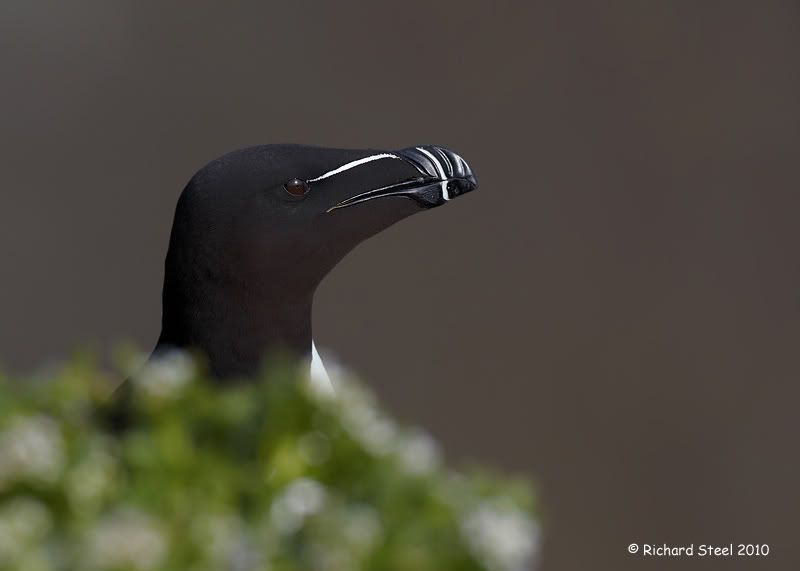
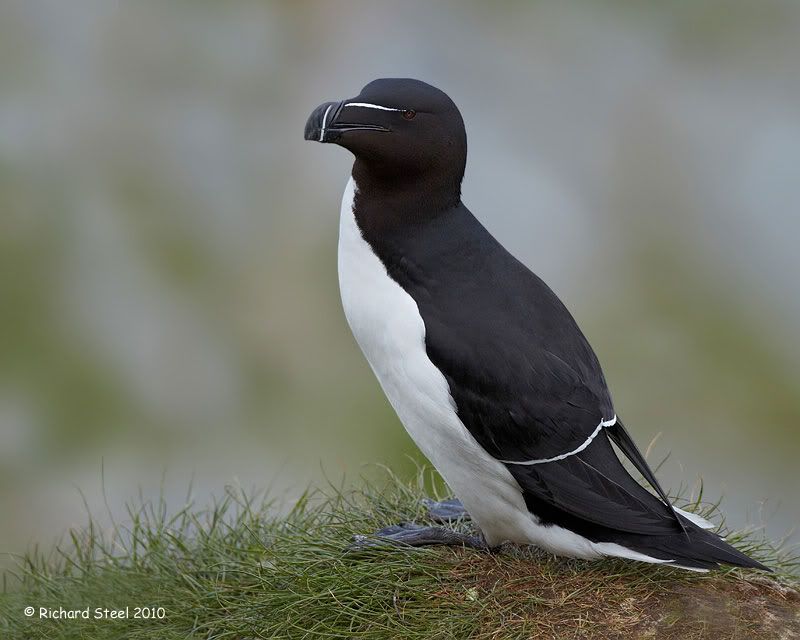
Puffins are present at Bempton but generally too far down the cliff to get decent photographs and so I concentrated my efforts on the other two auk species the Guillemots, and a particular favourite the Razorbill.
The Guillemots are less elegant in the air than other sea bird and their wings always seem slightly small in relation to their body which is superbly adapted for swimming.
The birds are a challenge to photograph in flight as they are small and very fast. I noticed at the point where I was stood on the cliff top path, where it ran very close to the cliff edge, that there were a number of Razorbills coming in to land at close range. However, the time window for getting photos was going to be very short as you needed to spot a bird coming into this area, lock on with the camera and take the photos before it disappeared behind the grass at the cliff top. This was further complicated by the fact that capturing birds that are flying towards you is probably the most difficult for the camera autofocus system to deal with. The unusual coloured background on these following photos is the sea below the cliff.
I just managed to catch this one before it disappeared behind the grass.
As I was effectively shooting downwards to the birds coming up the cliff face to land it gave the appearance that I was level with them.
So if you happen to find yourself in north-east Yorkshire I would strongly recommend a visit to Bempton, which can provide some great sea bird photography. One real benefit of Bempton is that there is no uncertainty whether the boat will be cancelled, as is often the case if you visit one of the sea bird colonies on the offshore islands around the UK.

Friday, July 30, 2010

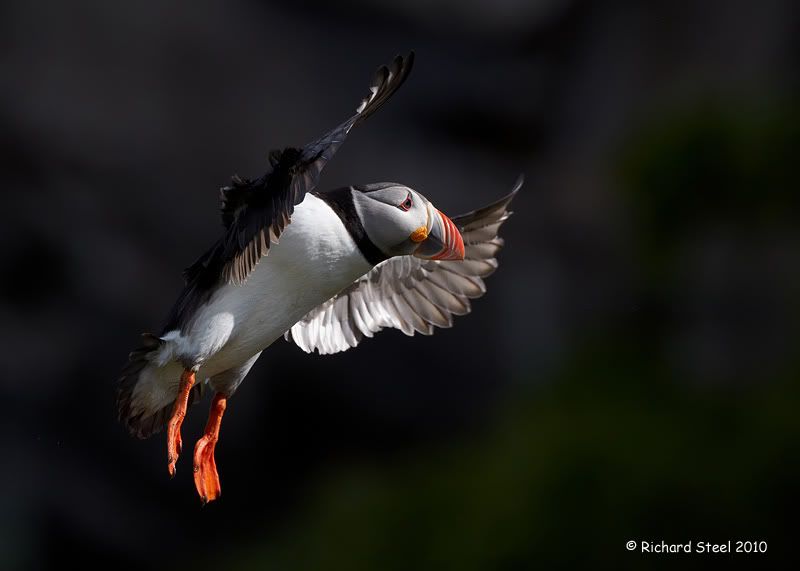
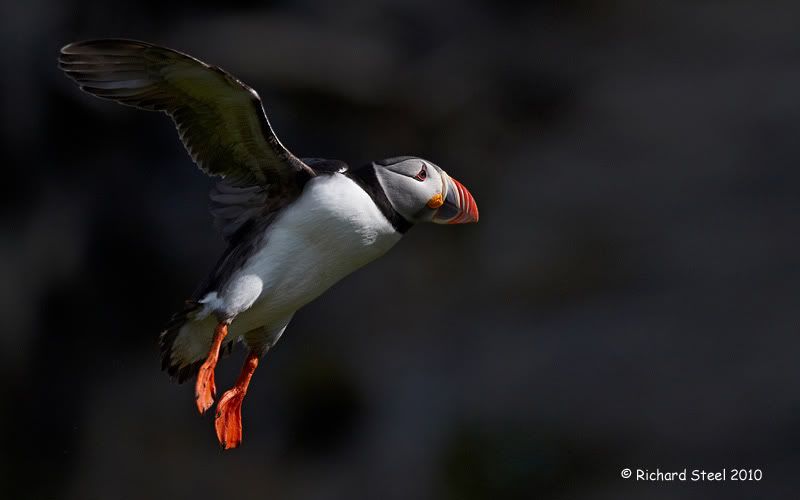
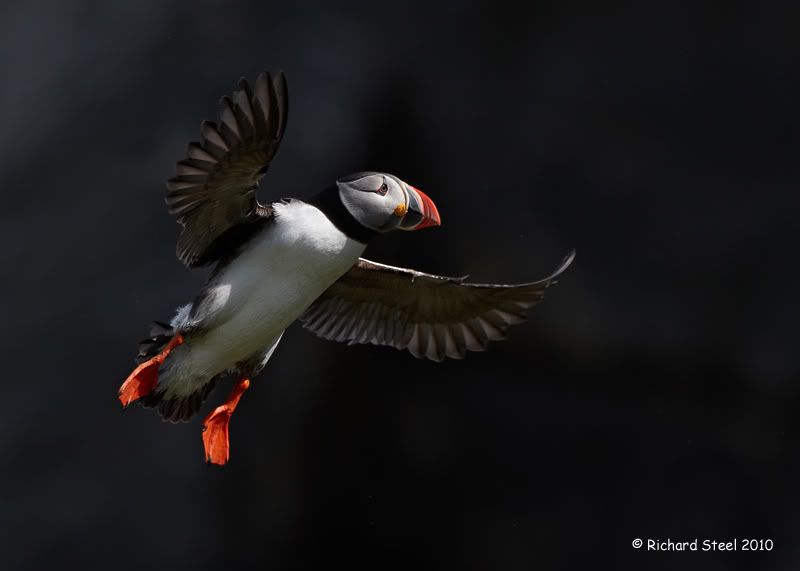
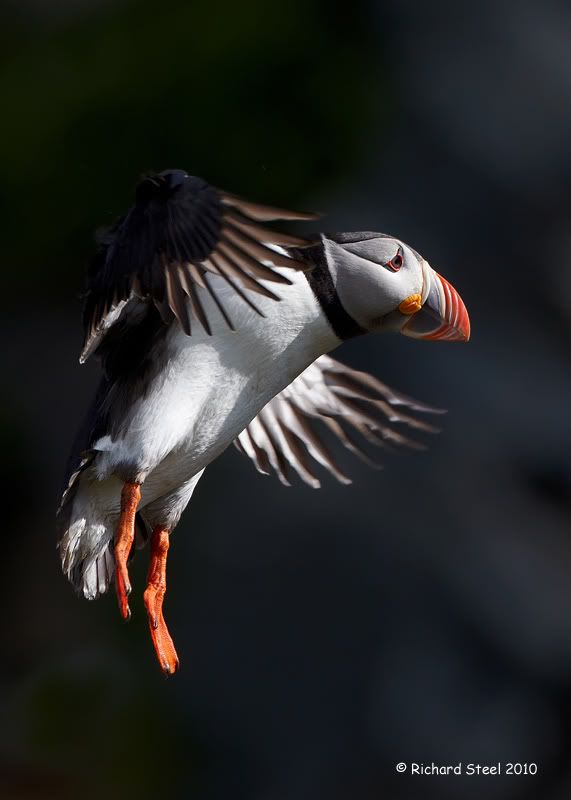
Inside the Circle Day 7 Part 1 - Puffin Fever

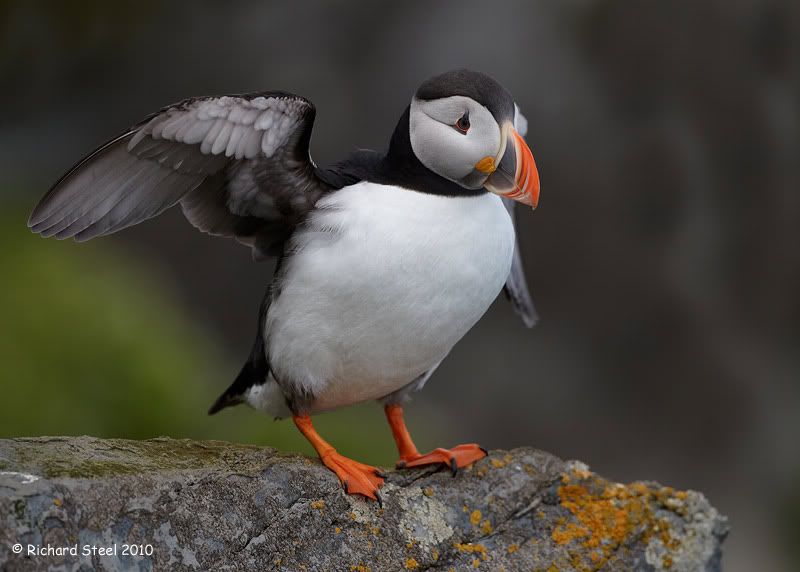
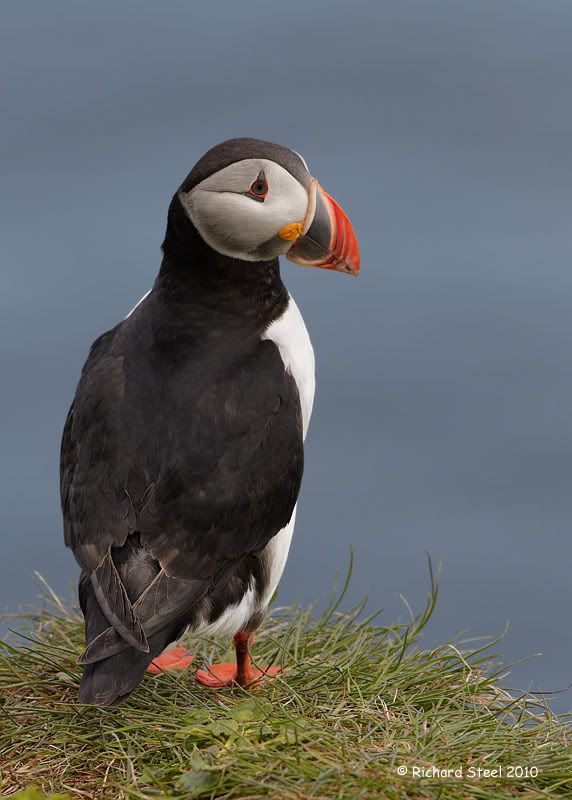
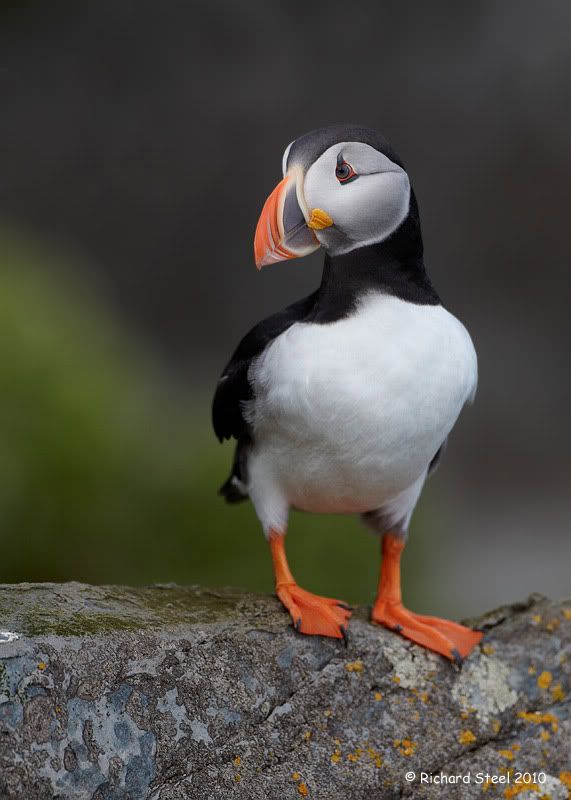
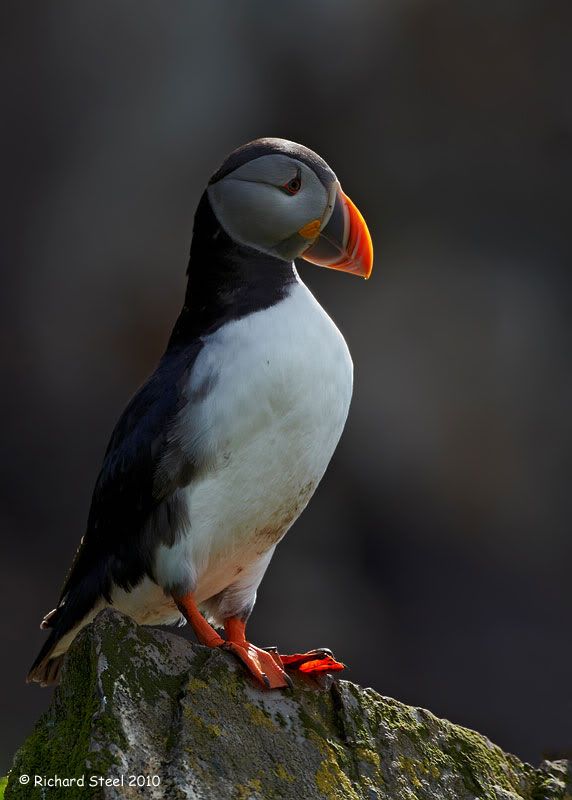
As I made the two hour drive north, I started to repeat the mantra 'ignore the puffins, ignore the puffins'. I wasn't suffering from to much northern daylight but was traveling to catch the 9am boat from Vardo to the sea bird colonies on Hornoya Island. The mantra repeating continued,to try ward off 'Puffin Fever' on landing, as I took the ten minute inflatable boat journey across a calm but dark sea. 'Puffin Fever' is a common affliction of photographers visiting sea bird colonies and has the main symptom of becoming completely absorbed in photographing these charismatic and colourful birds. The danger of the 'fever' is that it is painless and enjoyable and results in an absence of photos of the other wonderful seabirds present. All my target species were decidedly non-puffin.

On landing I took the path to the south which skirts round and upwards to the lighthouse. It turned in to a bit of hike. On reaching the top there were a few puffins on ledges just over the cliff edge. Razorbill were the only other species on offer and I resisted the pull of the 'fever' and took a few photographs.

Photobucket


Photobucket

It was at this point I made the mistake of thinking it would do no harm and may ward off the 'fever' just to take a couple of puffin photographs before I went off around the other side of the island to search for my target species.

Photobucket

Photobucket


Photobucket

As I made my way back around the island fully loaded with camera kit I came to a long flight of wooden stairs. I stepped on to the first step at the top only to see my legs suddenly appear from underneath me and horizontally in front of me. I am not sure how but I manage to stop the fall about three steps further down. If I hadn't it would of been messy, a lucky escape from serious injury.

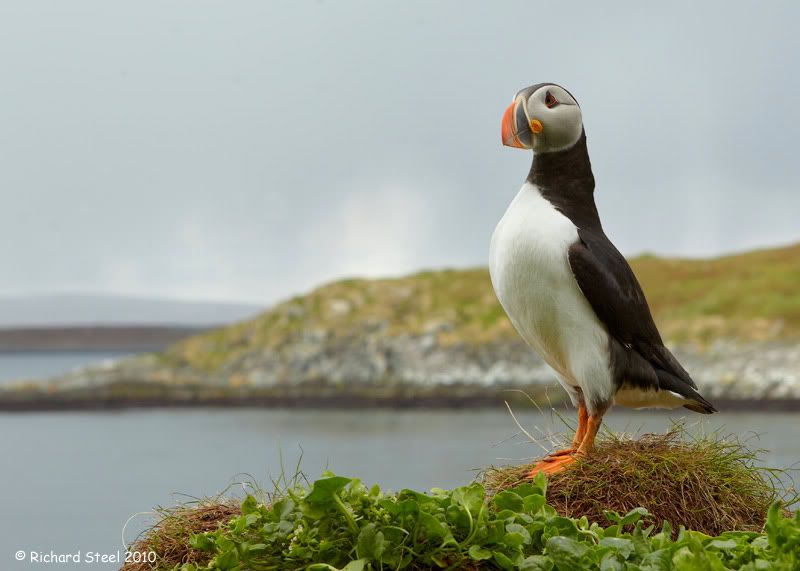
When I reached the far side of the island and to the base of a high vertical it became quickly obvious that my target species were high up on the cliff face and out of camera range. Meanwhile hundreds of puffins were streaming in around me from the sea and the 'fever' took hold. I thought I would try something I had want to do for a while which was take a couple of photographs using a wide angle lens to get images of birds in the landscape. I had forgotten how close you have to get to your subject with a 24-70mm lens as I crawled up the side of an enormous boulder to a bird perched on the top. The bird standing proud over its offshore domain.

Photobucket


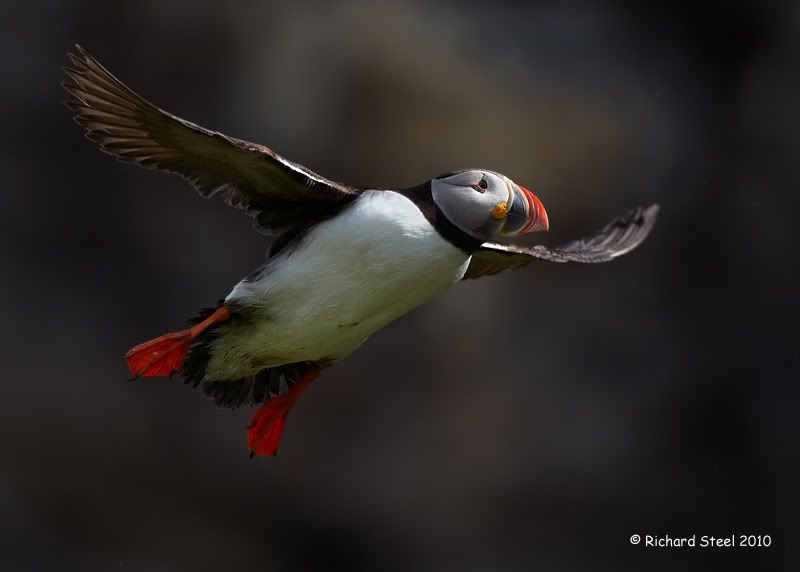
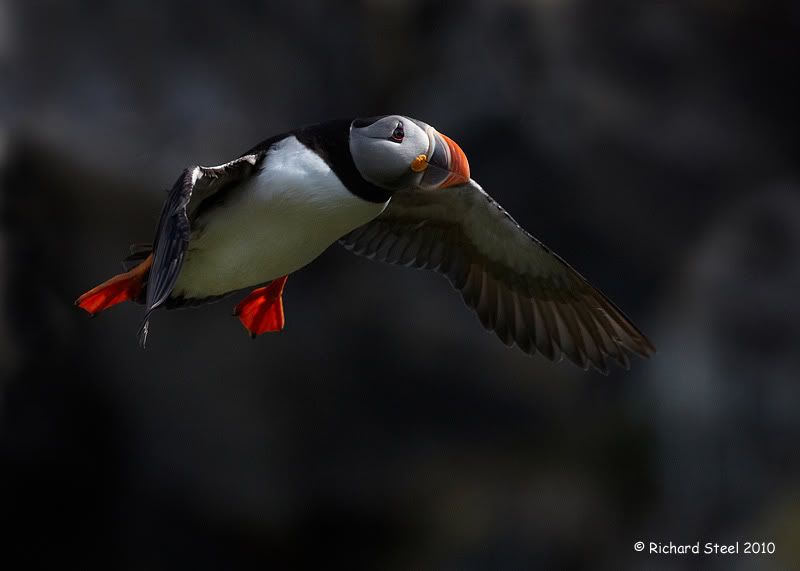
As the sun broke through the overcast sky all I could see everywhere was puffins as the 'fever' had firmly taken its grip. I thought I would take some flight photos given the sun was showing but the skies were still a grey-white which was not going to make for an attractive background. So as an alternative I thought I would use the vertical cliff as a backdrop to the passing puffins. The side lighting from the sun was not ideal and made for some difficult camera exposure settings but had the benefit of adding a bit of drama to the images and a dark background from the cliff-face.

Photobucket

Photobucket


Photobucket


Photobucket


Photobucket


Photobucket

Before walking away to see what else I could find, I noticed some back-lit puffins which deserved some attention as their beaks appeared to be really glowing.

Photobucket


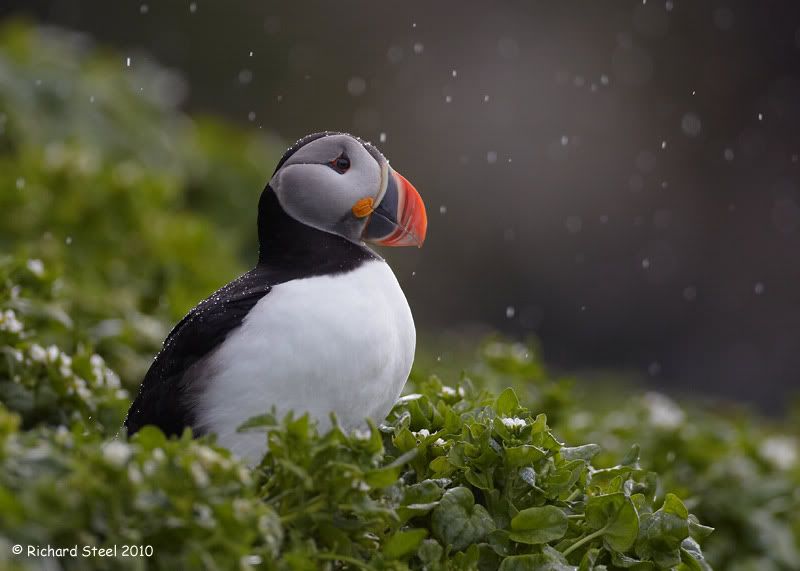
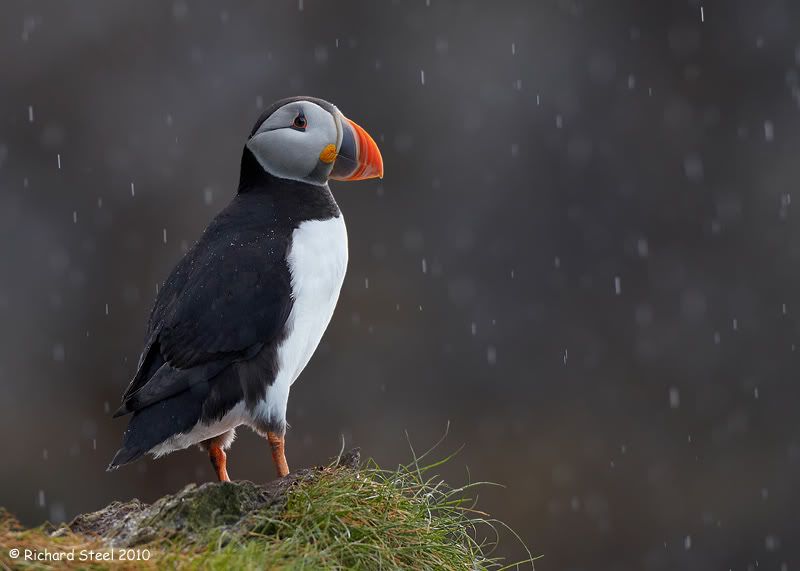
It then started to rain and the back-lighting through the falling water created a magical scene.

Photobucket


Photobucket

Fortunately the falling rain extinguished the 'fever' and it was now time to see what else the island had to offer but that will have to wait until the next blog post.

Sunday, June 15, 2008

Heading North for Seabirds - Other Species from Staple Island

While on Staple Island, although I concentrated mainly on the puffins there are a few other bird species present to keep the camera shutter busy. The isalnd has huge numbers of guillemots although I did not take many shots of them. A moment of 'affection' between a pair.
The guillemots were being kept busy my the constantly circling gulls that were trying to pick off unguarded chicks. Nature in the raw.
A few razorbill were also present.
Number of Kittwake were coming in back in to nests with their characteristic calls.

and numbers of Shag were present and mainly sitting on nests.

Business end of a shag with that unusual green eye
Our next stop on the tour was a 2 hour stop off at Inner Farne Island which is my favourite out of the two landing sites due to the Arctic and Sandwich Terns but that will have to wait for the next post.

Sunday, June 24, 2007

Bempton - Guillemot and Razorbill

While at Bempton Cliffs I did not take too many shots of the Guillemots and Razorbills as I was mainly concentrating on the Gannets. Here are a few of the shots that I did take of these birds during the visit.

Guillemot perched on the cliff edge
The Razorbill build their nests precariously built on tiny ledges The Razorbill are a fast flying bird and a difficult target to photograph in flight from the cliff top.

LinkWithin

Related Posts with Thumbnails