Showing posts with label Chiffchaff. Show all posts

Wednesday, June 01, 2016

Spring Selection

Firstly apologies for not posting for a while, it has been a busy time for me. Having been made redundant from my job at the end of March, I decided to set up myself up in business offering lake design and rehabilitation consultancy services which has taken up a lot of time to get  up and running. Also at the end of April I managed to fall over, causing damage to both my camera and lens and so that was out of action for a while being repaired. Despite all these time constraints, I have still managed to  squeeze in quite a few short sessions although have not had much time to go through the images.

I do love Spring and how everything bursts into life after the long winter days and the air is once again filled with bird song. This year we had a fairly cold period during April with northerly winds blowing from the north keeping the temperatures unseasonally low.  This certainly seemed to put a temporary hiatus on bird migration northwards with many summer visiting migrant species being delayed in their arrival.

Anyway enough of my ramblings lets get on to some photographs......

I spent quite a bit of time this Spring photographing Black Grouse but I intend to dedicate a post to them so will just give you hint of what is to come with this photo of a male bird calling at sunrise.

I had a meeting up in Newcastle and as usual when I head in that direction, took the scenic route home to take in some moorland and red grouse.


Some time has been spent with the resident birds of the coastal strip that runs along the top of the Wirral Peninsula. The coastal gorse looked amazing this year in flower with swathes of bright yellow and it seemed a good opportunity to try and get some birds perched on it where possible. Skylark, Linnet, Wren and Stonechat were the main species  photographed.


While driving round one morning I suddenly remembered a report from a couple of years back of Mandarin Duck that used a small pond to pair up before breeding. The ducks are only present on the pond for a very short period so I was lucky to find them there when I went to check it out.

Of course one of the great parts of Spring is the passage and arrival of migrant birds. This spring I saw a report of a drake Garganey being present on a local lake and decided to go straight there. It was fortunate that I did as the bird had left and continued on its passage the next day. It is a while since I have put a Garganey in front of the camera so it was a pleasure to photograph one of these beautiful waterfowl, even though conditions and access at the lake present numerous challenges.


I am always amazed at the small migrants birds and think about the epic journey they have made from the south. For example the Wheatear coming up from Africa.

This is particularly the case for warblers and the long distances covered by these tiny birds weighing a few grams. Below are a selection of these travellers including Chiffchaff, Grasshopper Warbler, Willow Warbler and Whitethroat filling their air with their varied songs.

I also managed to find one of my favourite summer visiting warblers, the Wood Warbler that fills the woodlands with its amazing electric song.


I will finish off the photographs of this post with one last species which is the Whinchat. The males when they first arrive look amazing but the colour often quickly seems to fade so it is always best to try and catch them early. Photographs of the female and male birds are below.


In two days time, I am heading north on my annual overseas trip. This years sees me returning to Arctic Finland and Norway with the majority of the time being spent on the Varanger Peninsula. Exciting prospects ahead and it will be good to return after my previous visit 6 years ago. Hoping the unpredictable weather is kind and that there will be plenty of photographs to share with you on my return.

Saturday, May 25, 2013

An Extraordinary Lark

I must admit having risen from the bed at some unearthly hour, the morning had not been very productive, with only a couple of Chiffchaff photos for my efforts, and so my thoughts were turning to a return home for some breakfast.

En route I decided to try one last place as a last ditch attempt to put some photos on the memory card and diverted off to a site close to home to look that beautiful songster, the skylark.  It proved to be a sensible decision. It is strange how small timing decisions can often make the difference between success and failure in wildlife photography. I am sure many of you, who pursue wildlife with the camera, have witnessed your subject appear where you have been sat as you have decided to walked away due to inactivity.

As I walked up the small grass slope I spotted a skylark and the next 90 minutes turned into an incredible encounter with an unusual bird. I crept into position and the bird seemed completely oblivious to me.

In fact as I approached, the bird decided to walkover towards me until it was standing about 30cms away and far too close to photograph. Strange. I was then left with a dilemma  should I try backing slowly away so I could take some photos, with the risk of the bird departing,  or wait for it to move.  

The bird was going nowhere and after a while I backed off, only for it to come trotting through the long grass to stand right next to me once. This was repeated several times before the lark headed skywards in vertical song flight. Up and up it went in full song, only to descend once more and land right next me.

Two dog walkers were coming along the path which I was convinced would see the departure of the bird but as they got closer it just casually walked around and hid behind me, to re-emerged next me once more after they passed. This was all very odd the bird just seemed to like being next to me. It was obviously on its own and still looking for a mate and seemed to content to spend some time with me.

Many people associate skylarks with their song flight when they almost disappear from sight in the blue yonder above, before slowly descending with their liquid song and finishing off with sudden plunge back to earth.  However, they also have a ground display when they go up on extended legs, raise their tail and appear to 'dance' and bob on the spot while in song. This is what the bird was now doing right next to me. To have a skylark stood singing and displaying literally right next to you, I can only describe as a sublime experience.
I decided to do some ground level photo given this unique opportunity. Photographing a small bird on the ground can be tricky when the grass is even a moderate length as there often stray blades which insist on appearing in the wrong place.  It proved even more difficult on this occasion as the bird insisted on coming too close.
Having taken plenty of photos it was definitely time for breakfast. Even when I stood up to leave the bird was still standing right next me. As I walked back to the car, the bird took flight, flew straight down towards me and landed in front of me once more. It continued to do this for the next 400m before finally deciding to go off and find itself some breakfast. A very strange bird but a superb encounter with an extraordinary lark.

Friday, May 11, 2012

Tiny Wonders

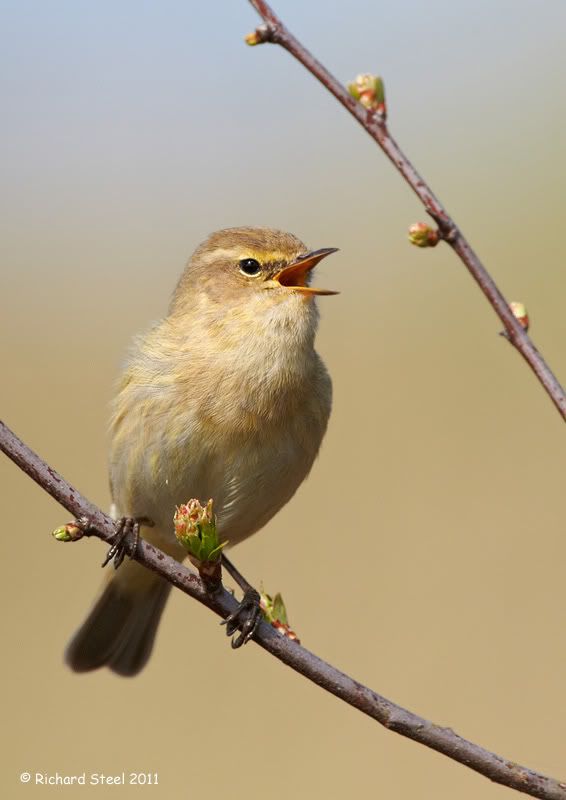
You are more likely to hear the characteristic call of a Chiffchaff before you see one. These tiny leaf warblers, which are one of the first warbler migrants to arrive in the UK and for me herald in the start of spring, are normally spotted energetically flitting high through the leafless trees. The only time they stop moving is to go in to their characteristic two note song.
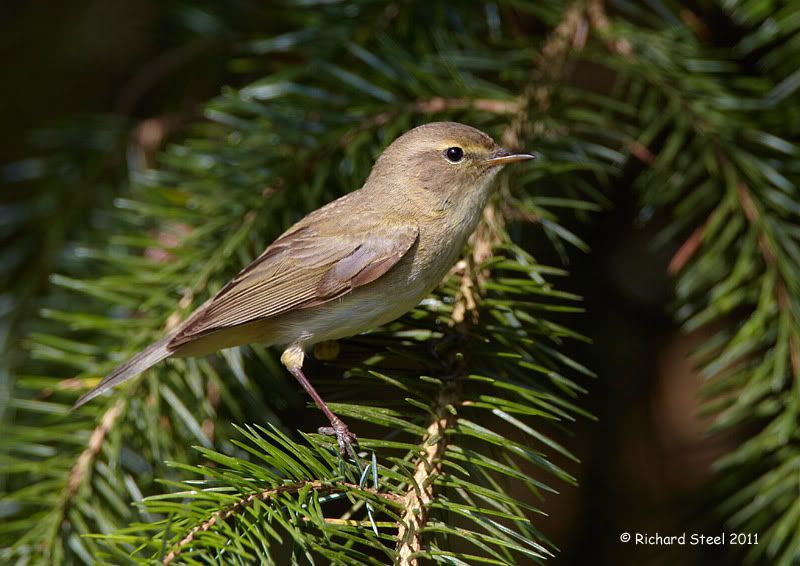
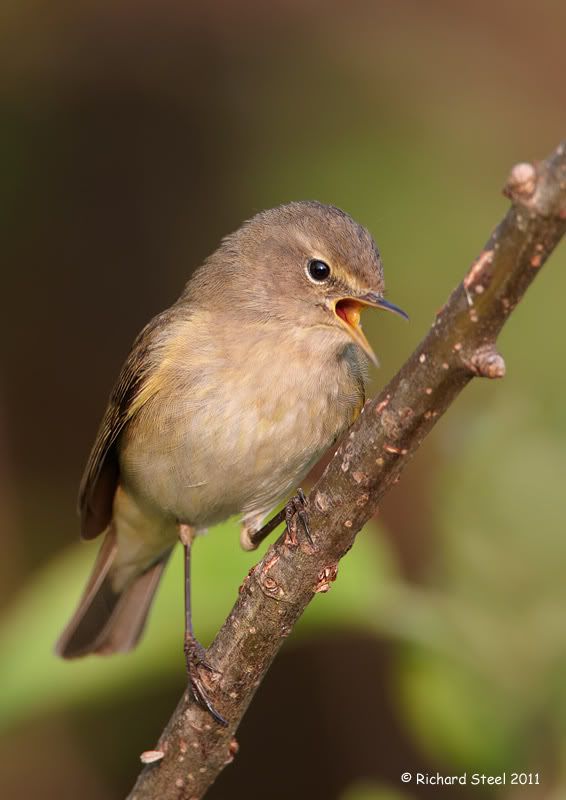
These birds certainly are not the most visually exciting bird being a rather drab brownish green with a feint yellowish eye stripe and streaking on the breast and very similar in appearance to a willow warbler. The colour does seem to vary slightly between individuals put the muted colour palette remains the same. Therefore from a photography point of view this is a bird may not be high on many people lists of target species. However, what they lack in colour they certainly make up for with a certain endearing nature to their 'character' and irrepressible energy and inquisitiveness which always makes the time in close proximity to one of these birds a pleasurable encounter.
Personally bird photography is not always about taking photos of the spectacular species, as I have always loved being in close proximity to a bird that many only see from a distance and being treated a brief insight in to their daily lives and habits. I believe such experiences make you a better wildlife photographer because by understanding behaviour, future close encounters become so much easier. In my opinion the greatest skill of  being a bird photographer is being able to get very close to your subject whilst it carries on with its normal behaviour.
I was recently told that the dark matted feathers that are often see above the beak when they first arrive and slightly evident in the photo above, results from the Chiffchaff feeding in Mediterranean olive groves on their migration up from Africa. I am not sure how true that is but it is certainly impressive that such a tiny bird that only weighs a few grams undertakes such long migrations.
One feature of their behaviour that certainly helps them on their journey is that their skills in catching aerial insects is on par with the best of the flycatchers. Their aerial manoeuvres in making sudden mid-air turns to snap up a fly with their flattened beak appears on occasions to defy the laws of physics.

The main challenge in terms of their photography is trying to find a bird that is a bit atypical and not too high up in a tree and using low bush or trees to forage and sing from. Like many warblers once they have established their territory they will often use the same set of song perches to sing from to attract a mate. Like the bird's appearance, the song is not the most exciting and sounds exactly like their name. However, it conveys the apparent unstoppable energy of the birds and often is sung relentlessly for very prolonged periods.
No doubt this will not be my last close encounter with Chiffchaff and I know the next will be a pleasurable and fascinating as the first.

Saturday, April 23, 2011

A Feast of Spring Warblers

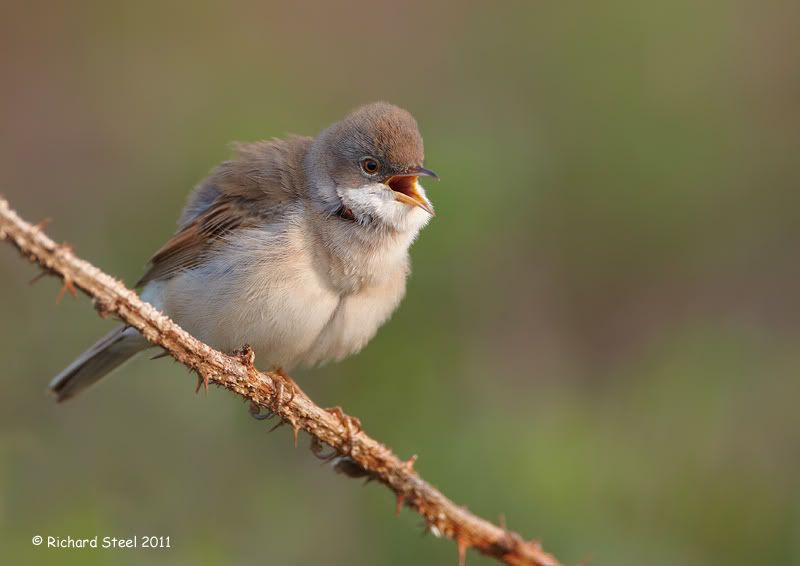
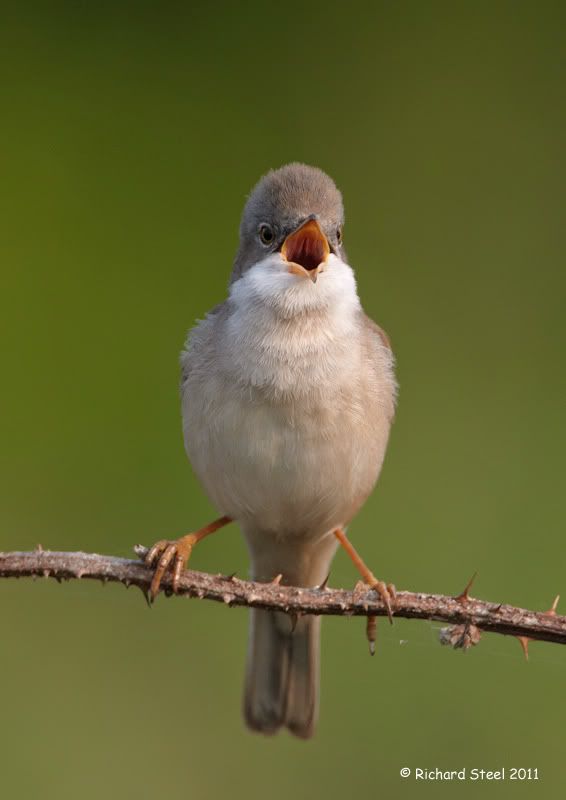
Those of you who have been out and about in the UK during the last couple of weeks, will have found it difficult not to notice the bushes have become alive with the songs of recently arrived warblers. These range from the reeling cricket-like sounds of the Grasshopper Warbler to the hesitant scratchy song of the Whitethroat. I have a great fondness for warblers and always admire these tiny birds and the epic migration passage they have undertaken from Africa to reach our shores.

From a photography point of view these birds create quite a challenge due to their tendencies for skulking in dense undergrowth and often only giving fleeting appearances. The best opportunities usually occur when the birds first arrive and sing to establish their breeding territories. My main objective when trying to photograph these small birds is try and capture the birds on an uncluttered background when they visit the edge or tops of low bushes. However, this photography requires a good deal of patience and can be a frustrating business. Anyone who has tried photographing warblers will know what I mean when I say there always seems to be one small twig in the way! There is also a limit with what you can achieve with these birds as flight photographs are usually out of the question and therefore the best that can be achieved is a bird in full song.

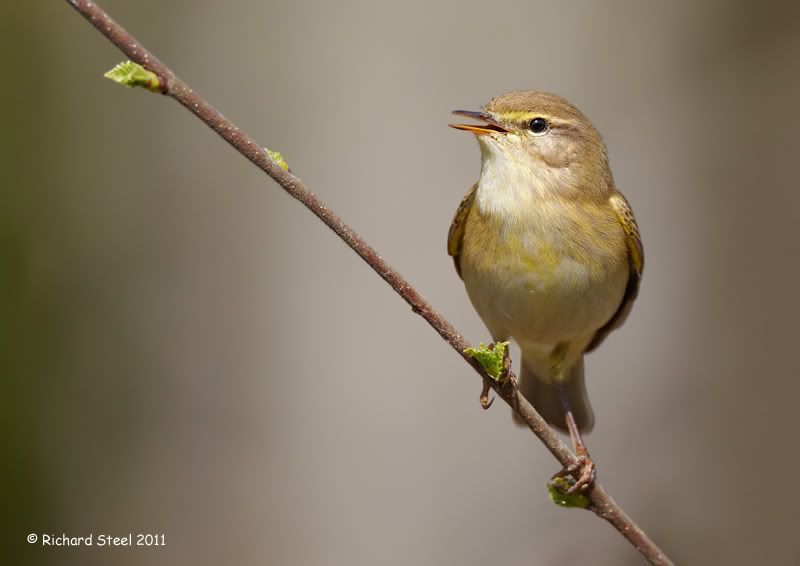
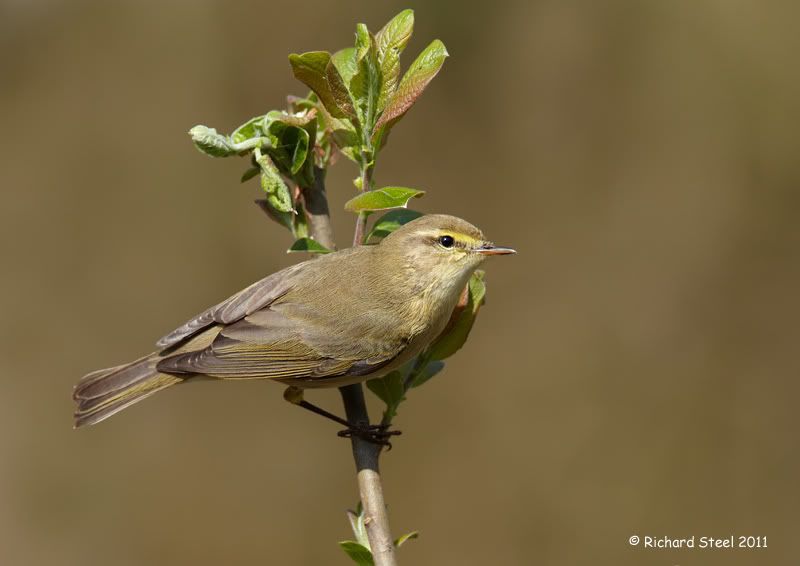
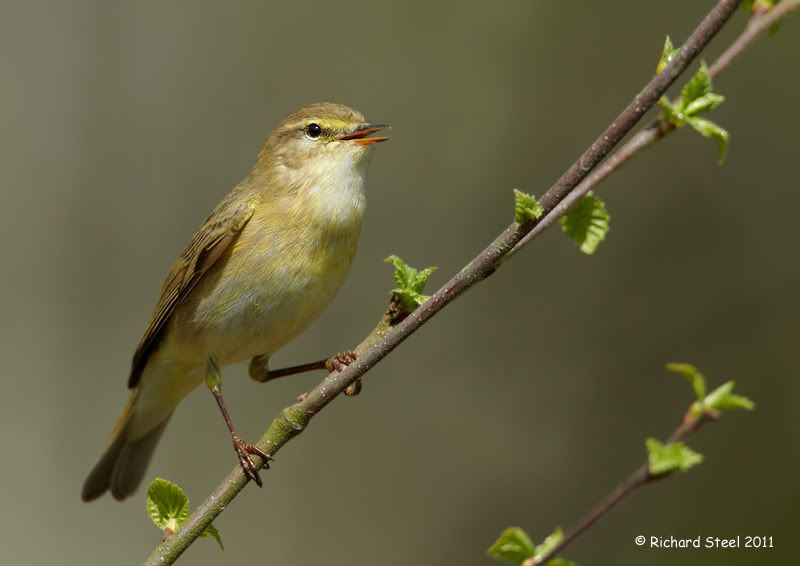
For this post I have decided to post three images of five species from a series of recent short sessions. I will start off with the Chiffchaff which is usually one of the first to arrive and often a first sign of spring.


Chiffchaffs bear a very close resemblance to Willow Warblers but tend to have darker legs and less yellow - green colouration.


The main identifying feature however is their unmistakable rather monotonous song from which they derive their name.


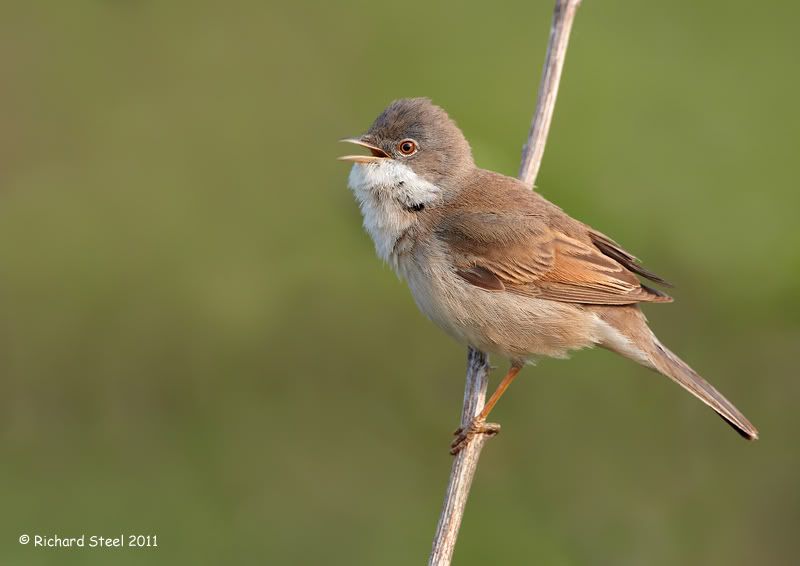
The Whitethroat usually arrives in mid April and can easily be located from their rather angry sounding hesitant warbling song. They also tend to give their location away by the males going up in an occasional parachuting song flight.


From a photography point of view there are two features of the birds behaviour that can help with capturing images. Firstly once a male has set up a territory it will tend to use the same perches to sing from and secondly they seem to have an insatiable curiosity and usually will pop up out of a bush to take a look at you.


These are wonderful birds and always seem to be slightly 'angry'.


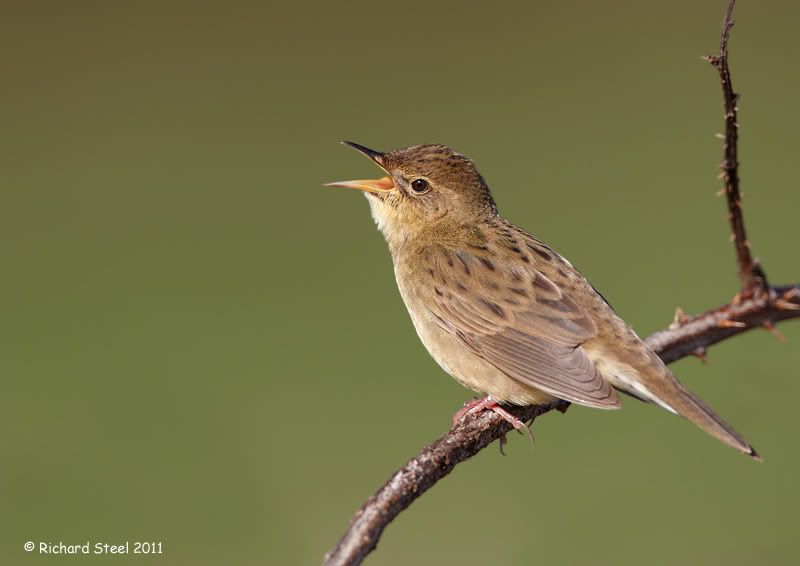
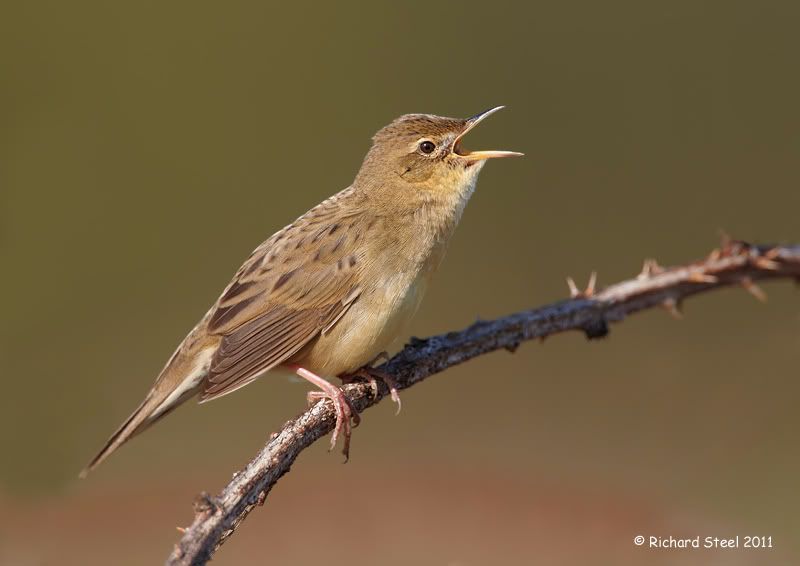
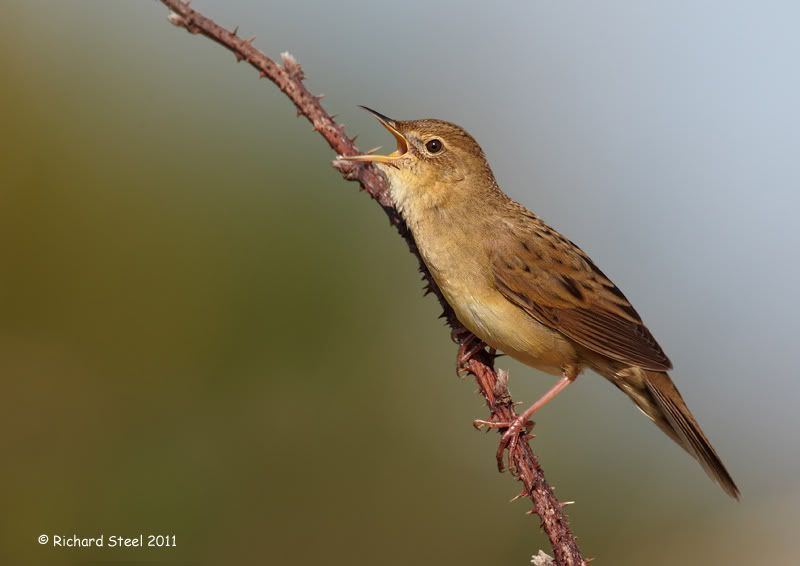
There seems to have been a big influx of Grasshopper Warbler into the UK this year. An early morning session is essential for these birds as often their insect like singing can be over by 8.am.
These are a particularly skulking species and the best time to see them is usually after they have just arrived following migration when the birds will appear on top of brambles to burst in to song.


The whirring song can last for several minutes while the birds turn their heads to project the sound whilst their whole body vibrates. However, I am often surprised by the number of people who are unable to hear their high pitched song.


There are two colour morphs of this bird a yellow and a brown version although the differences are quite subtle and is probably best left to the warbler identification experts.


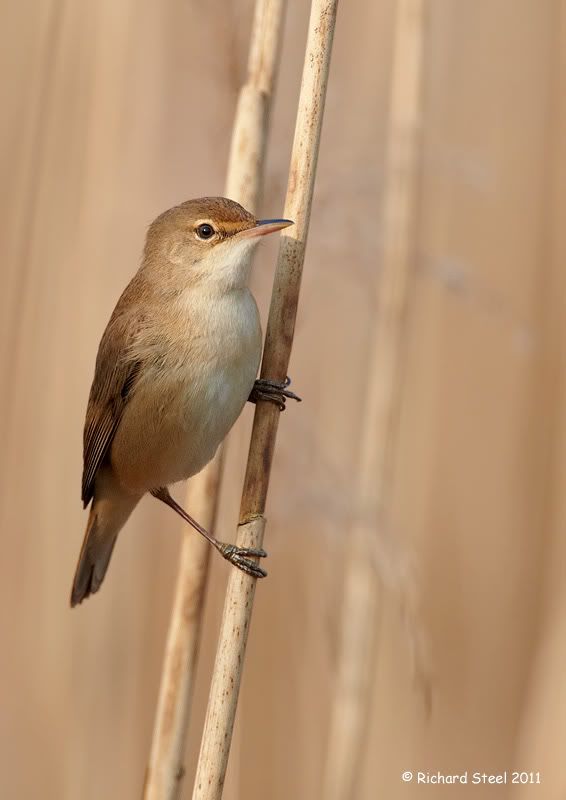
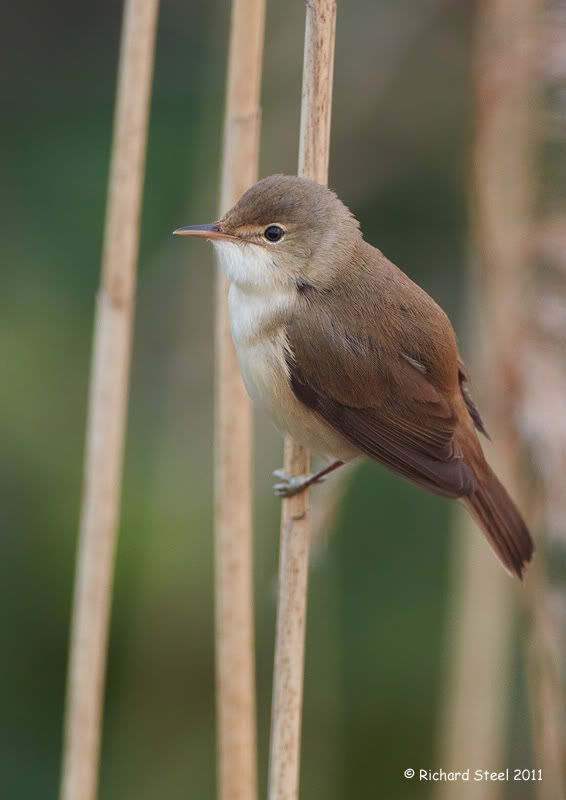
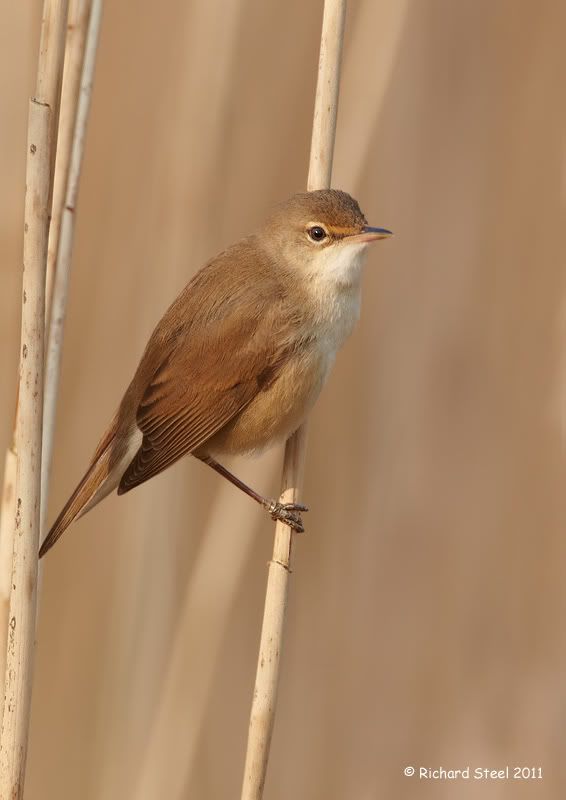
The Reed Warbler is a species I am hoping to spend more time on this year. It is a bird that can provide a rapid route to baldness as it can have you tearing your hair out with the frustrations of trying to get an unobstructed view.


They look quite a different colour under overcast skies or in this case before the sun had risen. Not the most colourful bird but they have looks that are appealing but difficult to define why.


I will finish off this rather long post with the Willow Warbler. A bird that bears a remarkable resemblance to the Chiffchaff.


The song is very distinct on these birds, as they flit around in the trees catching insects, which is a gentle warble of descending notes.


I know the song of these birds well as I had one singing continuously through the perpetual daylight of 'night' outside my bedroom window in Arctic Norway last summer.


There is plenty more time ahead for warbler photography as they seem to arrived early this year. They may not be the most colourful birds but certainly make up for this in character and I look forward to many more happy hours in their presence in the coming weeks.

LinkWithin

Related Posts with Thumbnails