Showing posts with label Pochard. Show all posts

Saturday, April 26, 2014

Time for a Few Birds

I have been having a lot of fun photographing brown hares this spring and started feeling I had been neglecting the birds a little. This was particularly the case as I could feel spring gathering around me with various migrants coming through and arriving locally. So it was time for a bit of bird time. Also I wanted to get in a little bird practice as I am away to Romania in three weeks where the majority of subjects will be birds. This post is a small collection of different birds photographed recently from a series of often short sessions in various places.

Starting of with a trip down south recently to visit my parents which resulted in a brief stop-off in Bushy Park to break up the journey. The avian soundscape of the London Parks has been transformed by a flourishing population of Ring-necked Parakeets, with their constant sqwarking from the trees. Their vivid green colours certainly add a splash of the exotic to these park lands. This is a species of considerable debate given the suggested competition between these introduced invading species and our endemic tree nesting birds. The light was not great on the day so I was looking for birds in places where I could avoid the sky which either meant low down or with a tree trunk filling the frame.

On one of the ponds in the park there were three Pochard. This is a duck species that has frustratingly evaded by efforts to photograph it and as on this occasion I have only managed a few photographs. This pair of Pochard where in the middle of mating with the female getting half 'drowned' in the process.
Moving closer to home, I have undertaken the occasional early morning or evening session before or after work. My good friend Gerhard created, with quite a lot of sustained effort, an 'out in the wild' feeding station for Linnet. These are quite a flighty species and so it provided a good opportunity to get some photos and watch the birds up close.  His efforts paid off attracting increasing numbers of the birds, which were mainly young birds or females but there were a couple of better coloured males amongst them. They tend to be a slightly overlooked species  which most will associate with loose bounding twittering flocks, but a good coloured male up close is a fine looking bird.
It was nice to see good numbers of Skylark along the local coastal strip. There liquid song dripping down from their high display flights is always a pleasure to the ears.
Always a tricky subject in flight.
This next photograph was a completely unplanned bonus as the bird landed next to me in a bramble patch whilst trying to photograph some warblers. A male Reed bunting in all the finery of its full spring plumage.
Over the last week or so I have finally turned my attentions to the increasing numbers of arriving warblers. These birds really bring an area to life as the once silent reeds, scrub and brambles suddenly takes on a whole new life with the incessant whirling, clicks, and scratchy warbles of various species trying to lay claim to a breeding patch. To appreciate this at its best requires the alarm clock to be set to a very early time which will leave you feeling fuzzy headed with tiredness by the early afternoon. Its worth it though.

A Sedge Warbler establishing its territory over an area of brambles from four different song perches.
Another lover of the security provided by a bramble patch is the Grasshopper Warbler. Now I did intend to avoid these this year but then again I say that every year and was once again drawn in by that mesmerizing insect like song. For me watching these birds broadcast their song is one of the real pleasures at this time of year and no doubt I will find myself drawn to them next April.

Wednesday, July 03, 2013

Roaming in Romania - Day 4: The Bounty of the Delta

Sleep deprivation was now setting in as I struggled out of bed to the  4:45am alarm call on the 4th day. A customary glance across the balcony to check the weather, as I dressed, saw a group of white pelicans pushing themselves upstream on slow powerful wing beats above the incessant chorus of frogs. The untimely breakfast of omelette's went down no easier than the previous day even with a large mug of freshly brewed coffee.

We set sail and this time head off a short distance downstream before turning off into a medium sized reed bordered channel. The quiet, heavy atmosphere of the previous afternoon had departed as the skies had cleared and the Delta had sprung fully into life once more. The biological productivity of this vast wetland truly has to be witnessed to be believed. The first bird that stalled our progress was a tiny Little Bittern I had spotted but by the time the boat had back tracked it had skulked back into the security of the reeds. After about 30 minutes travelling along an ever narrowing channel, it suddenly opened out into a vast lake bathed in soft pre-sunrise light. 

Ironically the first bird species we came across was the last one we had caught a brief look at the previous evening in the gloom of dusk, the Dalmatian Pelican. This species has been in rapid decline and is now fairly scarce within the Delta. All the pelicans seemed surprisingly shy despite their huge size and this one soon took flight with the approaching boat to relocate to a different part of the lake. 
This was only to be the start of several encounters with these birds over the course of the morning. As the boat was manoeuvred towards two more Dalmatian Pelicans, we paused briefly to take some photographs of a Cormorant that was drying out its waterlogged feathers in the early sun. 
I also managed a photograph of drake Pochard, its head glowing in the early light, as we slowly chugged through thick weed beds and lilies.
We eventually got into position for pelicans from what seemed to be an increasing frequency of positioning boat instructions from the four photographers. We took some portrait photographs of the two birds in the margins while the boat drifted ever closer to the birds until it entered the invisible 'circle of fear'.
All birds have this surrounding fear  zone which once breached will cause them to put more distance between themselves and people either by walking, swimming or flying away. The two pelicans settled for the latter allowing some full frame flight photographs of these magnificent birds.
Next stop on our circuit around the lake was an extensive lily bed  which was hosting a large colony of Whiskered Terns.
We took some more photographs to add to the collection of images taken the previous morning. The birds were busy building what appeared to be precarious nests, comprising a jumble of various water plant,s on top of the lilies. Occasional a Hooded Crow would swoop in a grab an unguarded egg whilst being pursued by a noisy group of terns.
Some of the terns had obviously learnt that it was quicker to build your own nest by plundering the materials from one of your neighbours. After a prolonged stay with the terns we headed across to an channel on the far side of a lake where a Pygmy Cormorant was drying off. I always think there is something very primitive in the appearance of these birds and it is quite easily to visualise the reptilian ancestry. 
We left the lake through a narrow channel and sailed through the weed-chocked waterway for around 20 minutes before entering a small lake. Zoltan, our guide, had brought us here to photograph Red-necked Grebe, a new species for the camera and one I was hoping to encounter during the trip.  A pair were present with the bonus of two chicks. The boat was positioned at distance so as not to disturb the birds and by waiting we were rewarded with the birds coming close on several occasions. A pleasure to watch and memorable time was had photographing these small grebes even though the light seemed to temporarily diminish while we were there. 
After staying there for a quite a while, the grebe family were left, and we finished off the morning session as it had started with further and very close encounters with Dalmatian Pelicans on a medium sized lake.


It had been an excellent start to the day with two new species at close range in front of the camera surrounded by the joys of the pulsating biological abundance of the Delta. As we moored up back at the hotel I was already wondering what avian treasures the evening session, our last on the Delta, would bring. You might have already guessed, given the number of photos above, that will need to wait now until be  my next blog post :). 

Saturday, January 07, 2012

Goodbye 2011

Happy New Year to you all. May your 2012 be filled with many wonderful wildlife encounters.
I was just backing up my images from 2011 when I came across a folder on the hard drive that had slipped under the processing radar. It was from a session last March where I spent an easy session at the Wildlife and Wetlands Centre at Martin Mere. I like to make a visit here in the Spring as you can often find numerous wild birds, especially Shelduck mixed in with the captive birds and at the time there are still plenty of Whooper Swan and wildfowl to photograph from the hides on the main lake.

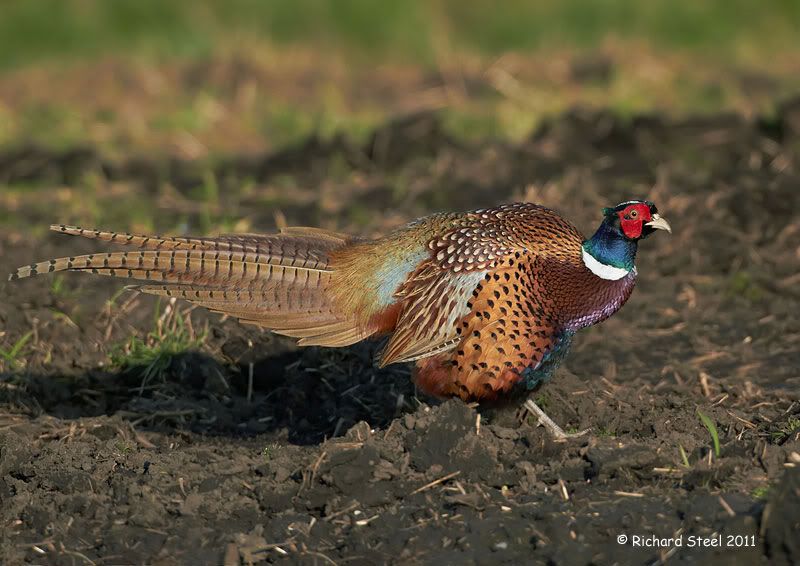
The session started before I arrived as I came across a male pheasant in full spring display mode. The bird was puffed up and 'showing off' to another male that is just out of the photo.

Due to the light direction my first port of call at Martin Mere was the main hide which as usual had plenty of birds at close range to chose from. However, I must admit I do find it slightly frustrating as these permanent hides do not allow you to get the more attractive low angle and point of view. Therefore it always feels a little if you are photographing down upon the birds rather than getting down to their level which produces better images.

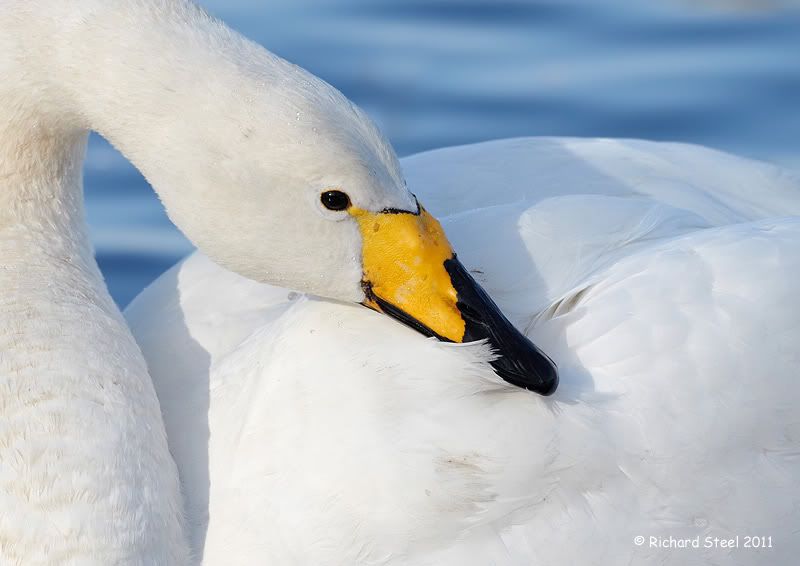
Large numbers of overwintering Whooper Swans were drifting around as usual, building up their energy reserves with the daily feed, before their long flight back to the breeding grounds in Iceland.

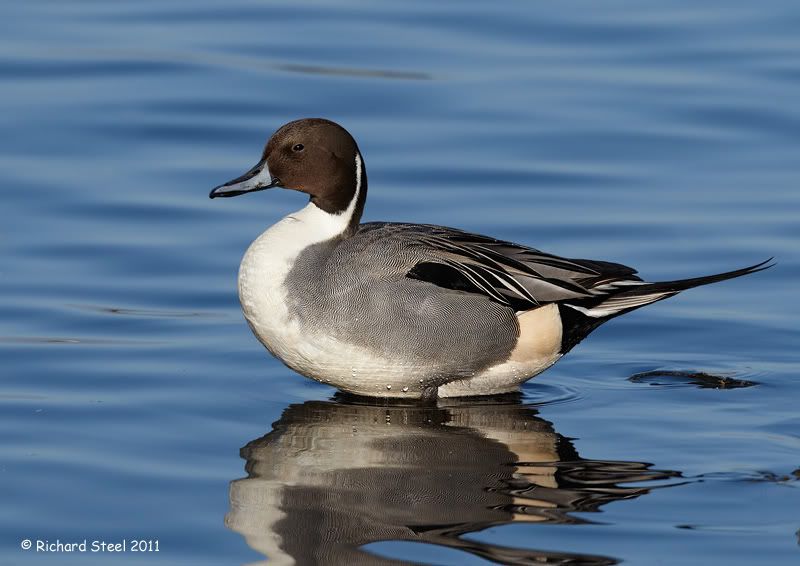
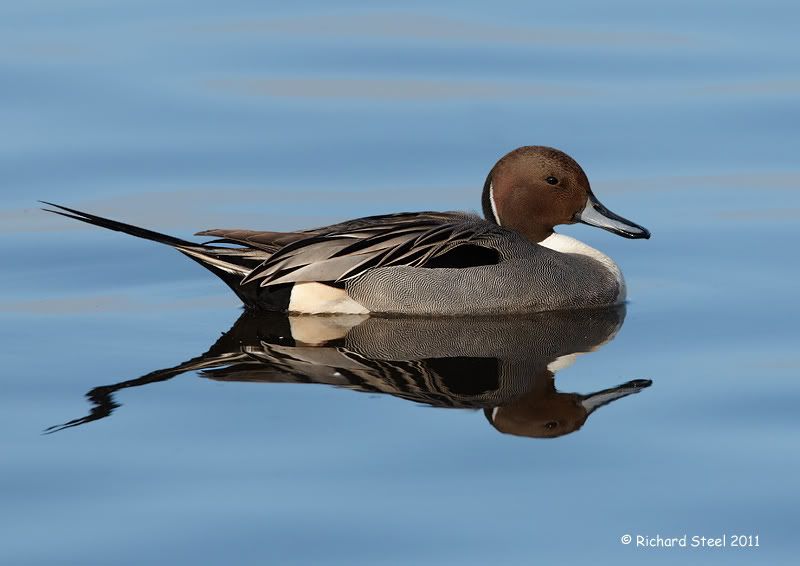
One of my favourite duck species, the Pintail, was present in large numbers. What these birds may lack in colour they certainly make up for through their attractive shape.
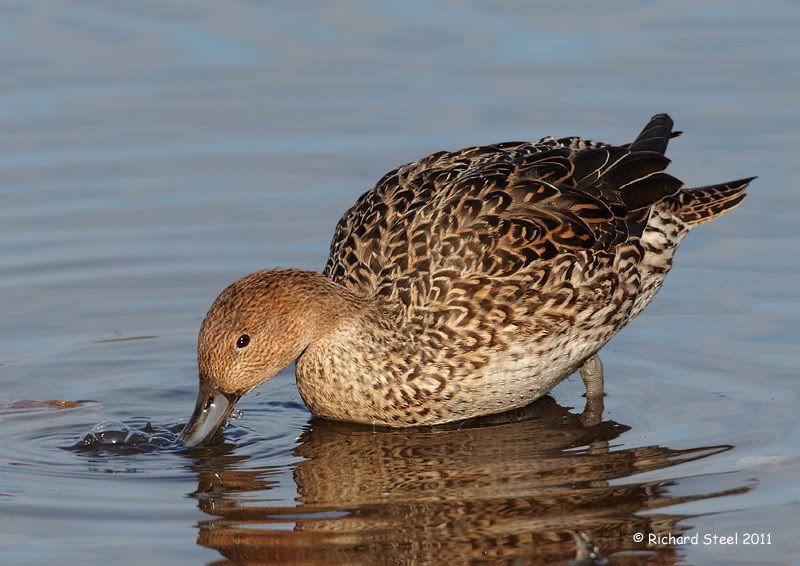
A female Pintail 'blowing bubbles' as it feeds in the shallows.
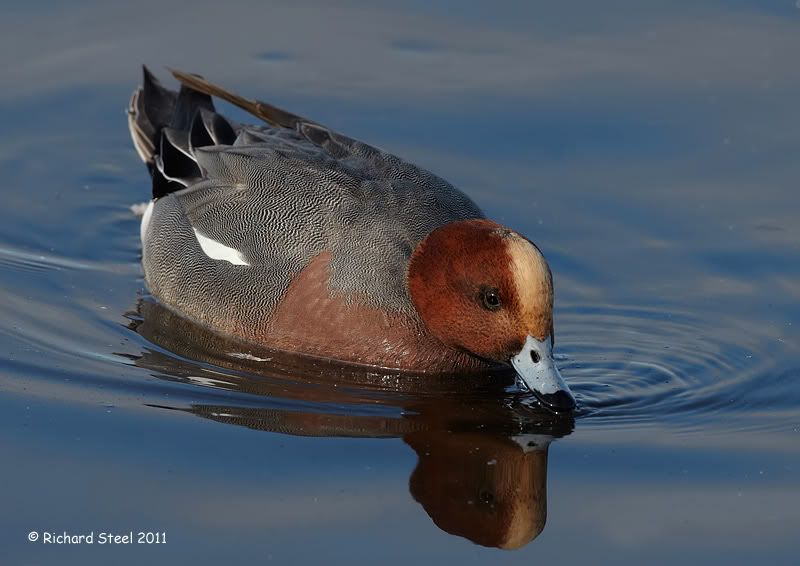
Amongst the Pintail were a few of the slightly more colourful Wigeon, that were announcing their presence with their characteristic whistling calls.
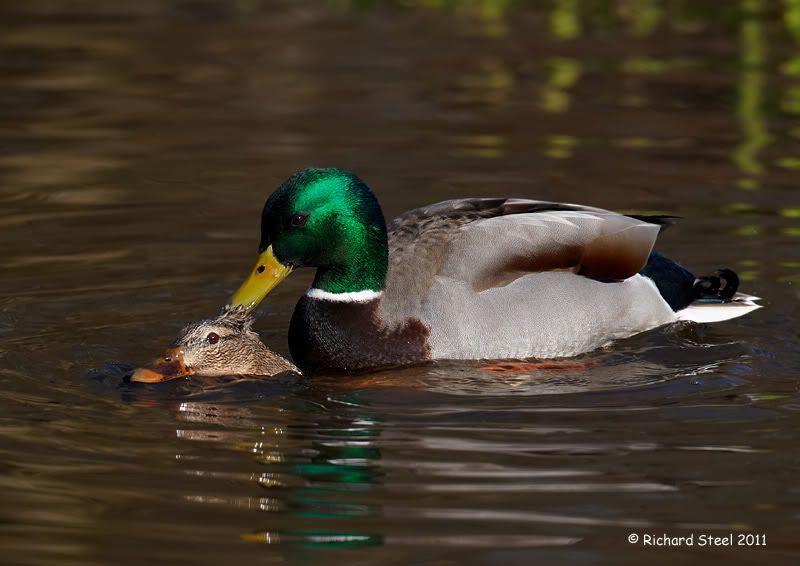
I left the main hide and took a wander around to see what else could be found. There was definitely a hint of Spring in the air during this March visit with Mallards busily mating. The female certainly seems to get the worse end of the deal during the process as she is pushed below the water.
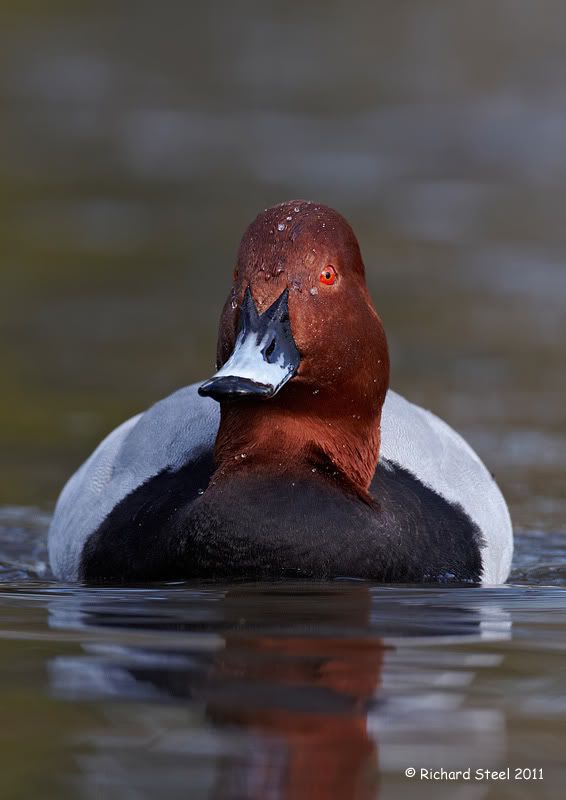
After a good bit of searching around I finally managed to find a wild Pochard amongst the captive collections to end a relaxing session with the camera.
I have already been out with the camera this year despite the best attempts by the weather to thwart me and will show some of these photos in my next post.

LinkWithin

Related Posts with Thumbnails