Showing posts with label Northern Wheatear. Show all posts

Sunday, November 01, 2015

A Few from Spring

With it being foggy and murky grey outside all day, it was a good time to catch up with a bit of the photo processing backlog. So I turned my thoughts back to Spring which is such a contrast to the view out of the window today. Early mornings filled with bird song, migrants arriving in waves, the birds looking bright and immaculate and the freshness of the new growth bursting forth from the plants. Such a vibrant time of year and always a pleasure to be out at first light and soaking it all in.

So for this post I just thought I would take a few of the bird images from last Spring and put them together. What could say Spring more than a bird on some willow catkins. In this case a colourful Goldfinch.
Living by the coast there is a reasonable number of gorse bushes and normally good flocks of Linnet. I always associated one with the other as the males often use the top of these vibrant yellow flowered bushes to advertise their territory in song.
A bird that is particularly noticeable in the Spring is the Meadow Pipit.  Huge numbers migrate and on certain days it seems they are everywhere. Of course these are a favoured 'victim' of cuckoos who time their migration to arrive when other birds are beginning to lay eggs.  
Many birds look at their best at this time of year as the males feathers finally wear into their fresh breeding plumage. This male Reed Bunting is nearly there with just a few tawny coloured feather ends to change before the transformation is complete. 

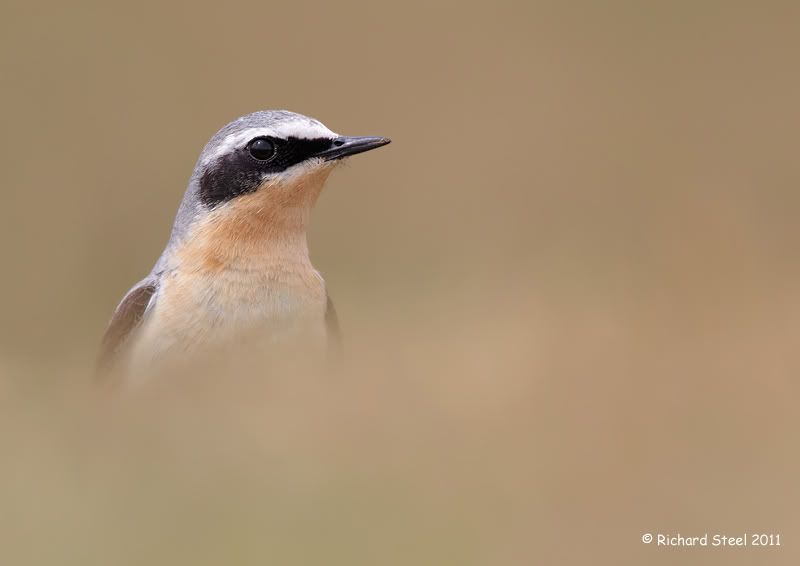
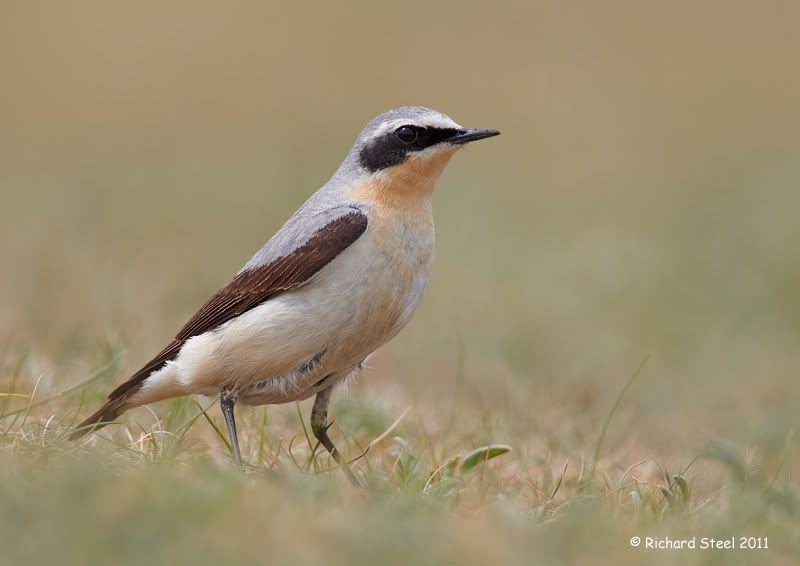
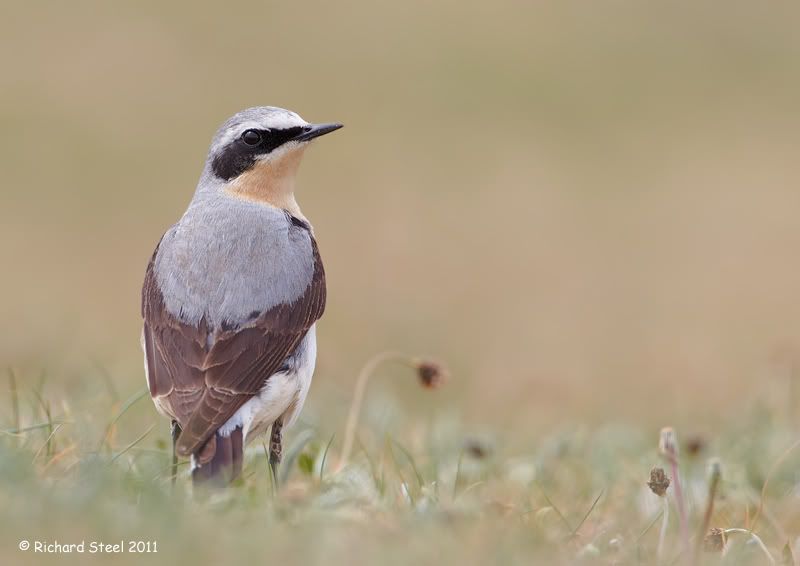
One of the earliest migrant arrivals is the Northern Wheatear with the birds typically arriving locally from their long flight up from Africa around mid-March. They bring with them a real injection of striking colour and contrast into what is still a generally drab landscape in the early Spring with the remnants of winter still evident. Often these arriving birds are very flighty and have an annoying habitat of tending to stay just out of camera range, displaying a flash of white rump as they keep their distance ahead of you.

Into April and migration is in full swing with the arrival of warblers and Whinchat. These birds look amazing when they arrive although the orange colours of the breast and flanks seems to quickly fade once they have been here a short while. From a photography point of view they are definitely a bird to try and catch as they arrive.
 Of course Spring is not just about sights, it is also about sounds. Unfortunately I did not get much time to photograph warblers this year with the exception of the Willow Warbler. This bird's song of descending notes I know very well, having had one singing all through the 'night' outside my bedroom when I stayed in Arctic Norway. The songster did not help with me struggling to get to sleep with the perpetual daylight outside.
Well having done this post and reminisced over Spring the grey murk outside suddenly looks a bit brighter. Also it has got me thinking that I should start thinking about and planning my trip abroad for next year. North, South, East or West...decisions...decisions.

Saturday, October 06, 2012

A Taste of Spring

As the autumn winds start to swirl outside and the chlorophyll drains from the leaves turning the trees to their rusty and golden hues, my thoughts go back to the Spring. I love Springtime, a time of renewal and hope for the warmer months to come after the long dark days of winter. However, this year the UK climate had other ideas and cool days and torrential rain predominated and nature's calander was perturbed. The usual arrival of migrant birds seemed to be delayed by about a fortnight and then all the summer visitors suddenly seemed to arrive at once. So this post is about some of those Spring birds, the photographs of which have sat on my hard drive gathering dust.

One of the first arrivals each year are the Northern Wheatear, usually touching down around the end of March. They are welcome addition of warm colour against the be-draggled vegetation ravaged by the winter weather. An energetic bounding bird species that pause briefly along the local coast as they head northward during their journey from Africa to northern breeding areas.  The females are attractive but for the photographer the male birds in their smart and bolder spring colours are the real prize
Amongst the Wheatear, the Skylarks battle it out for breeding territories. Many fast acrobatic chases between males occur low over the rough grassland before one of the birds will soar upwards in liquid song until it becomes a mere speck in the sky.  There it will hang in fluttering flight, often for many minutes, before rapidly descending back towards earth.
For those of you who have never had the fortune to be very close to one.
They will also occasionally sing from low perches on the ground. This bird would often use a particular boulder.
However, it would take exception to any other bird landing on its rock. This was the response received by a House Sparrow that landed just out of frame.

During mid to late April the scrub, reedbeds and low lying bushes come to the life with the churring, click, grating sounds of warblers. First the Grasshopper Warblers but closely followed by the Sedge and Reed varieties and the Whitethroats. Not wishing to become too anthropomorphic but Common Whitethroat always seem to be a slightly 'angry' and 'impaitent' bird. They are always fun to photograph and relatively easy with the right approach.

At the beginning of May Yellow Wagtails arrive brought, on the warming winds from the south. A brilliant splash of yellow and green amongst the rapidly growing vegetation. The first encounter with one of these birds each year always brings a smile.
You normally hear the birds before you see one as their characteristic high pitch 'jeet' calls emaniate from a field of low crops and penerate the dawn chorus. They absolutely glow golden when hit by the early low sun.
This bird caught by a sudden gust of wind from behind was having a 'bad feather day'.
Much as I like the Spring, I always look forward to the winter. The daylight may be limited but when the sun does put in appearance the low light can be just stunning. Lets hope we are not in for a gloomy wet winter.

Thursday, November 24, 2011

Delayed Departure

One of the interesting features of bird photography is that every year is different. I was only thinking the other day about some of the photographs I had taken this year in comparison to last. Some years I do not manage a single photograph of a particular species and the next I may end up with hundreds. This partly results from my approach of trying to concentrate on particular species but also from a few unpredictable encounters during each year with 'friendly' approachable birds. Northern Wheatear are a good example. Last year, photographs of this species were fairly few and far between but this year it has almost seemed like they are following me!
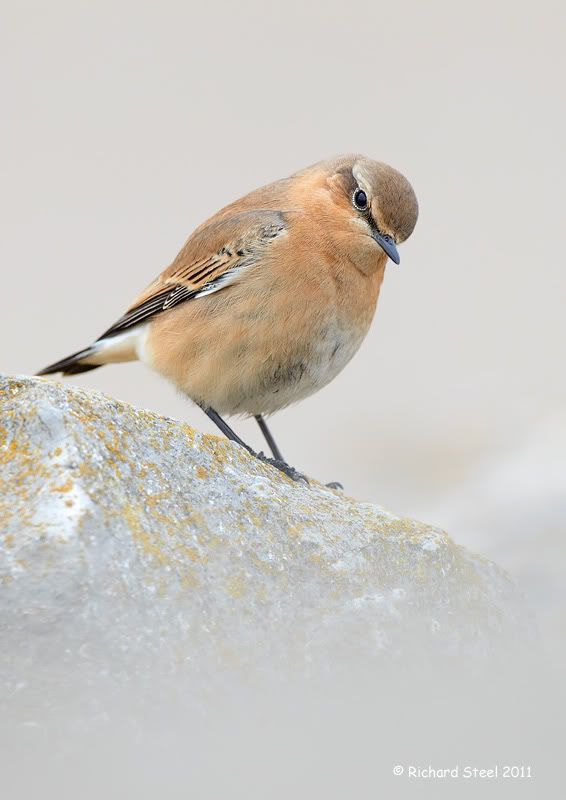
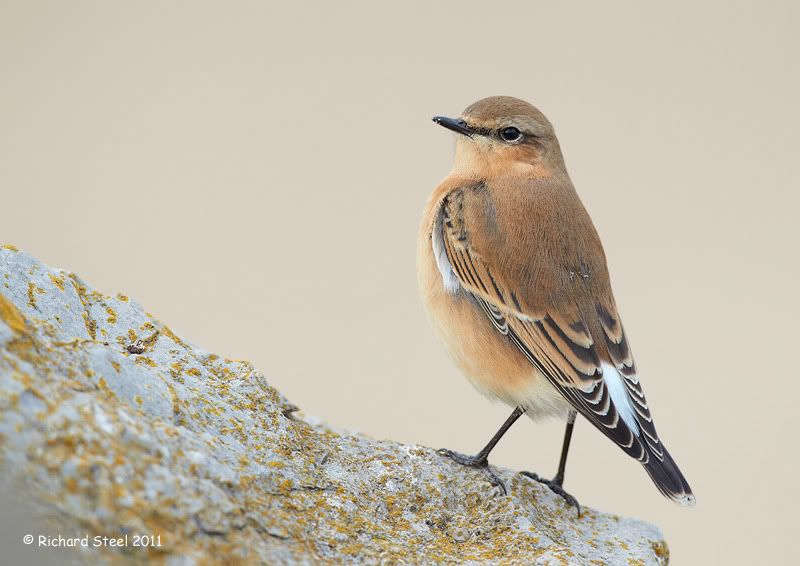
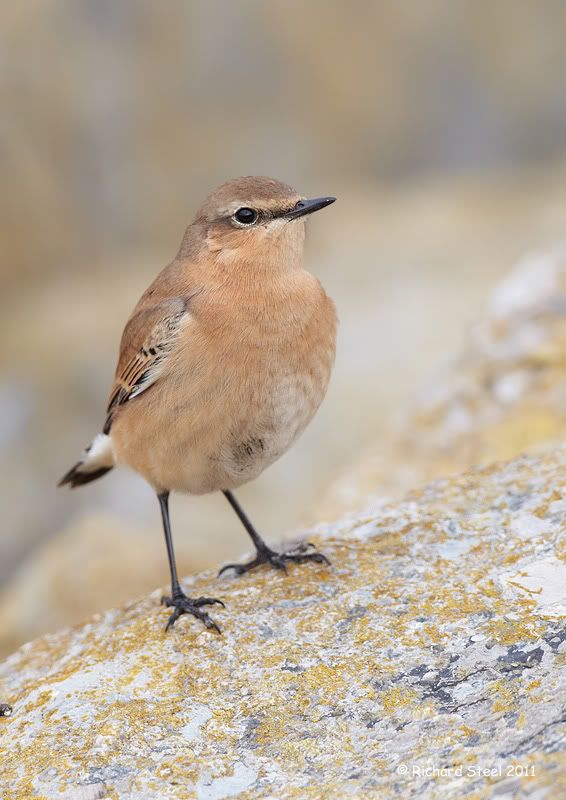
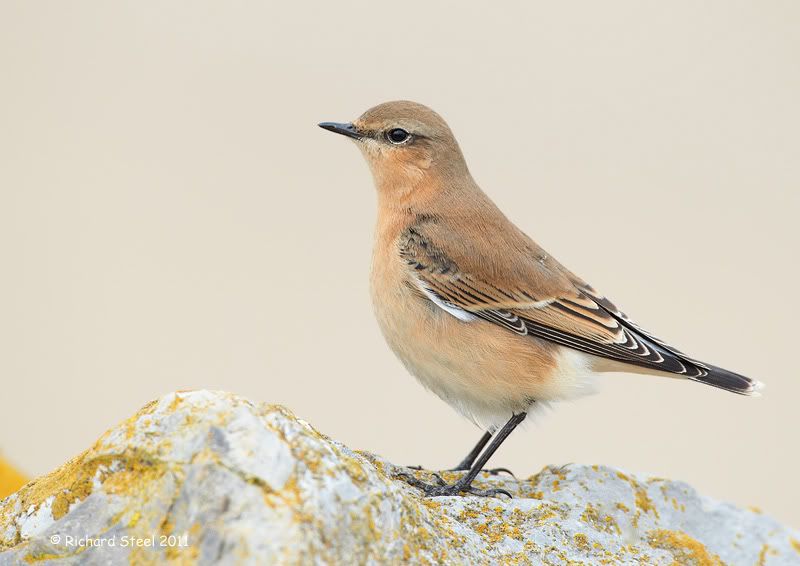
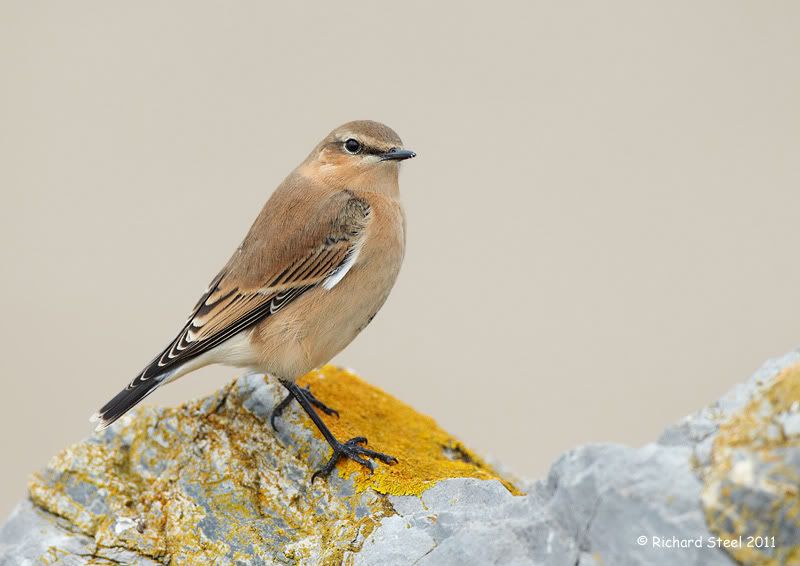
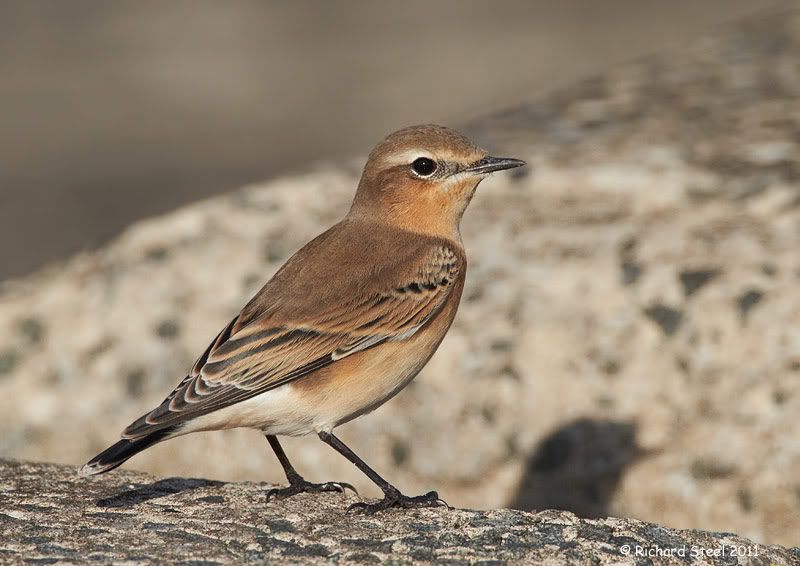
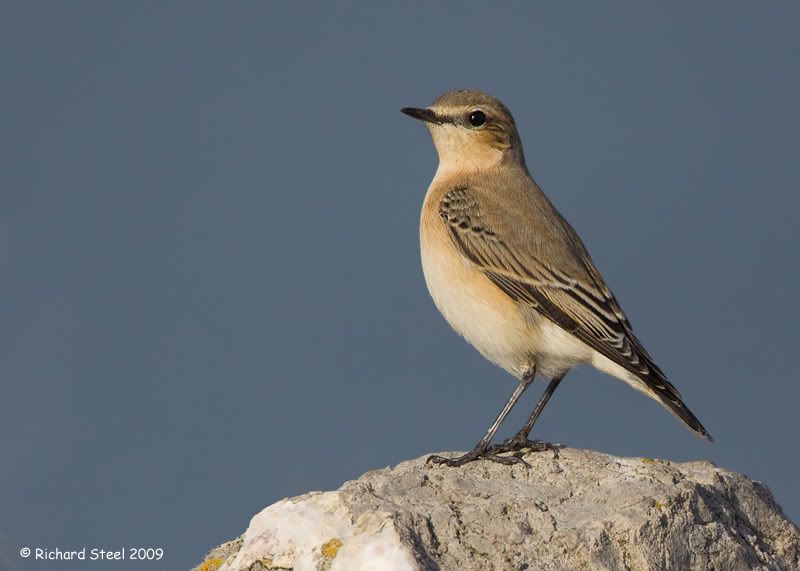
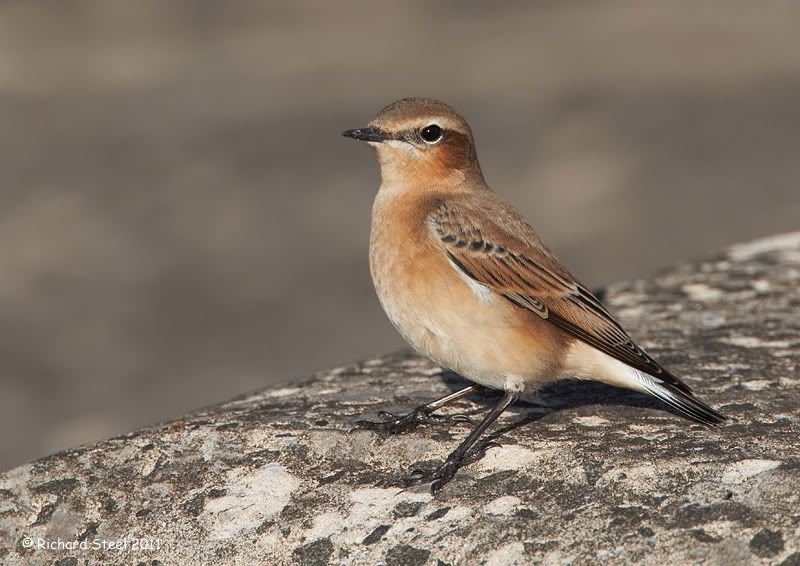
Having already had a good year with this species, another bird recently appeared in its autumn colours offering some great photography opportunities. This bird took up a prolonged temporary residence on the rocks of the local sea wall a couple of weeks back. A very late migrant that should already have been winging its way into Africa. The latest record for this species in my local area is November 21st and this was just beaten by the bird finally departing southward on the 23rd.
It made a pleasant change to be photographing this bird on some rocks, which provide a more 'natural' setting rather than amongst the grass or perched on the posts of the North Wirral coastal strip. During its stay the bird became quickly accustomed to the constant passing of people along the promenade and therefore very approachable for photography.
Where birds are in contact with large numbers of people, good photography opportunities can often develop.
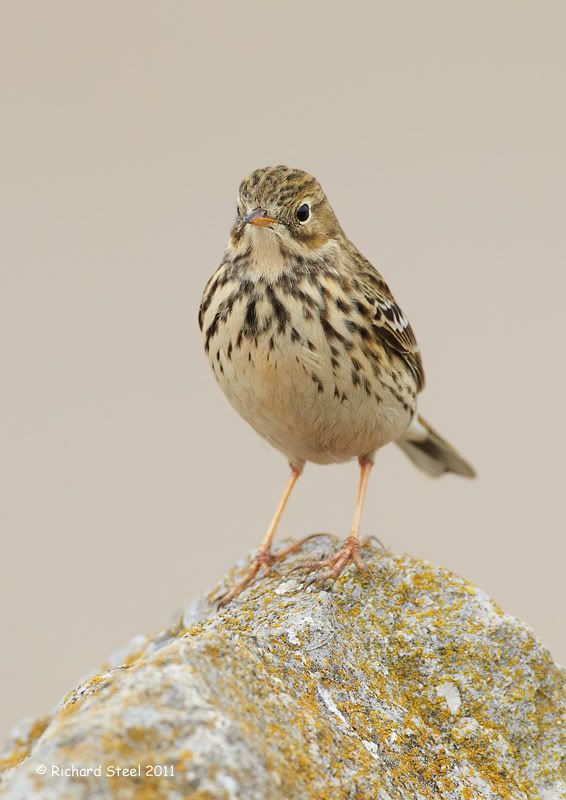
Interestingly this wheatear, despite being on migration, had decided that the heap of boulders was its temporary home and became very territorial, chasing away any other birds that landed nearby. Meadow Pipits were the usual target of its aggression.
The beach in the background provided some nice complimentary coloured background to the bird and although the day was overcast there was still reasonably good and even light.What you cannot see on these low res images here is the feather detail and so you will have to believe me when I say you can see each feather filament in the high res versions.
There was one particular rock that I hoped the bird would use as this was the only one with a decent growth of yellow lichen. After a short wait the bird obliged.
Hopefully, the bird's late departure has not affected it chances of reaching its final destination. I wish it luck on its long journey. This is certainly the last wheatear I will see in 2011 and beside the photos, I am left with fond memories of all those special moments I have spent with these birds this year.

Monday, September 19, 2011

Southbound for the Winter

I popped out the other day for a brief session along the local coast. It was one of those outings where I did not have a particular target species in my sights and so it was just a general walk around to see what could be encountered. On my local coast there are usually some birds around to photograph, particularly waders, as long as you make your visit at the right state of tide. Also given that its autumn you never know what southbound migrants you may stumble upon.

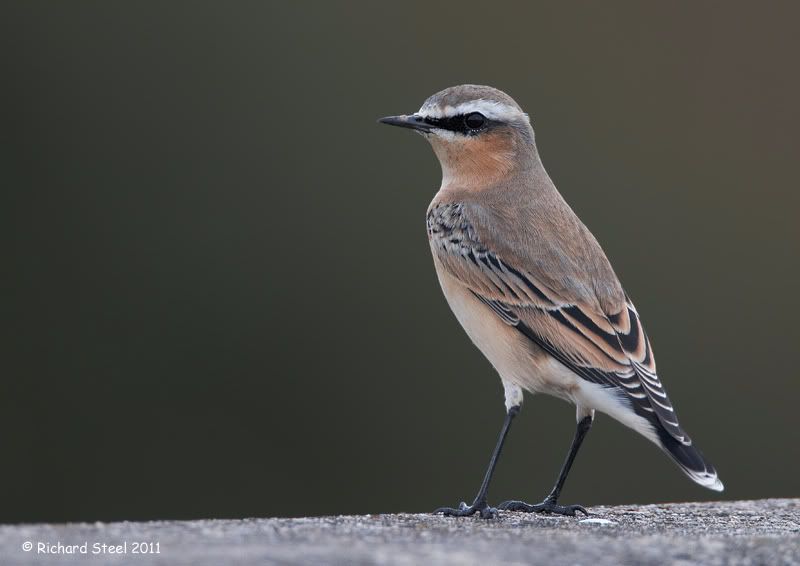
As I wandered along the concrete embankment that forms the sea defences, I bumped in to one of the local birdwatchers and we chatted for a while to see if he had come across any interesting birds recently. As we talked, a movement further along the wall caught my attention as a North Wheatear landed. A feathered cue that it was time for some photography :).
The birds were looking tidy in the warm colours of their fresh autumn plumage. However, I think I still prefer the colours of the spring birds, which really add a splash of much need colour to the still dormant landscape, when they first arrive locally in mid-March.
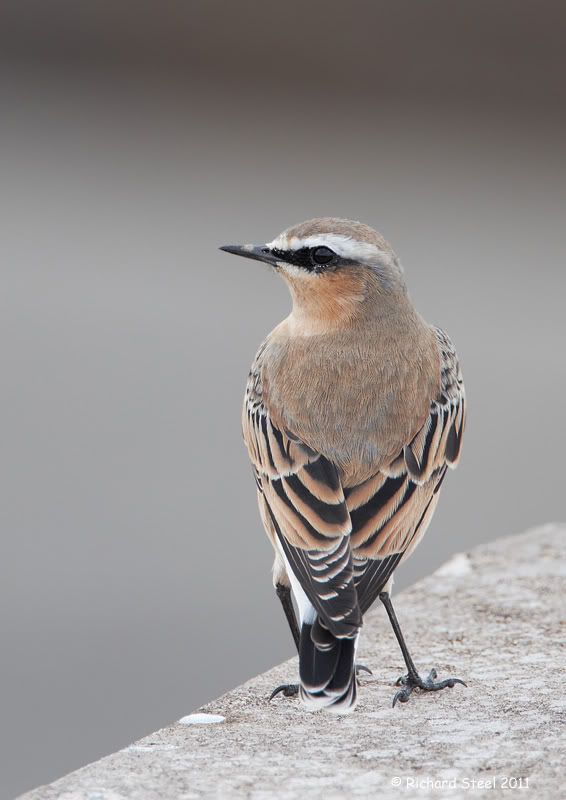
The attractive patterns created by the rear view of a male bird.
As the sun broke through the clouds four more birds arrived. The burnt orange colour of the birds glowed in the late afternoon sun as they temporarily paused on the southward journey to Africa.
The concrete sea defence structures appear to offer them a temporary substitute, and probably a reminder of their rocky upland habit that they had recently left. They would occasionally drop down to snatch another passing insect.
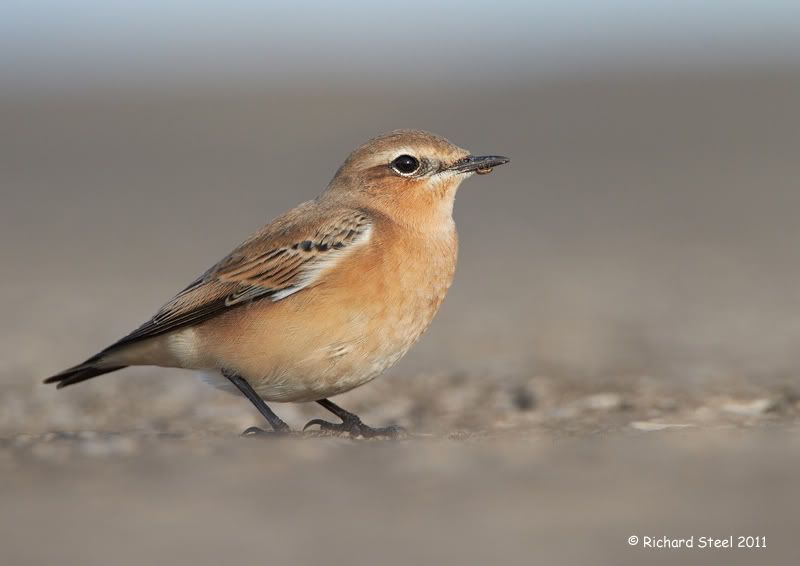
Given the birds seemed so relaxed, I decided to try and see if I could crawl up close to a bird that landed nearby on the concrete embankment. After a slow a careful commando crawl, much to the bemusement of the local passing walkers, I was up very close to the bird with a nice low shooting angle.
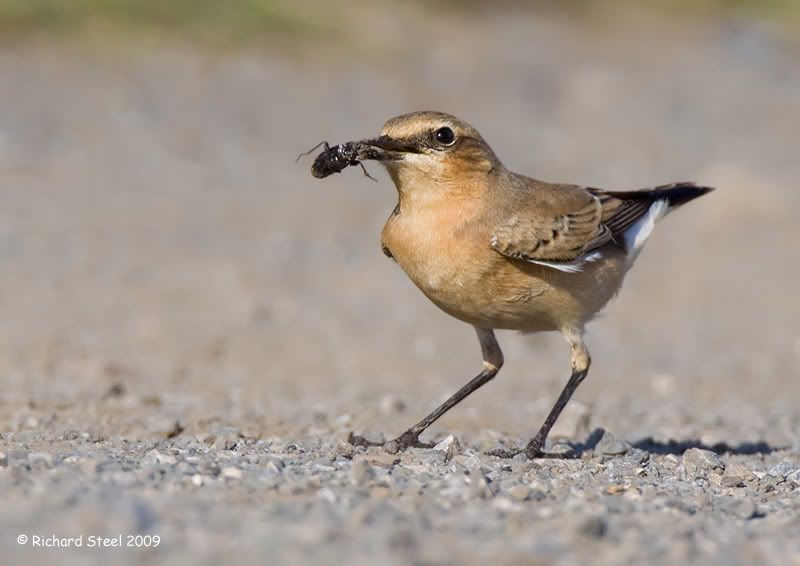
Whilst photographing this bird at close quarters, I noticed it had what appeared to be a small piece of 'mud' stuck to its lower bill. However, on examining the photos on my return home it turned out to be a small beetle, a stowaway on a free trip south.

Wishing these birds safe passage on their long arduous journey ahead. I would like to think that maybe our paths may cross again when they will be travelling back through the area next spring.

Wednesday, August 24, 2011

Heading to the Hills

The other day I saw a Northern Wheatear in its apricot autumn colours heading rapidly southward, a sign of the autumn bird migration getting started. This sighting reminded me of a memorable brief session I had with this species earlier in the year, when the birds were heading northwards to their upland breeding areas, but had not got round to going through the images. We get quite good numbers of the birds moving along the coastal strip of the Wirral during migration. I have generally found the spring birds to be much less approachable for photography. They always seem to try and keep at distance that is just out of photography range and always move a short distance ahead of any approaching person with a flash of their white rump, from where they derive their name.
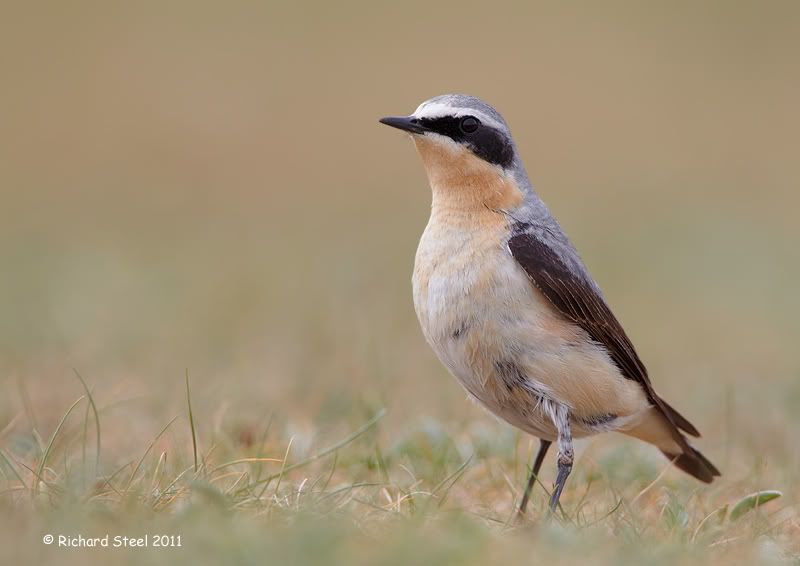
A spring male bird is a joy to behold and certainly brightens up the mid-March landscape, when they first arrive locally and during their long journey up from Africa. This particular bird shown here I came across whilst out looking for Skylarks during May. I spotted the bird, looking resplendent in its fresh plumage, sitting on a fence post and was surprised in that it allowed a close approach.
The bird then dropped to the ground in a dip in the sandy grasslands, that border the coast, and I could suddenly see a good potential opportunity. After watching the foraging bird for a few moments, I predicted the path it was going to take and went round to the far side of the depression and lay down and waited at the top of the bank just out of view of the bird. The secret to the closest wildlife encounters is often to predict the path of the animal or bird based on your knowledge of its behaviour and hope it keeps wandering in the direction of your position. Obviously luck plays it part with this approach and some say I always seem to have it on my side but maybe it happens a little to often for it just to be by chance alone.

After a short wait a head appeared over the crest of the bank directly in front of me.
The bird paused for a while decided I posed no threat and slowly came up on to the top of the bank where I was lying.
This beautiful male Wheatear then stayed in close proximity for a while allowing me to take quite a few photographs. At times it came very close and inside minimum focusing distance on the lens and I had to wait motionless for it hop back out to a suitable range. It obviously knew I was there but seemed unperturbed by my presence.
The session came to an abrupt end when a dog walker, seeing me lying on the ground, walked right up to me to ask what I was photographing. I pointed to the Wheatear flying off in to the distance.

Monday, September 21, 2009

From North to South

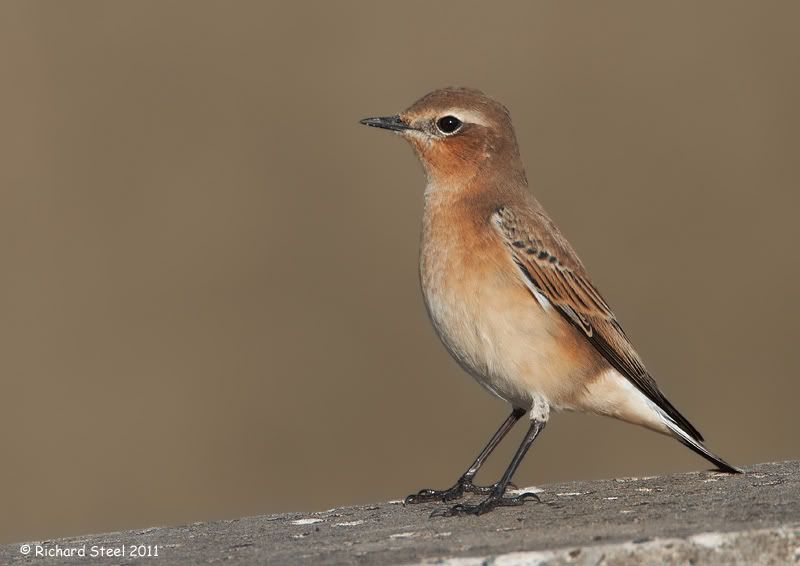
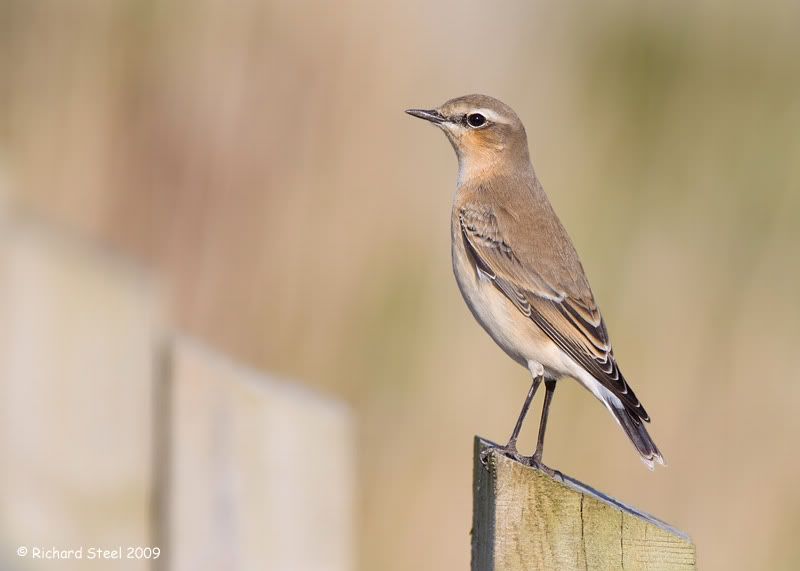
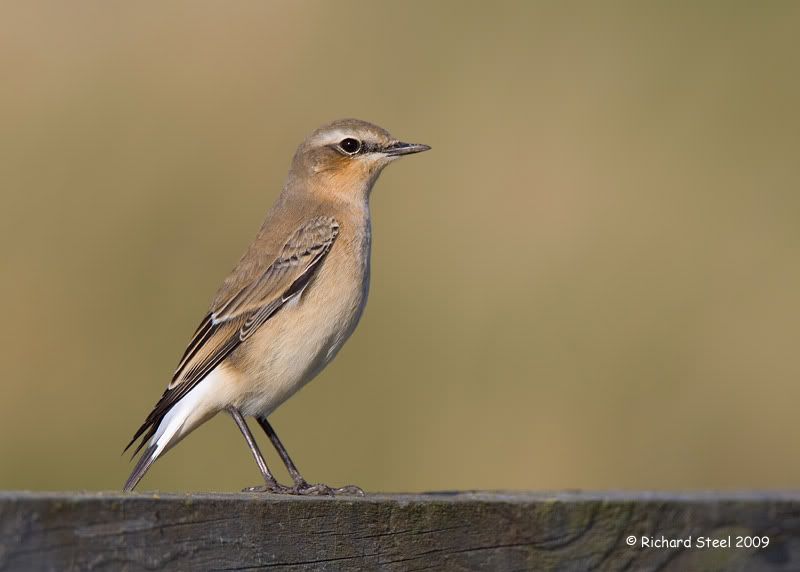
The Northern Wheatear are currently making their long journey back southward towards Africa for the winter. Small groups of birds can be found temporarily pausing along the scrub and pasture areas behind the local coast, although finding them is more a question of luck in being there at the right time as some are passing through. I was fortunate to recently locate a group of 8 birds.
Photobucket


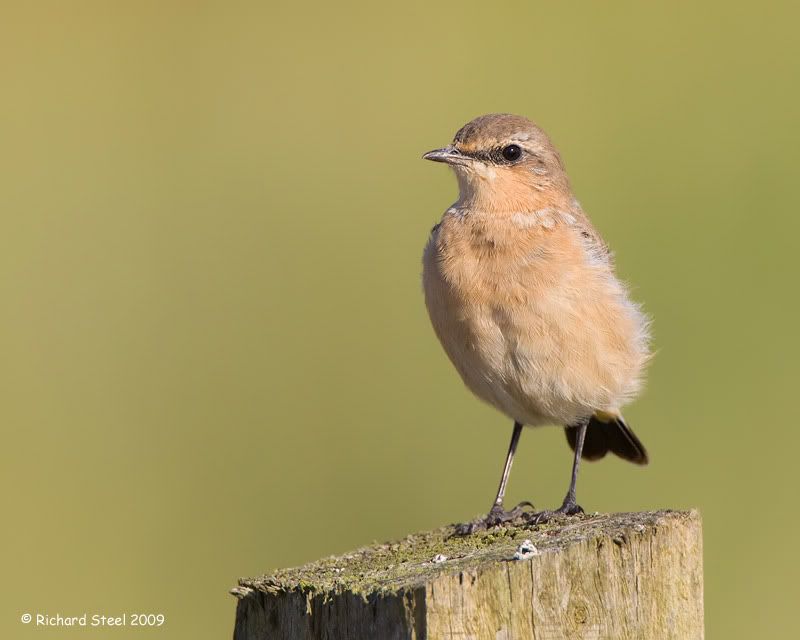
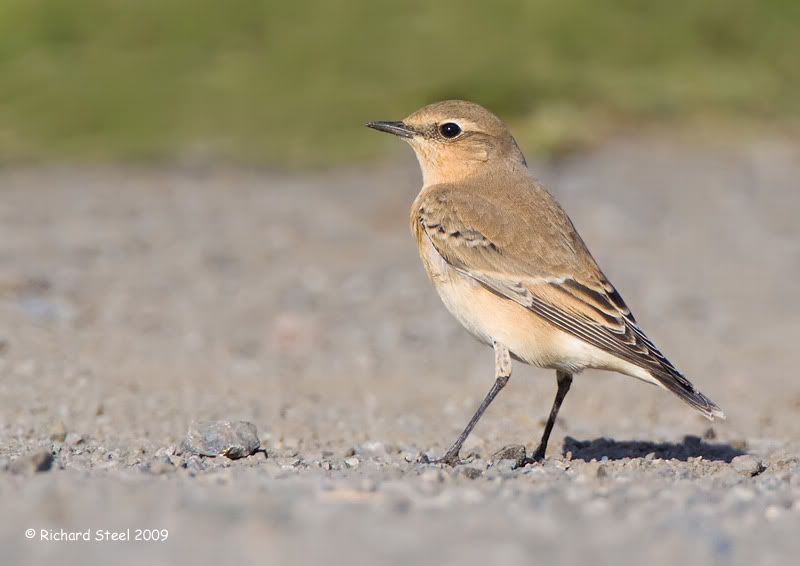
The autumn passage birds have a 'softer' look about them as the males have lost their bold markings of the spring and all the take on an appealing warm apricot colour. These returning wheatear also seem much more approachable than those found in the spring and were typically perching along the fence line of a paddock.
Photobucket

Photobucket

A few were also present on the large boulders of the local sea defences which is the closest similar habitat they will find around here to their rocky upland breeding grounds.
Photobucket

The birds were busy hopping down from the fence posts on the a gravel path to feed on insects to fuel their long journey.
Photobucket

However, the heat haze coming off the path on the warm early autumn day was playing havoc with focusing as usual. This bird was having a battle trying to subdue a large beetle in had found.
Photobucket

Wishing them all a safe onward journey and I look foward to their return with their spring colours in the middle of March.

Sunday, April 26, 2009

Spring Sunshine

Spring is such a wonderful time of year for the bird photographer. The birds are very active, often in their best colours and the spring passage of migrants can always produce the unexpected. A further benefit is that first light is still at a sensible hour!
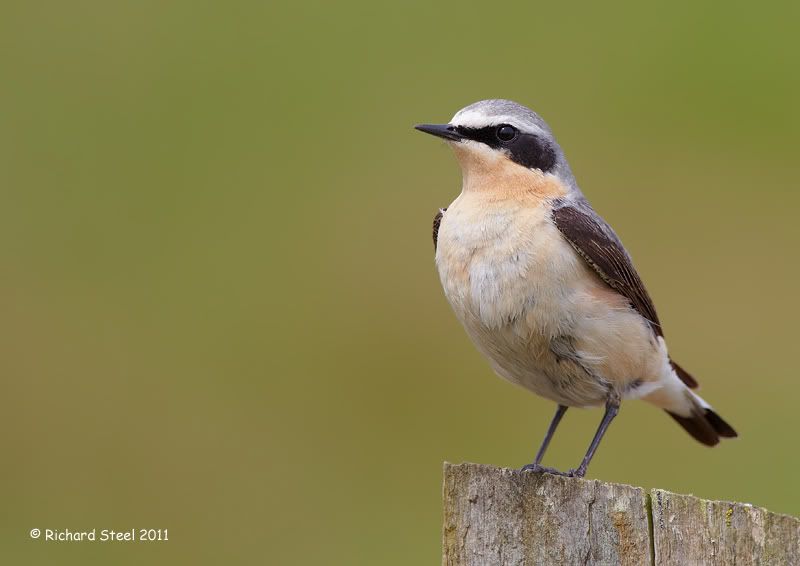
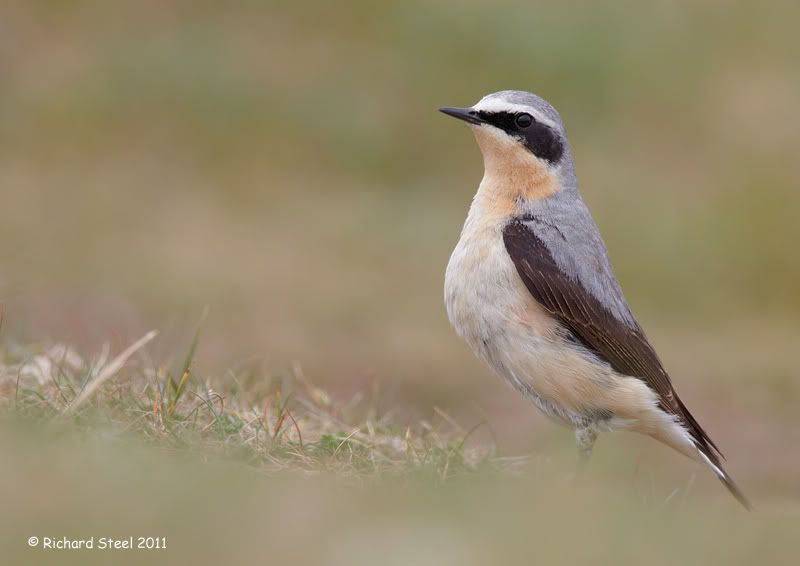
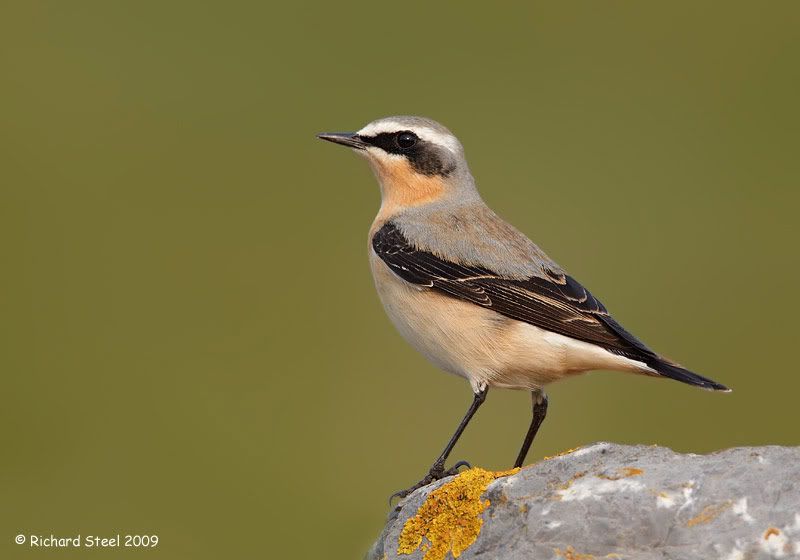
My local coastline is a good place to wander around at this time of year as it is popular as a brief stopping point with migrants heading northwards. One of the first arrivals are the Northern Wheatear in their beautiful spring colours. They are difficult birds to approach with a fondness of staying ahead of you and frustratingly just out of range. I managed to use some cover to get close in on this fine male.
Photobucket

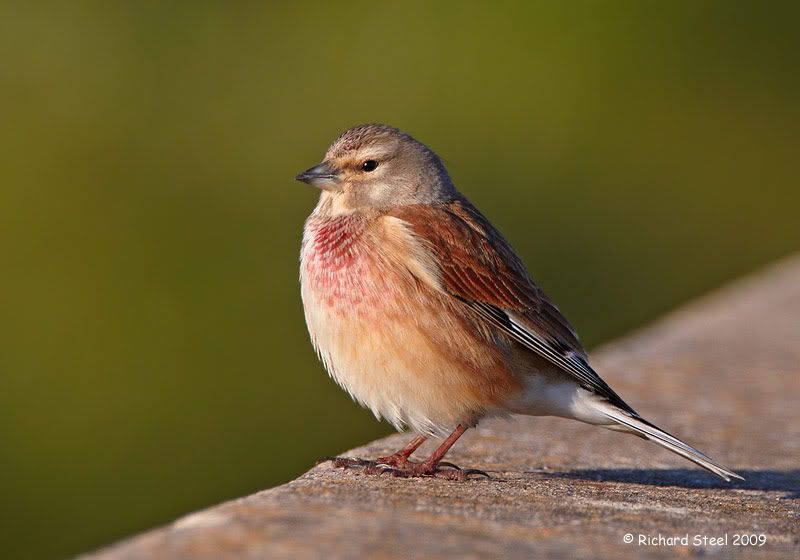
Another species which is diffcult to get close to are linnet, although spring does seem to offer the best chance for a photograph or two as the males are often preoccupied with trying to attract a mate.
Photobucket


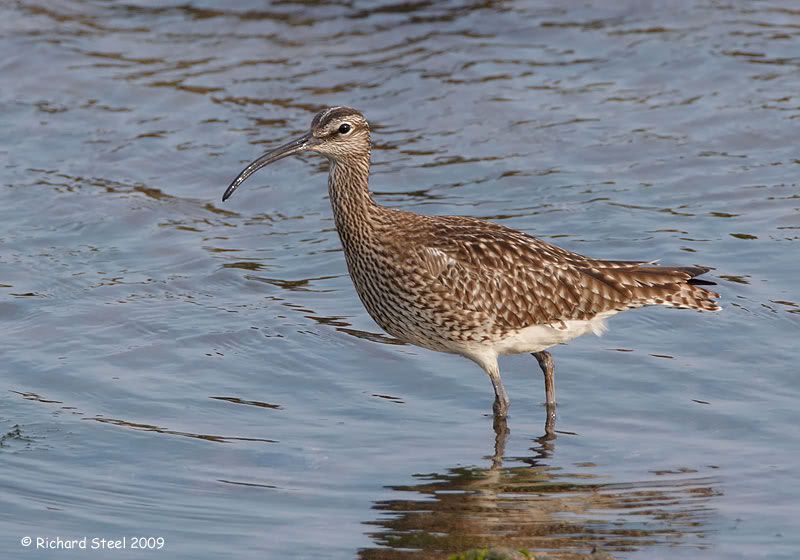
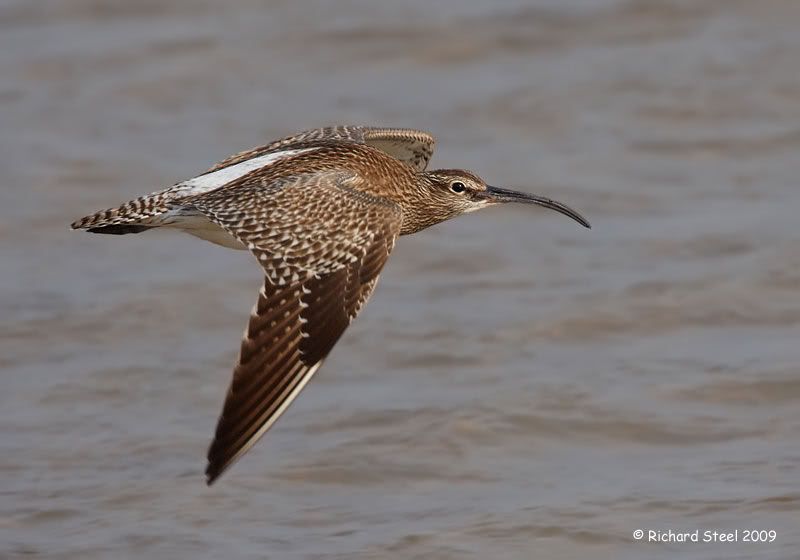
I was out yesterday morning and managed to get a Whimbrel in front of the lens for the first time. Always such a great pleasure to get a new species. Slightly smaller than a curlew and easily distinguished by the head stripe, there are always few passing through each spring. They show similar characteristics to the curlew in being nervous and difficult birds to approach. A slow and patient couple of hours were required to get a few photographs.
Photobucket

Photobucket

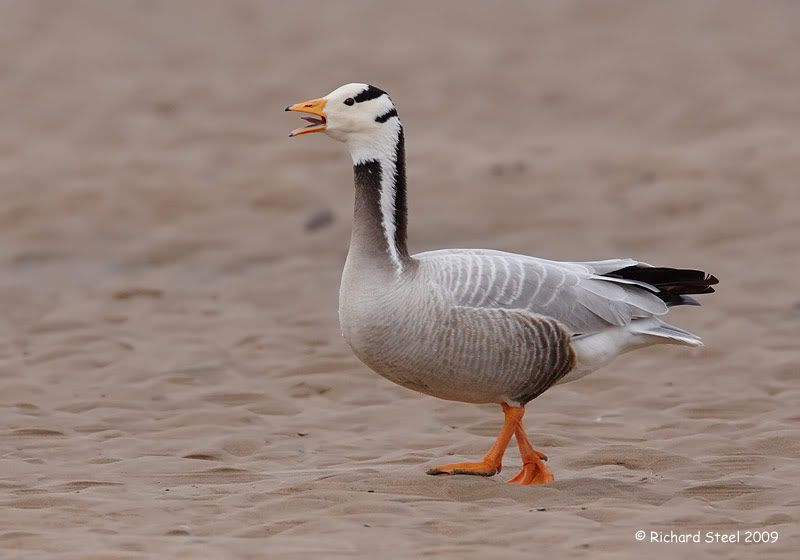
As for the unusual, I was recenty out with my friend Steve and spotted this goose on the local shore. It was one of the moments when you had to rub your eyes in disbelieve, as there in front of us was a Bar-headed goose. These birds are from central Asia and hold the migration altitude record as they fly over the Himalayas. I suspect this bird has never seen central Asia and likely to be an escapee (although it had no leg rings) or a feral bird.
Photobucket

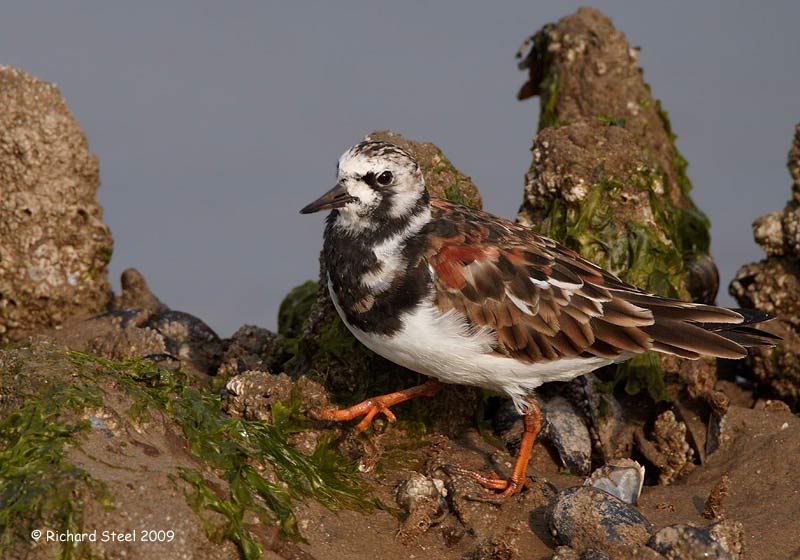
To finish off this post there is still the odd Turnstone locally that have not headed north to breed. They are looking very smart as they transform into their summer plumage.
Photobucket

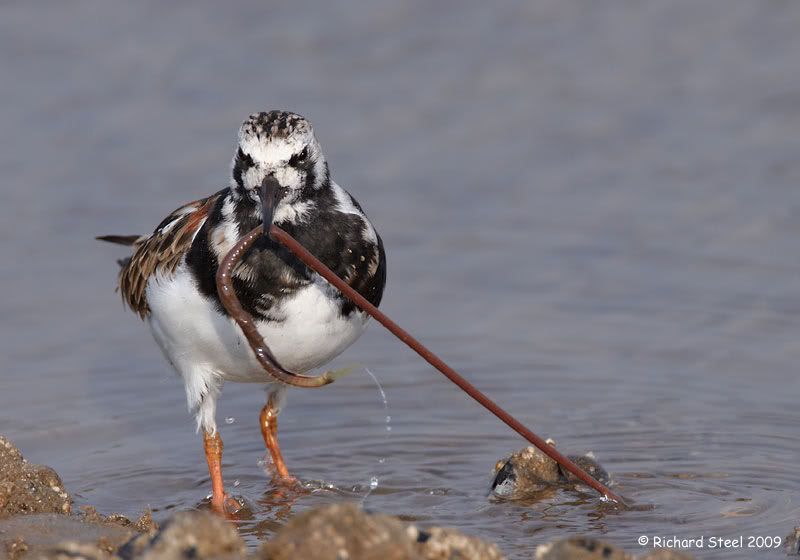
I should imagine this worm had wished this particular bird had made its migration journey.
Photobucket

LinkWithin

Related Posts with Thumbnails