Sunday, March 14, 2010

Diversity is the Spice of Life

One of the great joys of photographing birds is the diversity of species that may be encountered nearly anywhere. I am fortunate of living in easy access to a wide range of habitats, from hills to farmland through to woodlands and coast, that in turn support a varied bird fauna. I thought I would put together a compilation of recent photographs taken in a wide range of situations with a bit of background on how the photographs were achieved.

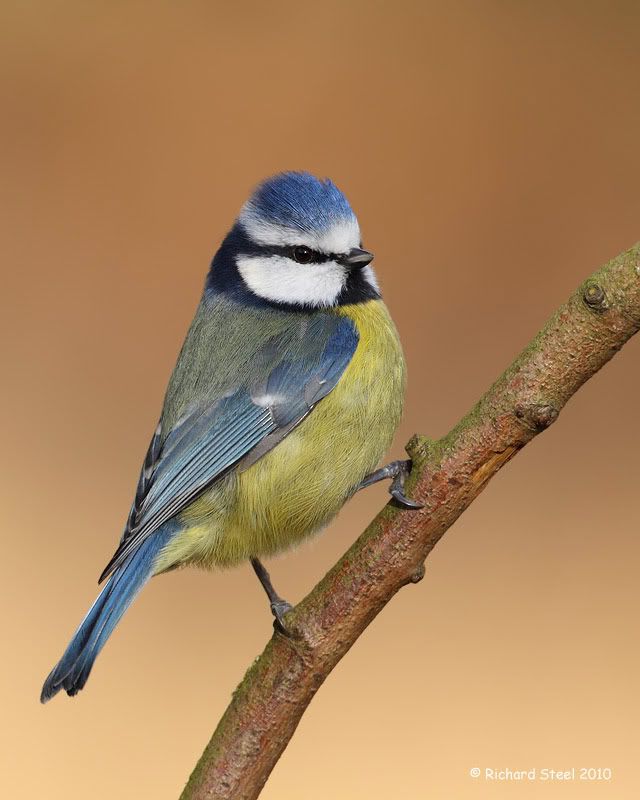
Starting with woodlands, a well placed feeding station can attract a wide diversity of birds, particularly during the cold winter months when the small birds have a need to supplement their energy supplies. The setting up of a feeding station requires careful consideration in terms of light direction, placement of perches and the hide but the results can be very productive. The Blue Tit is a common bird but shows some stunning colours in Spring plumage.
Photobucket

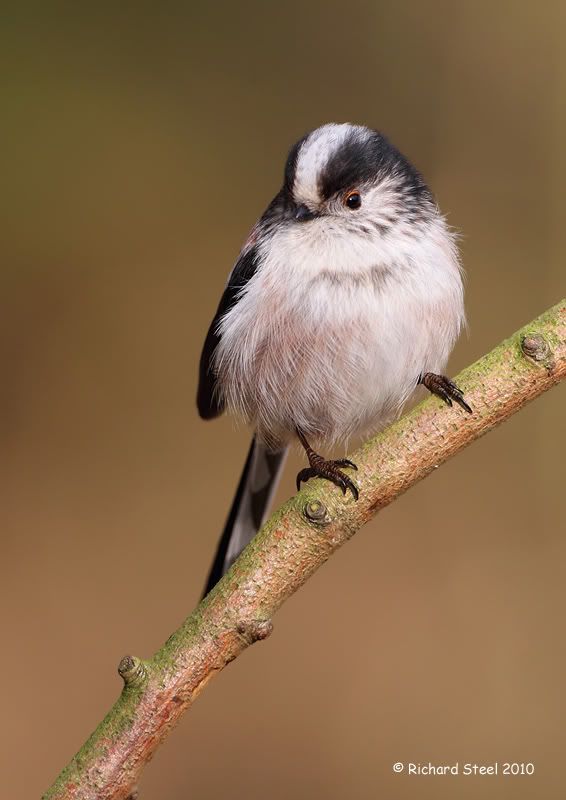
It is difficult to dislike Long-tail tits with the unique shape and colours and comical antics. They usually descend to a feeding station in groups but can be quite difficult to photograph.
Photobucket

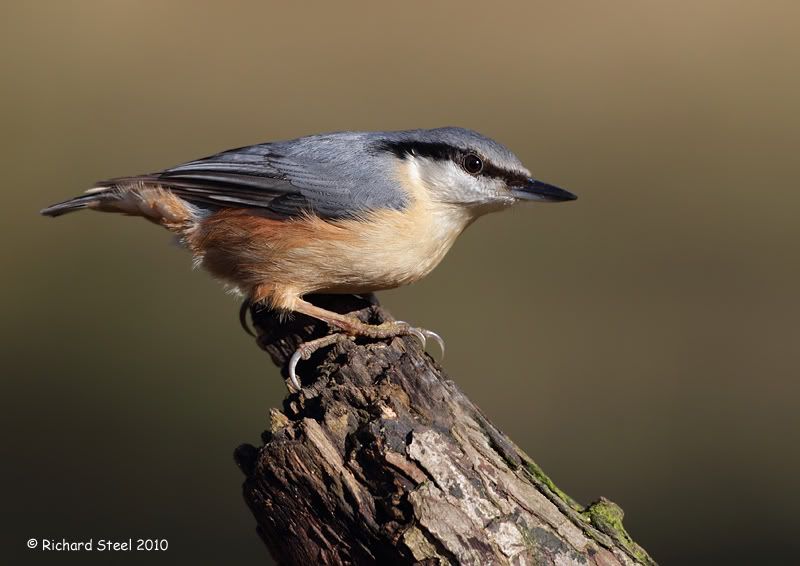
A common woodland feeding station visitor is the Nuthatch which can usually be heard long before they arrive with there almost electronic sounding call.
Photobucket

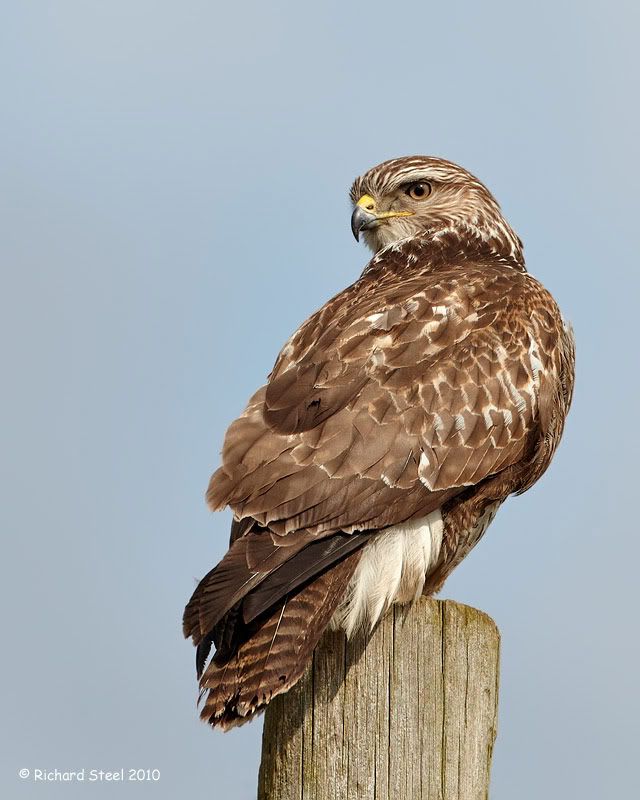
Moving across to the Farmland habitat, the office where I work is surrounded by fields and currently hundreds of bleating lambs. The are a number of birds that are resident that allows me to undertake short sessions during my lunch hour. These include a large mixed flock of rooks and jackdaws and the occasional buzzard.
The opportunities to photograph the wary buzzard are seldom but a joy when they happen.
Photobucket

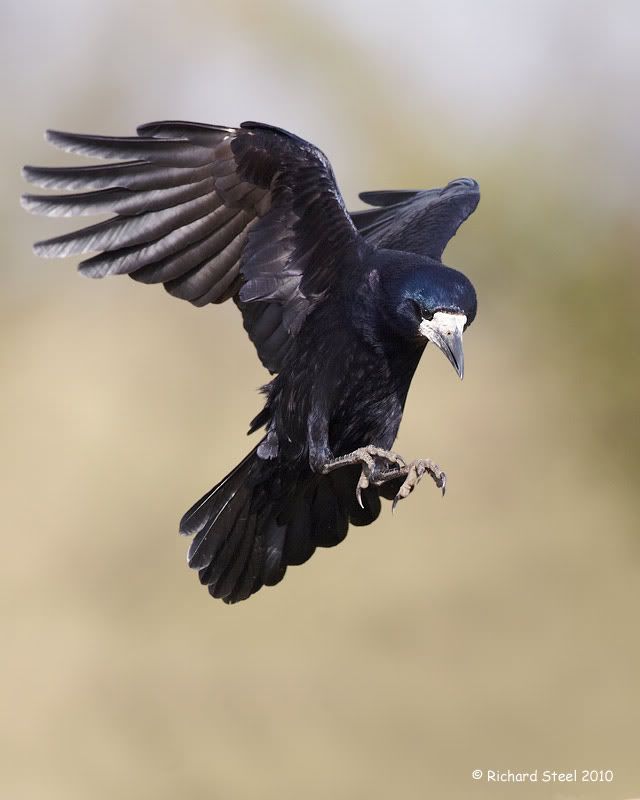
Photographing rooks under the lunchtime sun presents some tricky exposure issues.
Photobucket

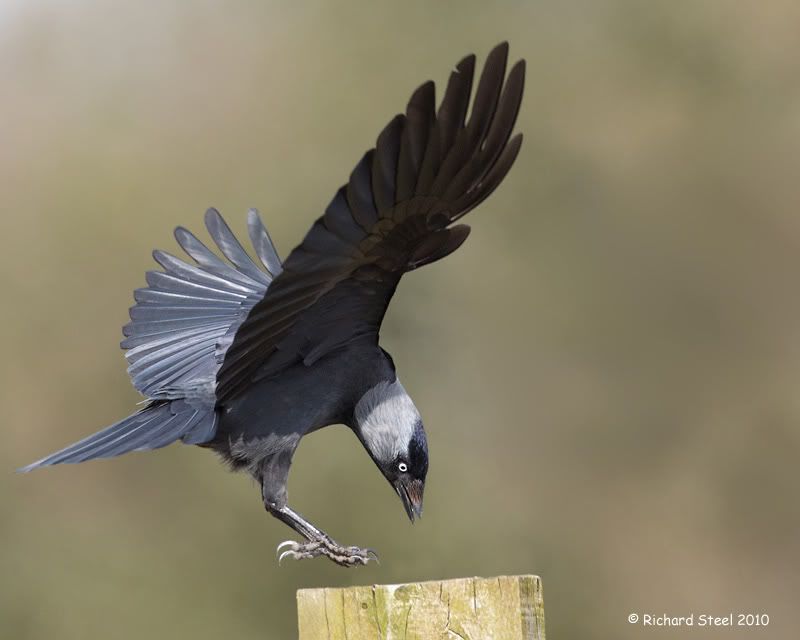
A Jackdaw taking carefully landing on a fence post.
Photobucket

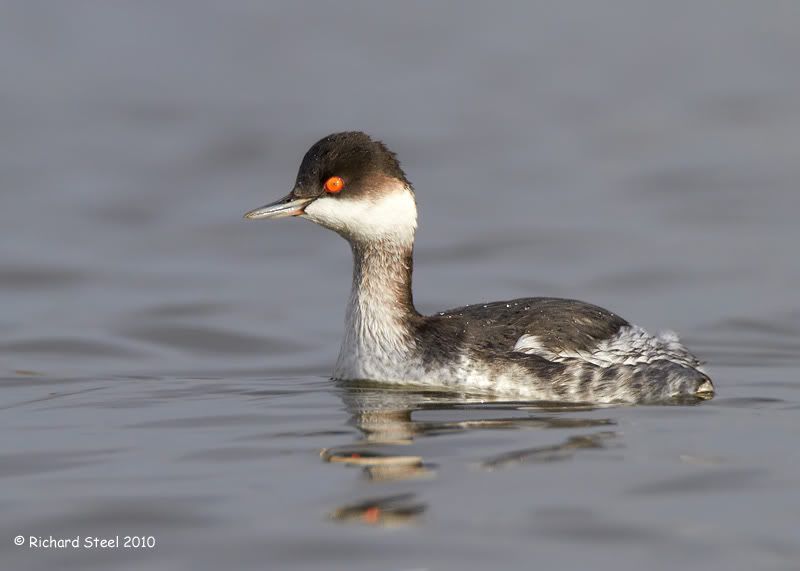
Moving down to my local coastline. A Black-necked grebe was being report as taking of temporary residence on one of the large local marine lakes. It proved a tricky customer to photograph but perseverance won out eventually. I ended up lying on the ground on the lake margin and was fortunate when the bird with the spooky eyes popped up a close range after one of its foraging dives.
Photobucket

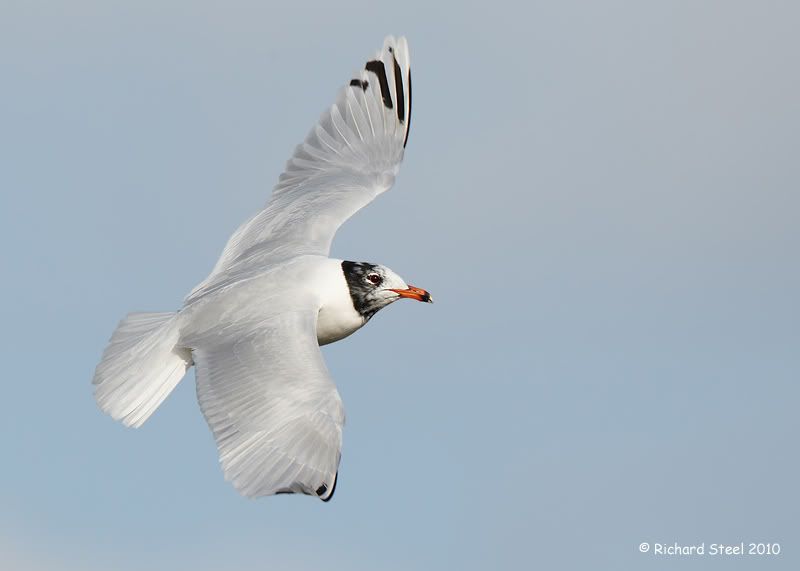
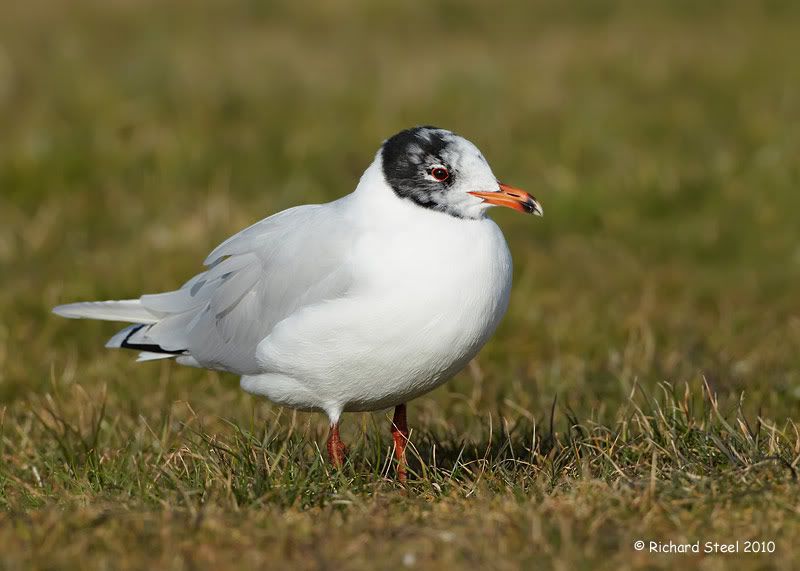
I also caught up with the second winter Mediterranean Gull that has been lurking locally for a couple of months. It is rapidly progressing towards full summer plumage. It was not quite in summer colours when I found it and I hope it will stay around for another couple of weeks for the feather transformation to become complete.
Photobucket

Photobucket

I will finish this post with some waders who will be soon heading northwards to their breeding grounds where I hope to catch up with some of them again with a trip I have planned to Arctic Norway in June. The following photos were taken during the recent big spring tides when the birds are forced to take refuge on the local sea defences at high water.
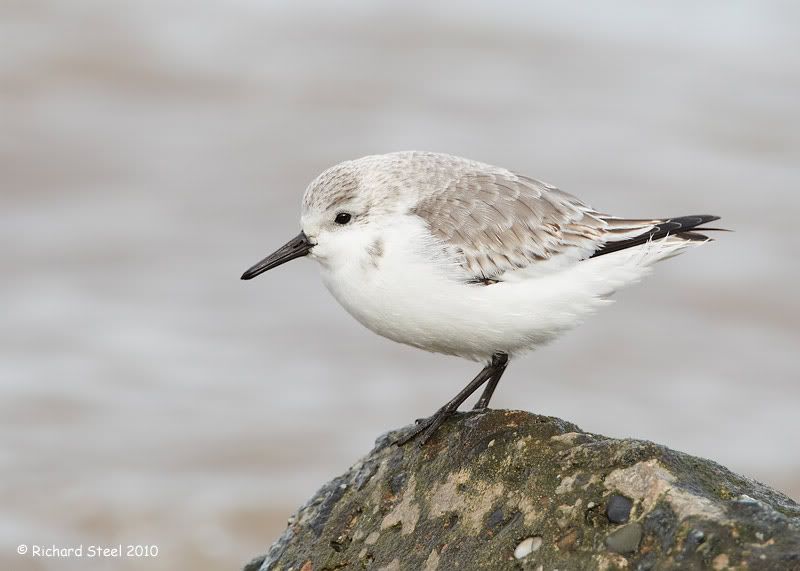
The rare sight of a stationary Sanderling
Photobucket

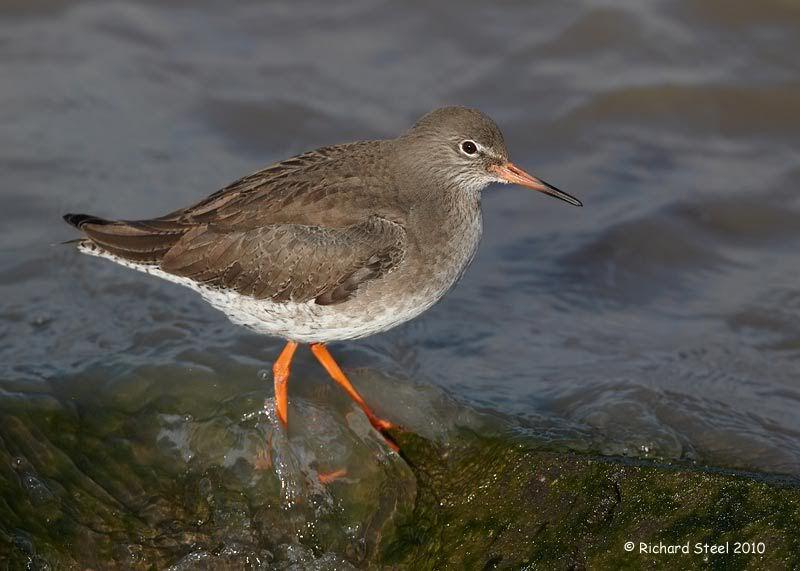
Wading Redshank
Photobucket

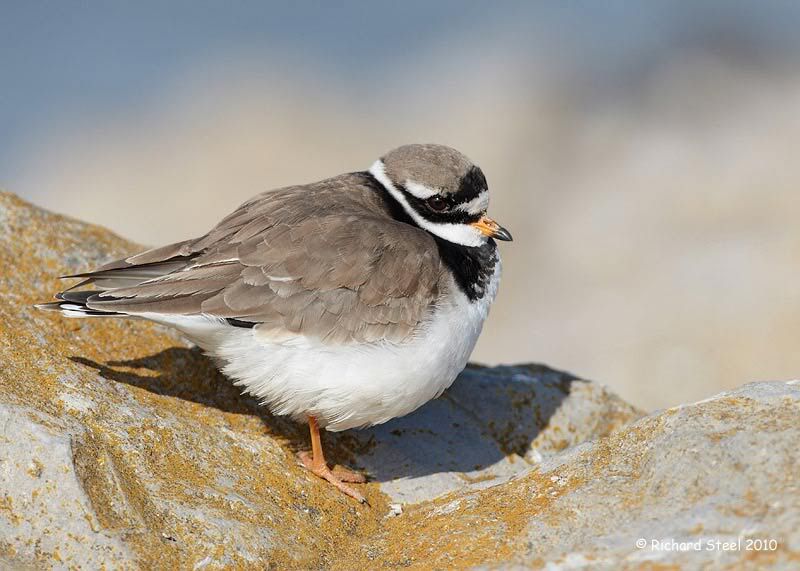
Resting Ringed Plover
Photobucket

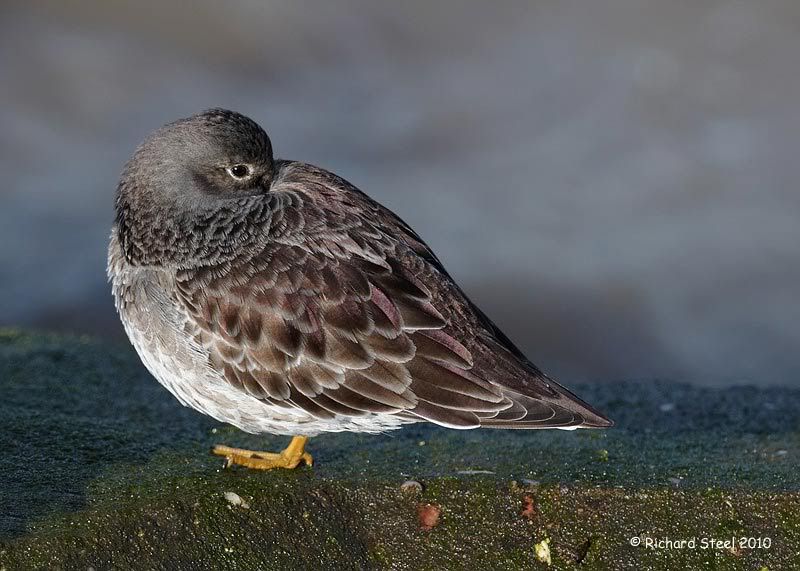
It is not until the light is at the right that you can see where the Purple Sandpiper gets its name.
Photobucket

Tuesday, March 09, 2010

'What Larks'

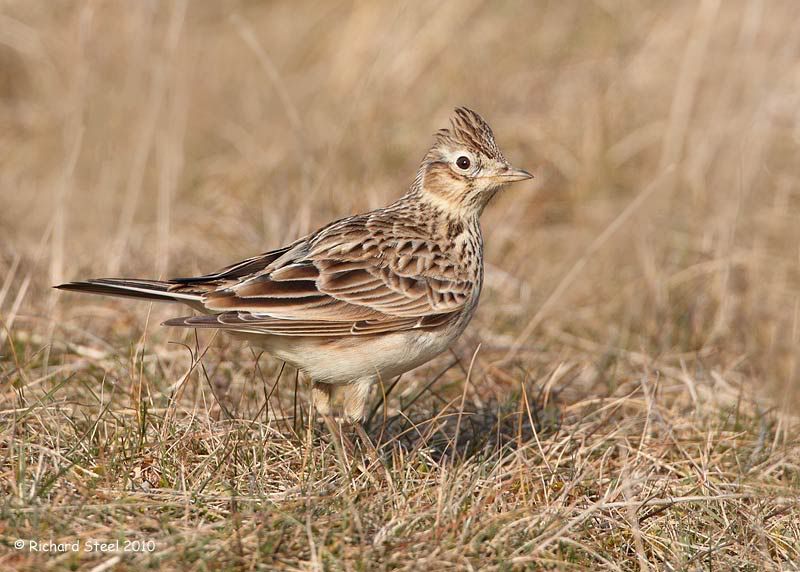
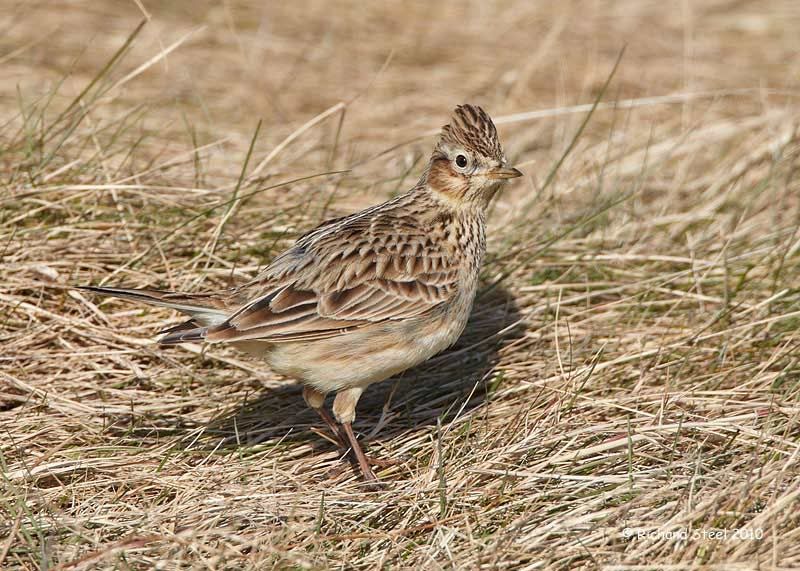
When I was at school, in the dim and distant past, we were asked to study Great Expectations by Charles Dickens. Only one phrase has stuck with me from that book which is the title of this post about skylarks. Nothing reminds me of my childhood more than skylarks. Lying in the long grass on a sunny afternoon fascinated by the these small birds ascending to such a great height in a cloudless sky while their beautiful liquid song descends. My apologies I was getting a bit lyrical there but I am not the first to be so inspired by these beautiful birds.

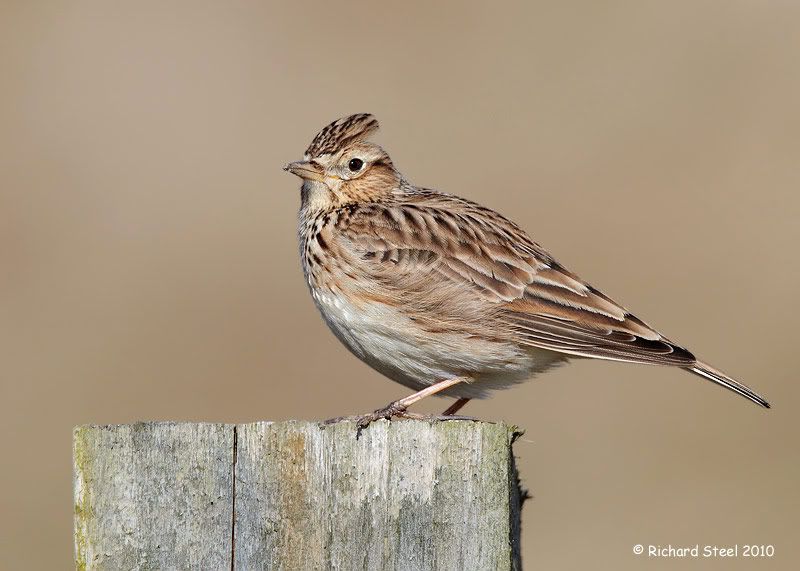
My fascination with skylarks all these years later is no less diminished and now when the first image is captured on the memory card it signals to me that Spring has begun. I am fortunate to have a good population of these birds along the local coast and March is my favourite month to photograph them before the vegetation gets too long. As I walked to the site where I usually photograph them a smiled was raised by hearing that characteristics song overhead. Being a ground dwelling bird they are not one that is found perched in trees but they do have a fondness for sitting on fence posts.
Photobucket

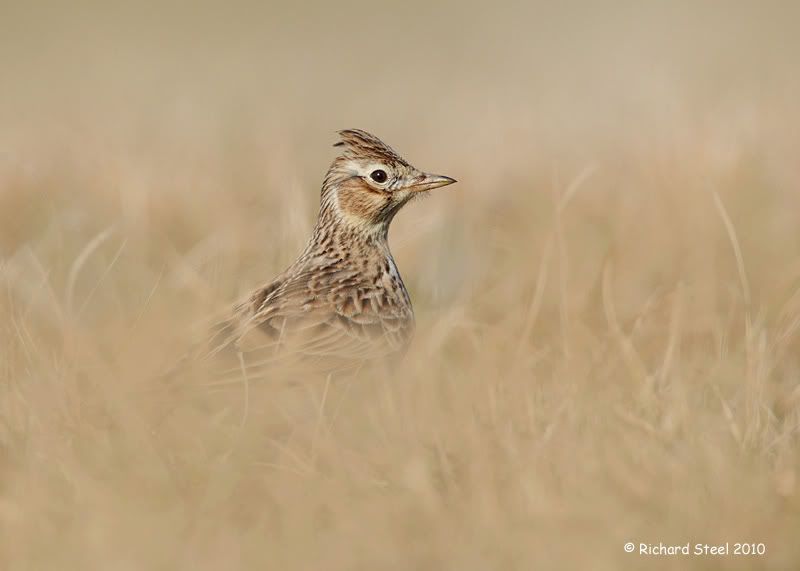
In a more natural setting there excellent camouflage comes in to play and they can be quite tricky to spot.
Photobucket

Photobucket

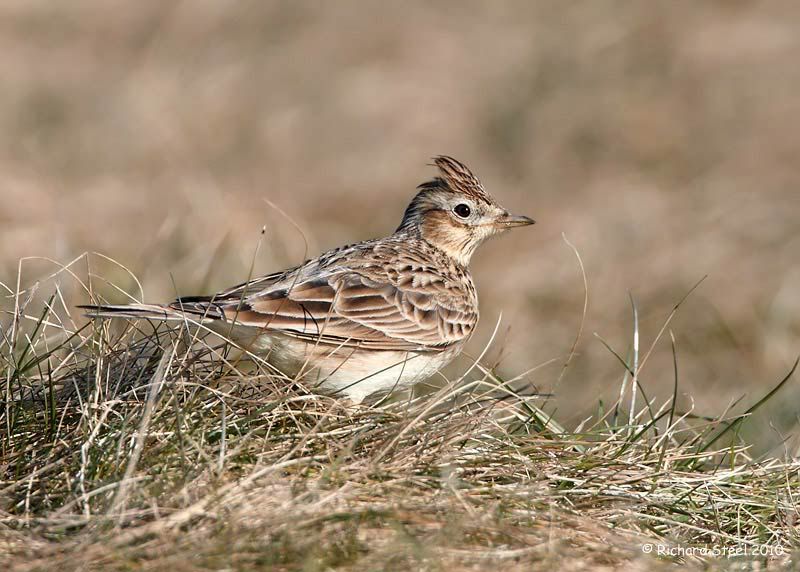
By slowly and carefully crawling in to position I managed a low angle and to get in close proximity to a couple of birds and it is always a great pleasure to be in their company.
Photobucket

Photobucket

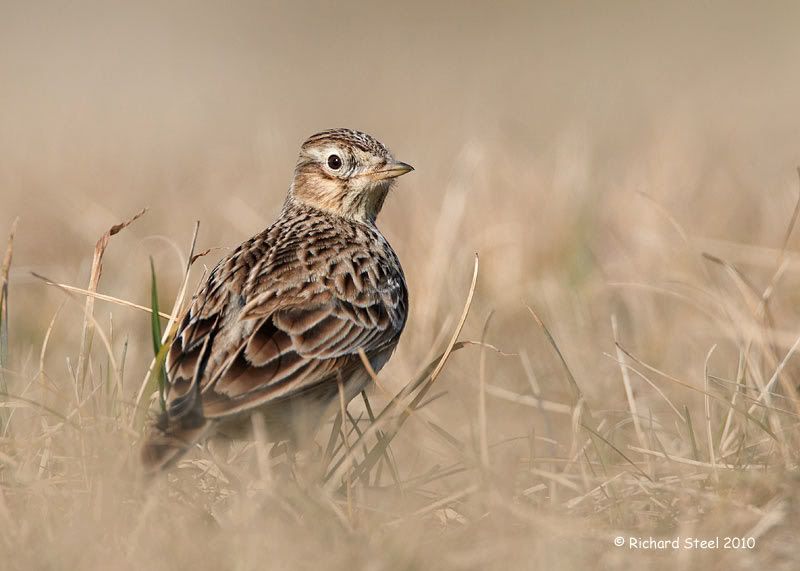
By opening up the lens aperture, the resulting shallow depth of field can turn the surrounding vegetation in to a mist of colour that is useful for drawing attention to the subject.
Photobucket

Hopefully I will get opportunity to have another session with skylarks before my attention is diverted by the arrival of the spring migrants. The first of the Northern Wheatear should be arriving in the next few days if they are keeping to their usual annual timetable.

Wednesday, March 03, 2010

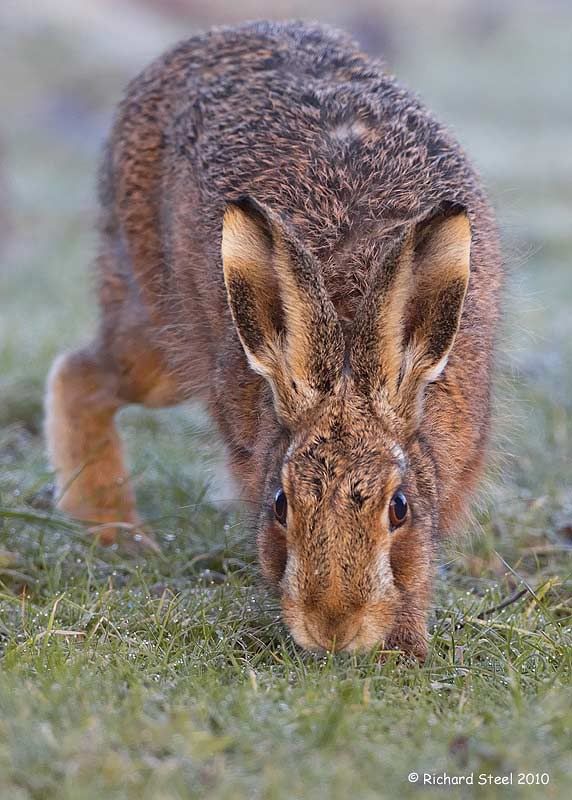
Hare and Deer

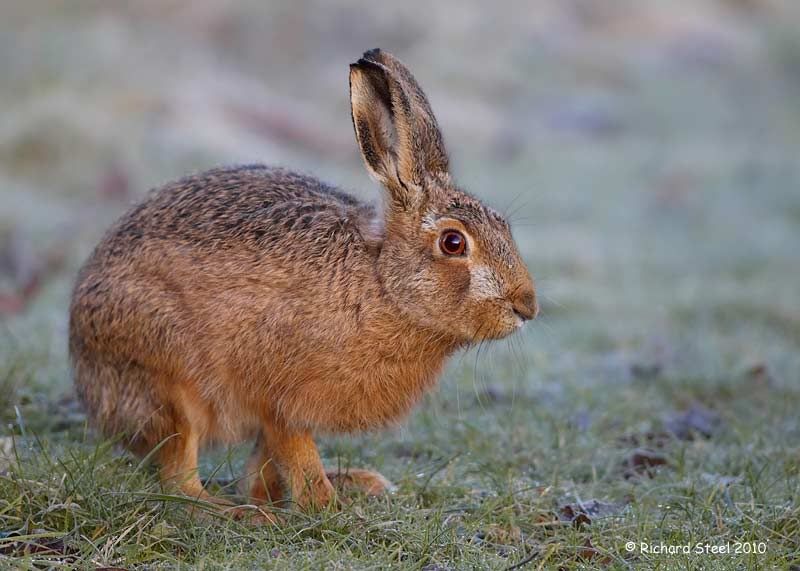
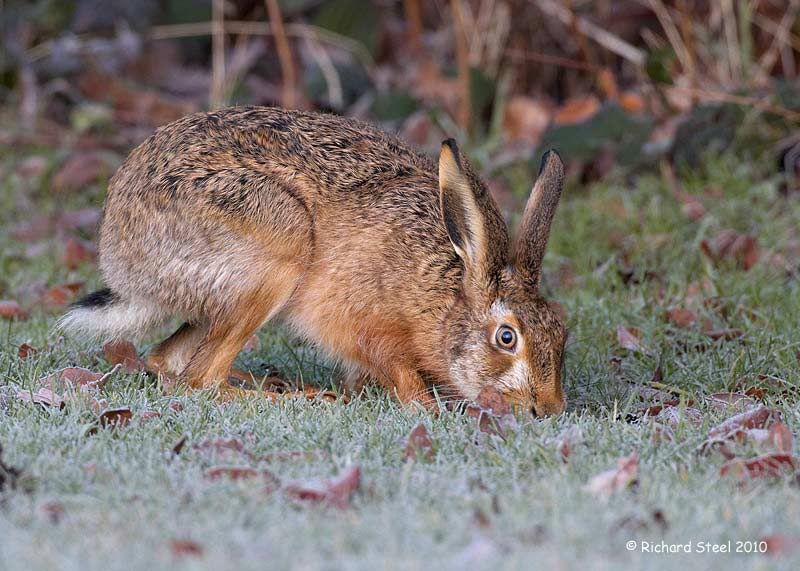
The title of this post is not the name of the local pub but I thought I would show some recent photos of mammals to make a change from the birds. My attention is just now turning towards Brown Hares as the stirrings of spring are in the air. Nothing lifts the spirits out of their winter hibernation more than the birds bursting back in to song as they call for mates. However, the weather has continued to be cold which has kept the hares hidden away in the hedgerows and so my sightings to date have been few and far between. Hares do not seem to be fond of the cold and hot extremes of weather but then they do not have the benefit of a burrow to retreat to like rabbits. Their home being a shallow depression in the ground that does not offer much protection against the elements.

Will I get the elusive hare 'boxing shot' this year? That is difficult to say given their unpredictable nature and the element of luck necessary in photographing wildlife but I will give it a good try.

It is always good to see and capture the first hare photos of the year and I managed to find a couple in some poor light on a recent frosty morning.

Photobucket


Photobucket

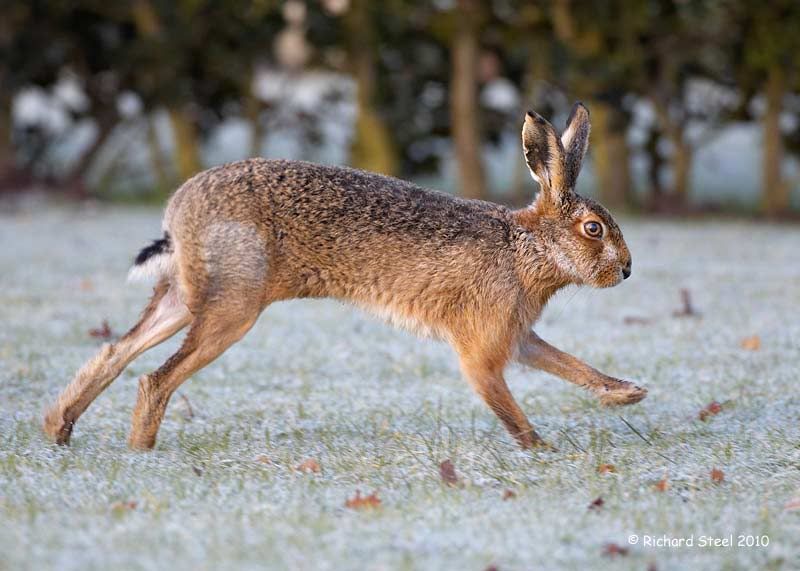
Not quite enough camera shutter speed to freeze this hare in its run past but some blur in the legs can add to a sense of movement.

Photobucket

A close encounter of the best kind.

Photobucket

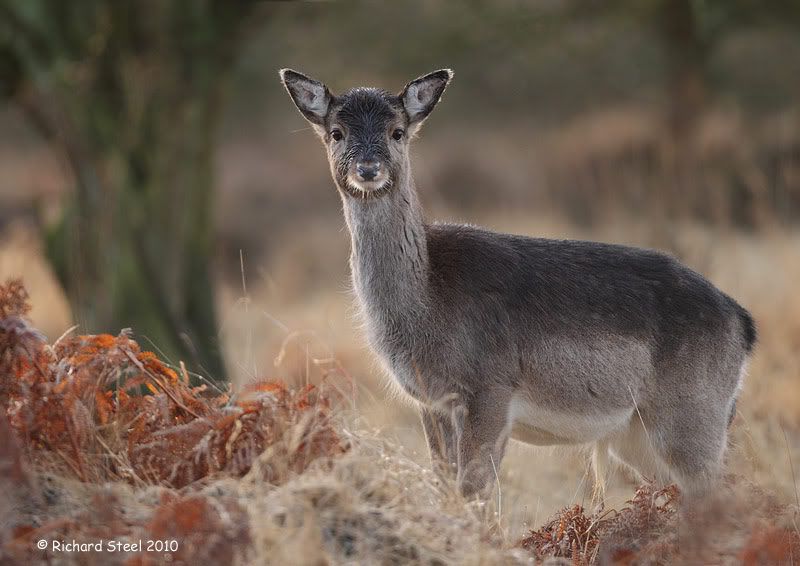
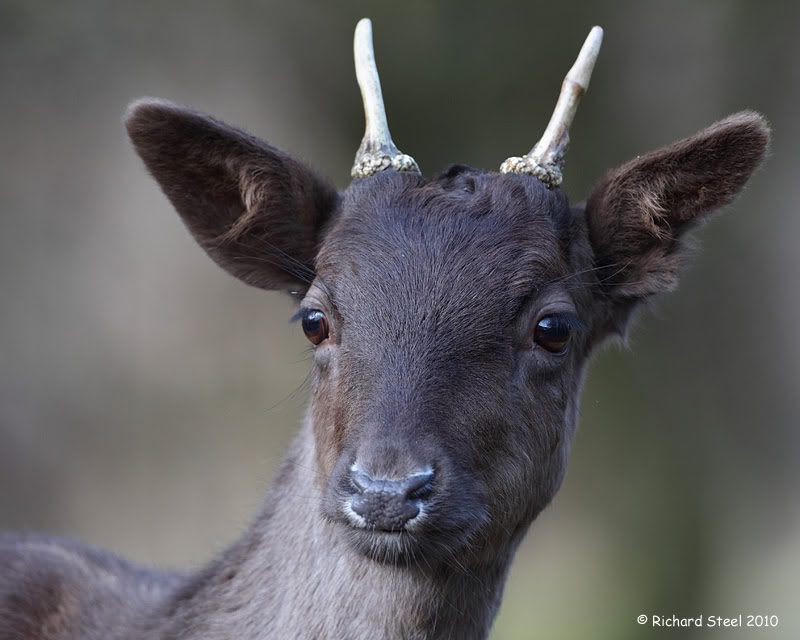
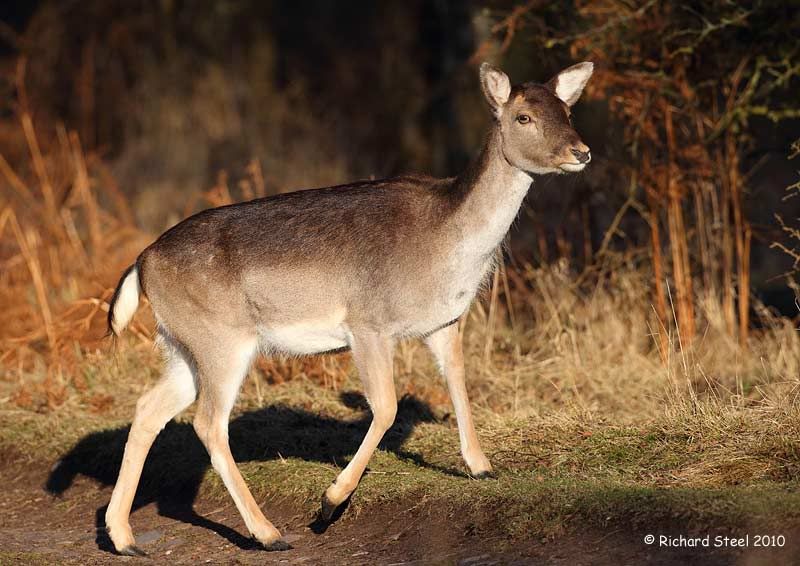
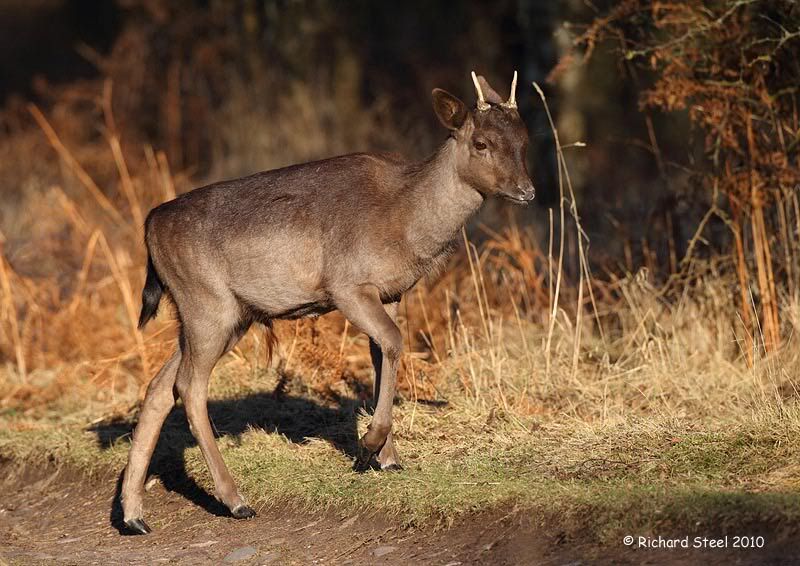
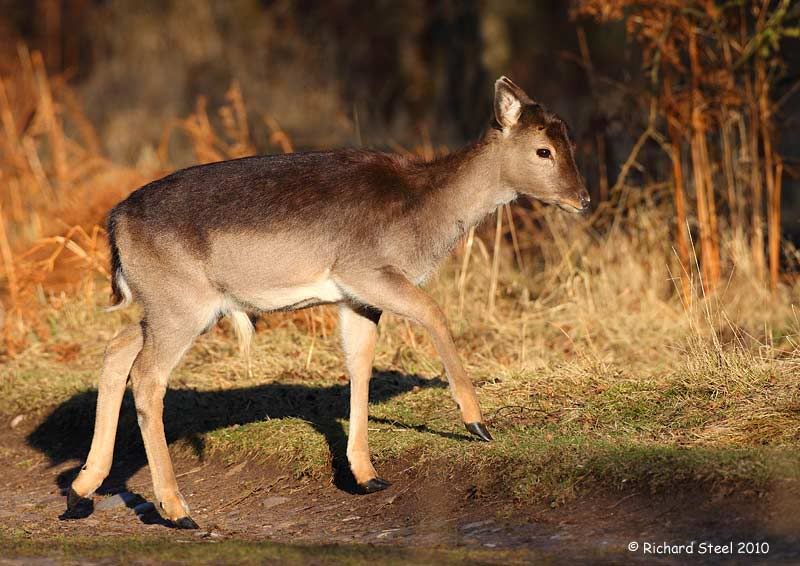
Moving on to some larger animals, as whilst out photographing some birds recently I came across a group of deer. I am still trying to work out what type of deer these were. My first impressions were that they were all dark coloured fallow deer but wonder if a couple of the group were Sitka deer which are known to inhabit the area. If anyone has any views I would welcome them.

Always good to get some direct eye contact with your subject.

Photobucket

Up close and personnel.

Photobucket

Later in the day a small group lined up to cross a footpath. Fortuately they made the their moves one at a tiime allowing me to get photos of each.

Photobucket

Photobucket

Photobucket

Thursday, February 25, 2010

Project J Progress

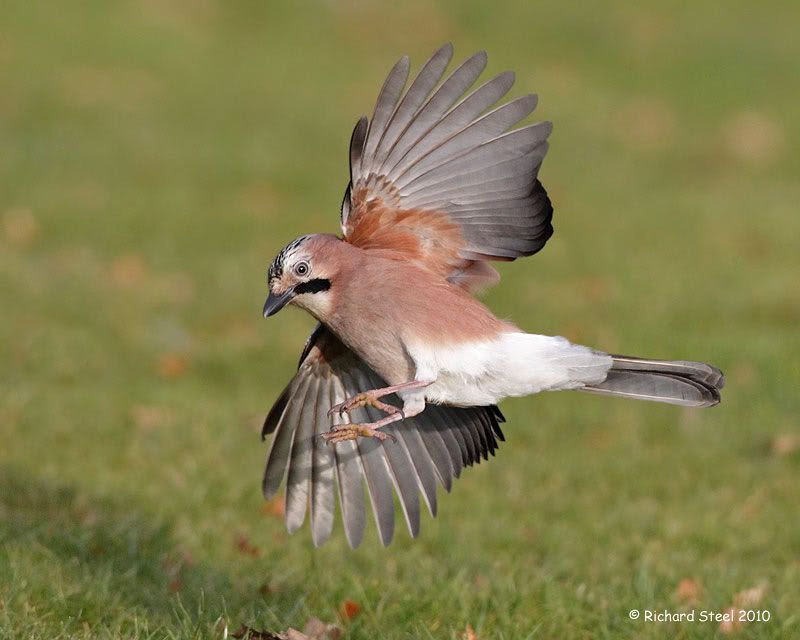
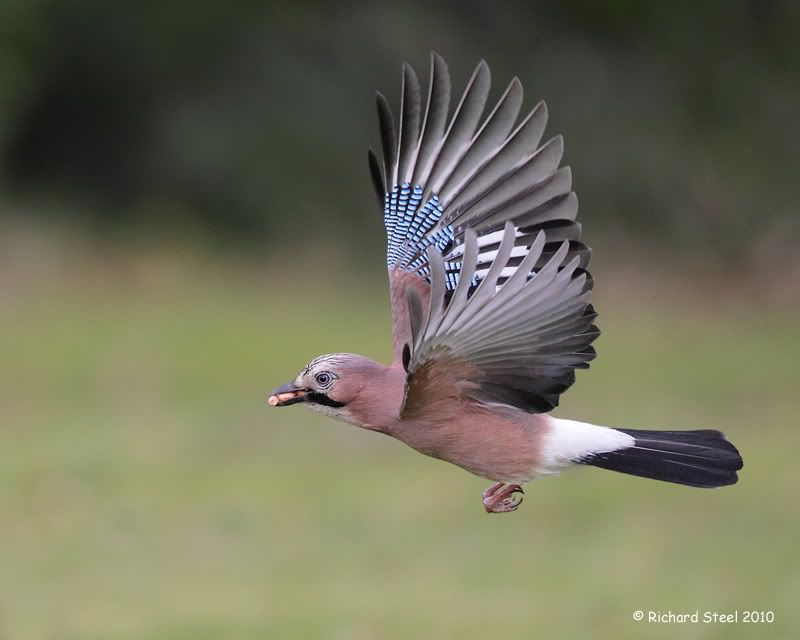
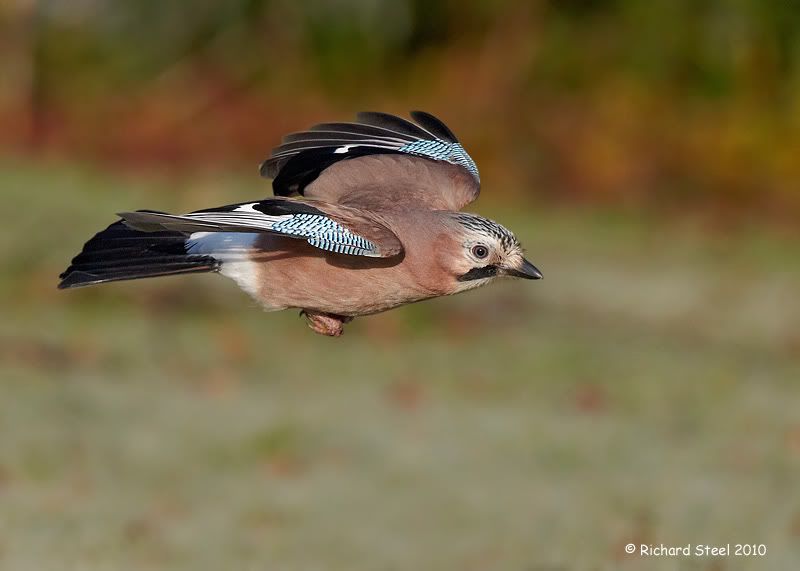
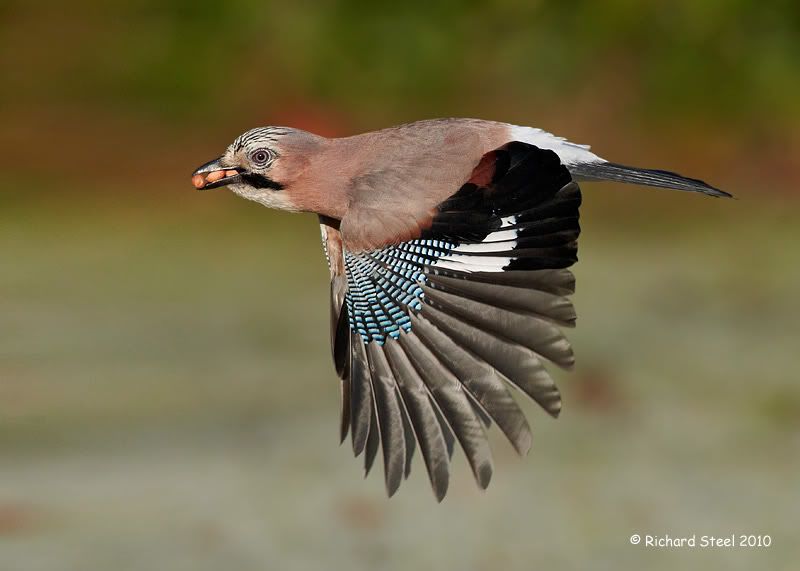
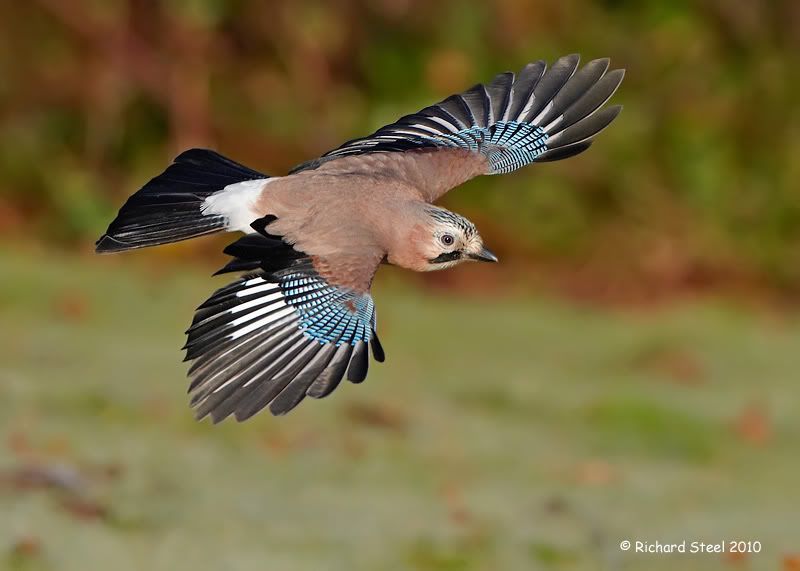
Regular readers will know that I have a long running project which has involved attempting to take some photographs of Jays in flight. This has been known as 'Project J'. My success in achieving this goal has been very limited to almost non-existent from my previous attempts but I can now happily report that progress is being made.

There are quite a number of difficulties to overcome on Project J. Firstly you need to overcome the shy nature of Jays and find a method of getting close to them, then you need to get them flying in the right place in relation to the light and along 'predictable flight paths' and you also need some good light conditions to get sufficient shutter speed to freeze the motion. On top of all of these factors they are actually very erratic on their flight path, particularly at point of landing which makes it extremely difficult to lock focus with the camera. This probably accounts for why there does not seem to be many flight photographs of them. However, I am never one to shy away from a photographic challenge and finally my perseverance is starting to produce some results and the following are from two brief sessions.

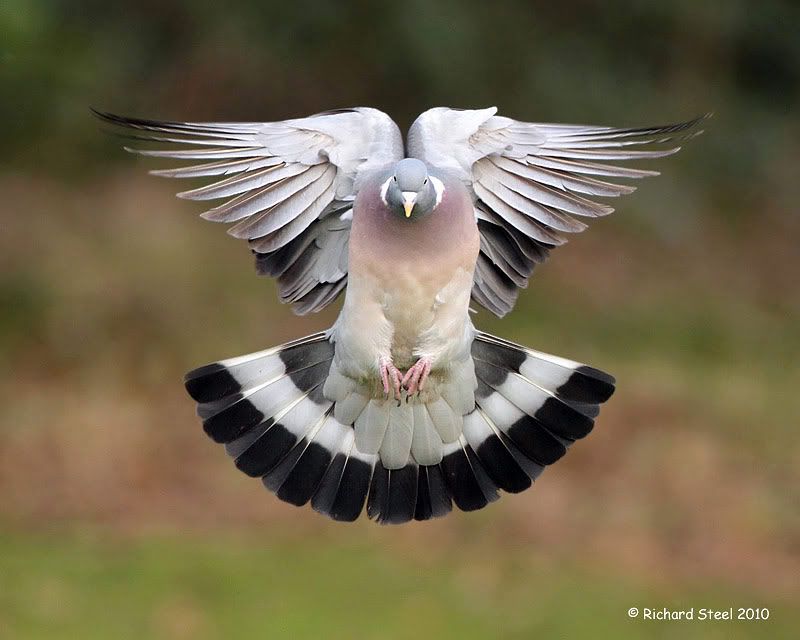
Project J tends to be a bit of a waiting game and so I welcomed the appearance of this incoming Wood Pigeon for some pre-Jay flight practice.
Photobucket

This next photograph reveals another problem with the Jays in that all the interesting wing patterns and colours are on the top side.
Photobucket

The contrast in the under and top surfaces of wings can be seen quite well in this photograph taken at a moment when the sun disappeared behind a cloud.
Photobucket

A further problem is that the flight is not continuous wing flapping but a combination of 'flap' and 'glide with wings held tight to the body' which is probably a major contributing factor to their erratic flight. This photograph shows a bird between flaps.
Photobucket

This basically leaves two options available for get them looking at their best either a banking view which is very difficult to achieve or during a wing downbeat.
Photobucket

Finally may favourite photo to date of the banking pose which I think was a result of more luck than judgement.
Photobucket

I have not finished with Project J yet and just waiting for some sunshine to coincide with some free time. So expect some more updates in the future, hopefully!
Sunday, February 21, 2010

King and Queen of the Sawbills

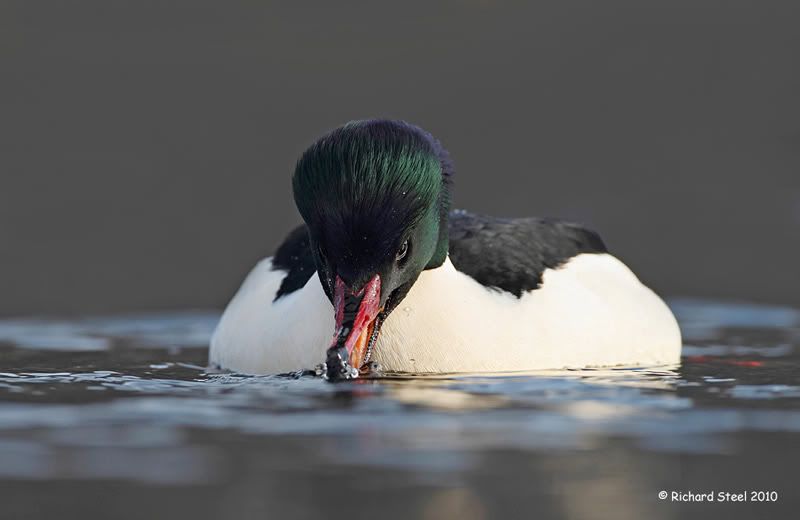
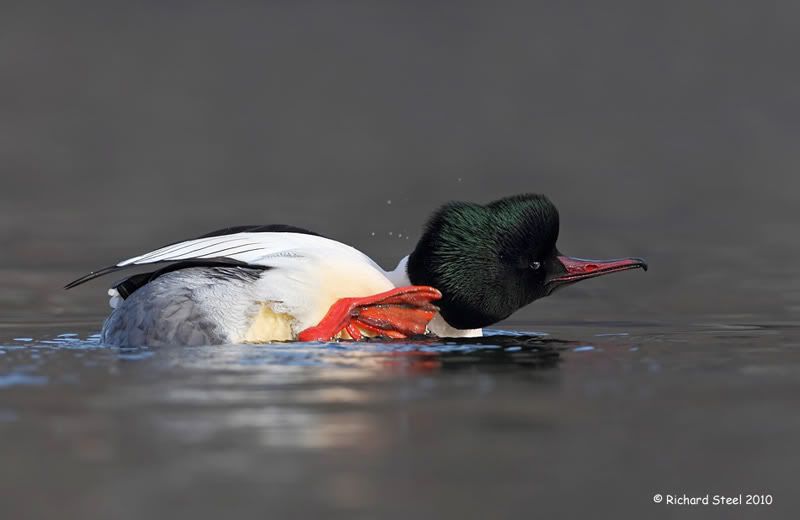
Of the sawbill species in the UK in my book the Goosander gets the top place as the Sawbill Royalty. They are such majestic and beautiful birds. I arranged with my friend to Steve to take a trip out for them and was worryingly met with a thick blanket of fog as I stepped out the front door. However, I still retained hope given that the lake where they reside over the winter is in an upland location and might be above the low lying fog. This proved to be the case as we drove down the length of the lake to find the birds with clear, sunny skies overhead and flat calm conditions. We could not find ththem at first and after a bit of searching we decided to return to where we started to find a group of 9 birds had appeared! On this visit the lake level was lower than before and had exposed a concrete boat launching pier which gave the perfect vantage point for some water levels photography.

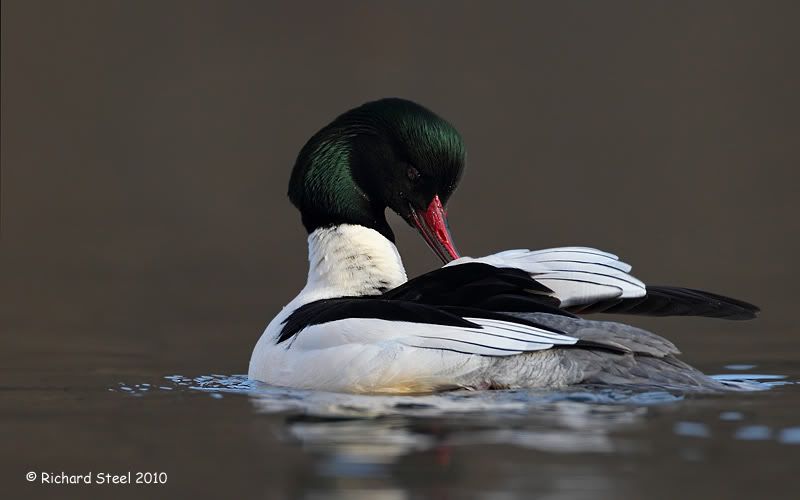
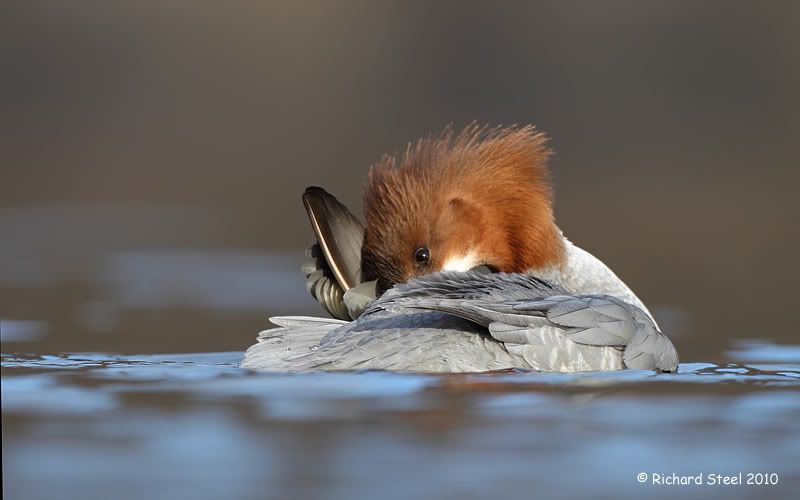
A preening male bird
Photobucket

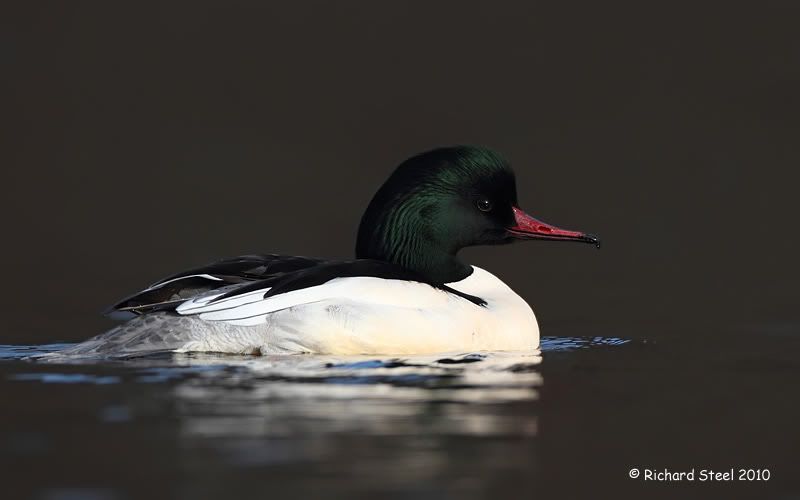
If you are ever looking for a bird to test your photographic exposure skills then look no further than a male Goosander in sunlight. The difficulty is trying to balance the extremely bright whites of the body with the black of the head while trying to capture some its metallic green iridescence. The other problem is that the females are so different in terms of exposure settings that it is difficult to quickly alter the camera settings between the two.
Photobucket

Photobucket

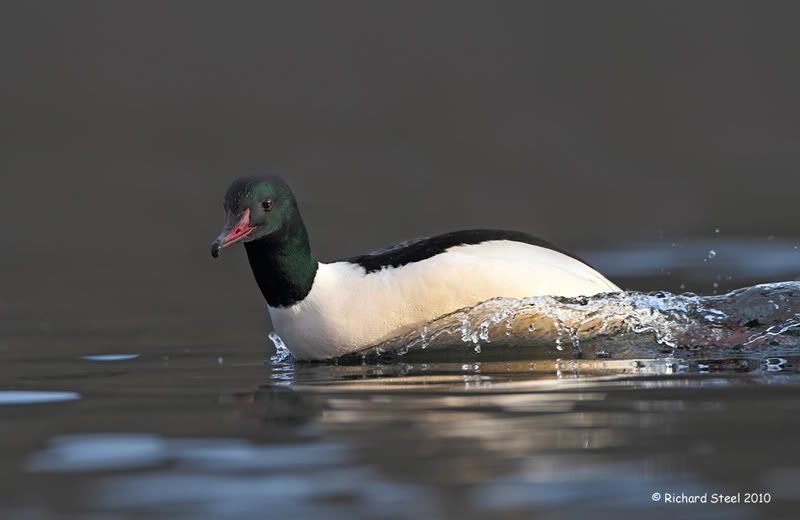
The males were starting to show some early signs of territorial behaviour as spring approaches and were occasional 'surfing' across the water at each other.
Photobucket

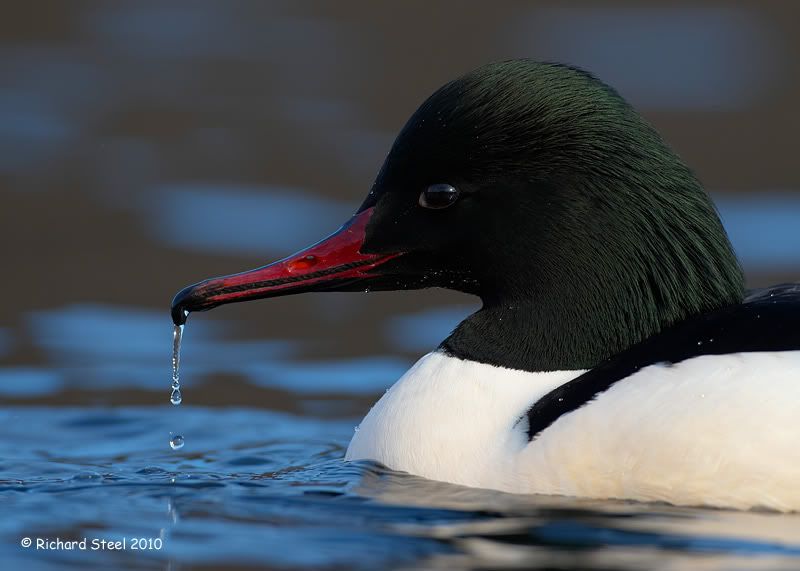
The low angle of our position on the landing stage gave opportunity for some intimate photos, although is a great way for getting a sore neck quickly.
Photobucket

My favourite male photo of the session was of this bird in mid-preen and showing those bright orange feet.
Photobucket

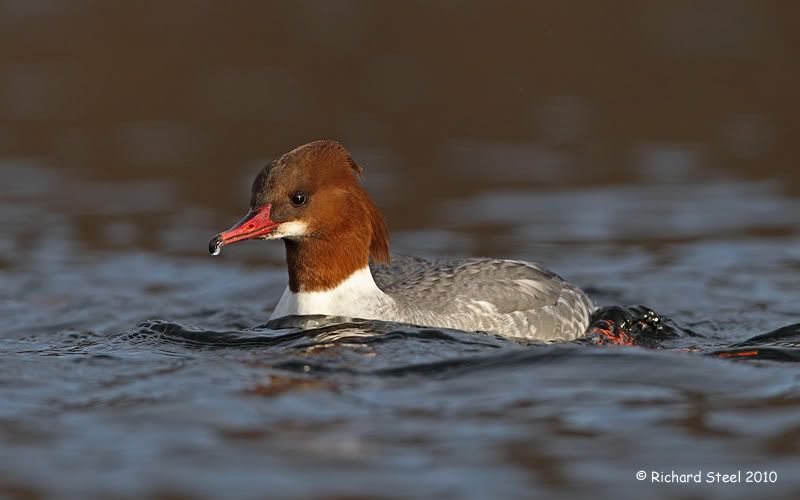
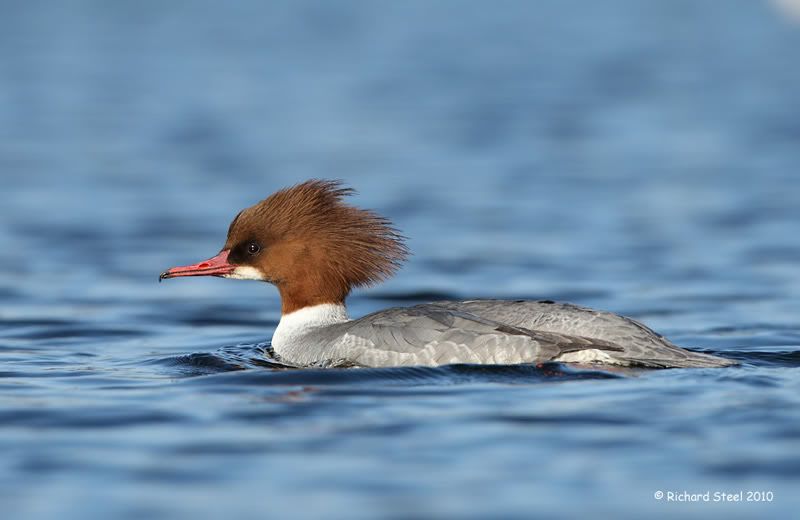
I mainly concentrated my efforts on the males but of course it was difficult to ignore the queen of the sawbills.
Photobucket

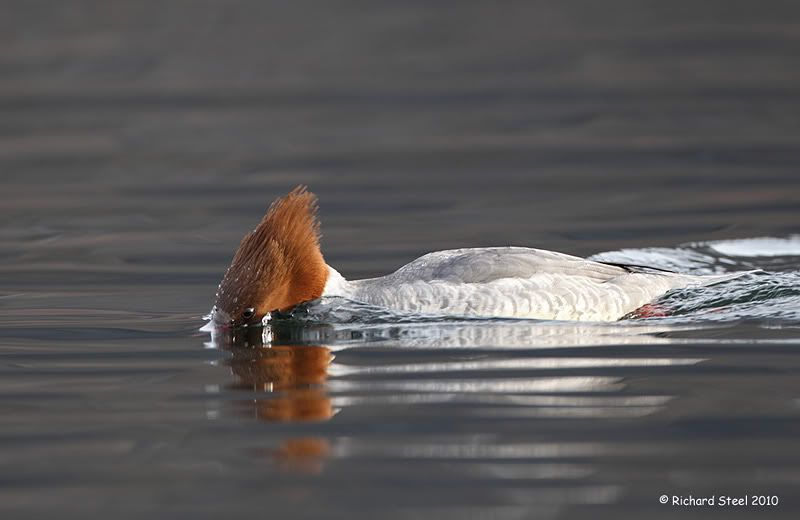
There must be a fish to eat down there somewhere.
Photobucket

Taking a rest to keep those feathers in good order.
Photobucket

The dark backgrounds of the photos above are a result of the reflection of the rising hills on the far side of the lake. Photographs taken in the direction along the length of the lake produced a blue background from the clear skies overhead which I think compliments the colours of the female better.
Photobucket

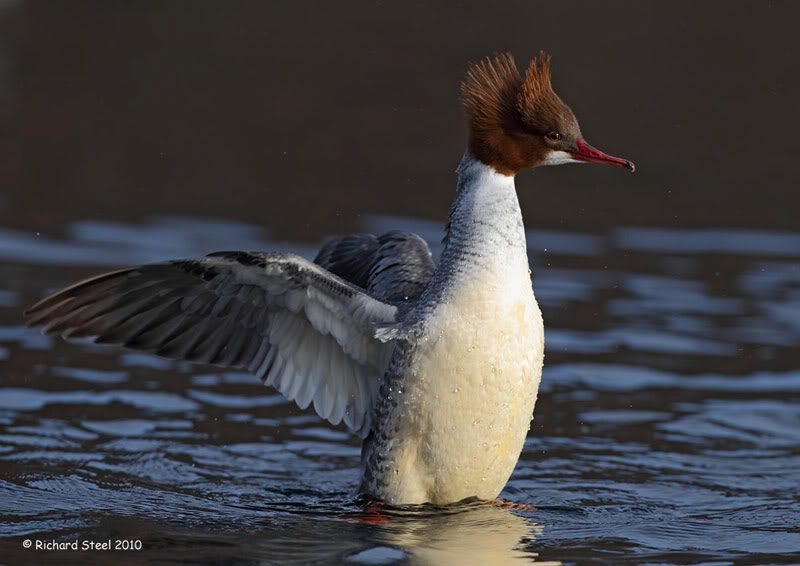
Last photograph to finish this post of a female sitting up in the water to shake her wings after a preening session.
Photobucket

A fun session in a wonderful location with cooperative birds, great conditions and good company. It does not get much better than that. As we left the lake and descended the hill we plunged back into the fog layer and so had the added bonus that photography would not have been possible elsewhere that day.

Saturday, February 13, 2010

Fieldfare Fly-bys

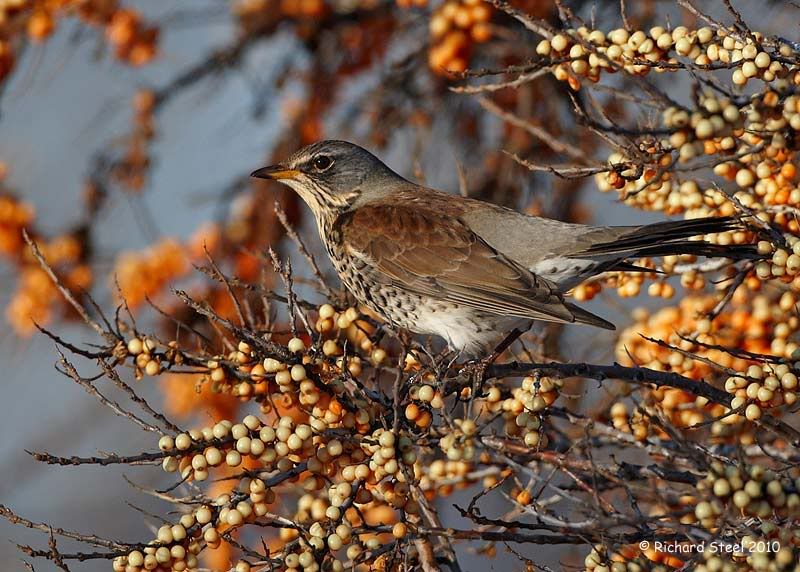
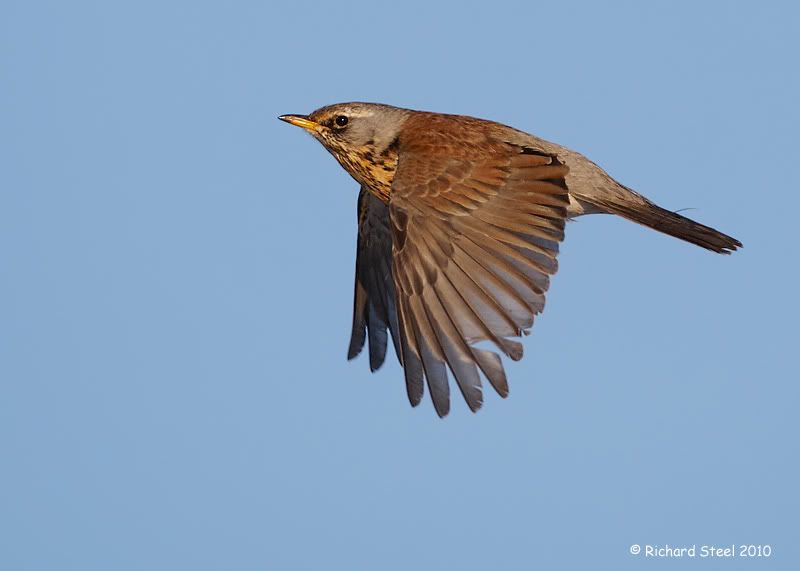
A large part of being of wildlife photographer is being able to spot an opportunity. I was out photographing some Fieldfares recently. With all the recent cold weather a big flock of birds were gorging themselves on a Sea Buckthorn bush that was heavily laden with orange berries.
Photobucket

As I watched the acrobatics of the birds on the bushes, I noticed a steady traffic of birds along a regular circular route to and from the bushes. This movement of birds reminded me of the constant stream of puffins that come into the Farne Islands and I decided the situation might provide a good and rare opportunity for some flight shots of Fieldfare. These are not easy birds to photograph being relatively small and fast moving but I was aided by the good light conditions and clear blue skies. I stood at distance from the bush and under the flight path to give myself opportunity to track and lock focus on to the birds during their approach to my position.
Photobucket

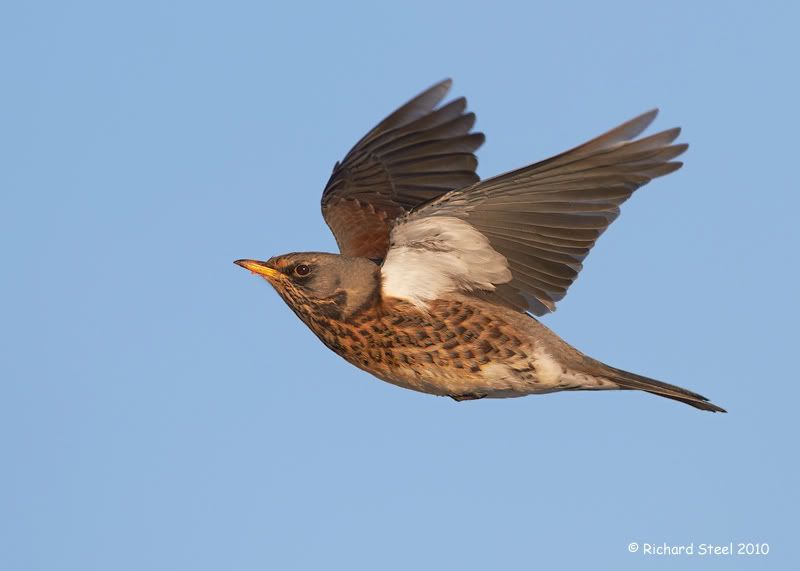
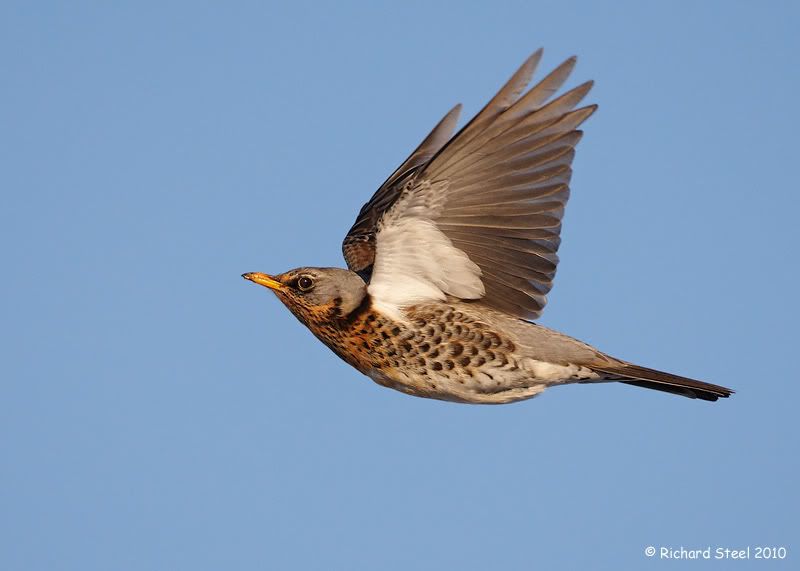
The characteristic white underwing of the Fieldfare which is always a good identification feature if a flock of thrushes are passing at distance.
Photobucket

By this next photograph you will notice all the birds are heading in the same direction. All the birds were captured on the outbound journey from the bush and were flying in from another direction, a kind on avian one way traffic system.
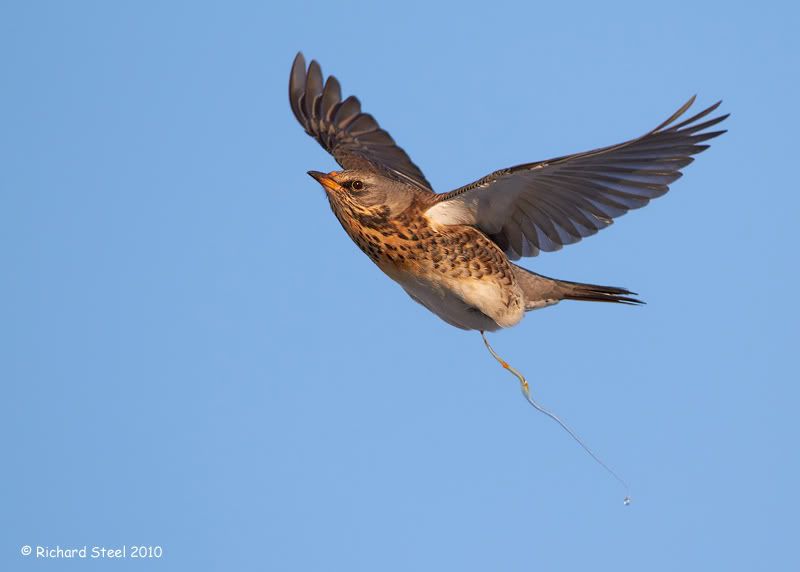
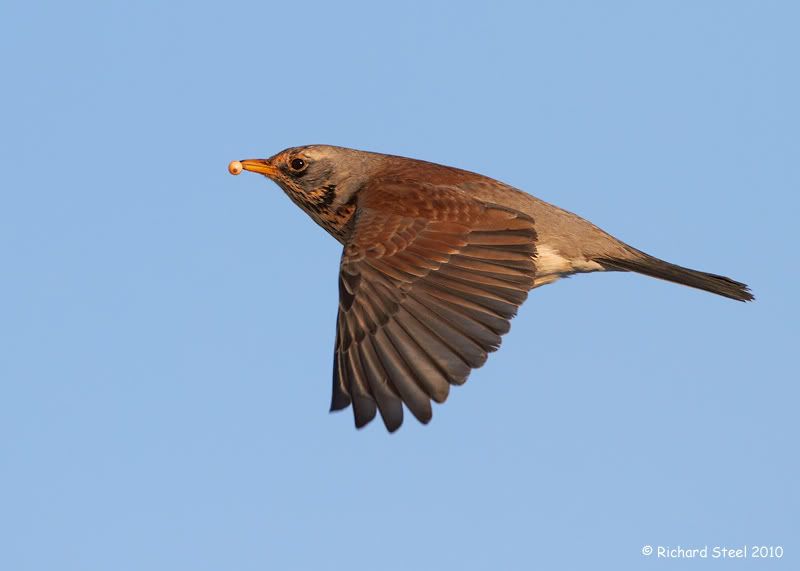
This bird was taking one of the berries with it.
Photobucket

As everything that goes up must come down, so what goes in one end must eventually come out the other.
Photobucket

One last image to finish with this one taken with the 7D, a camera body that if you read enough about it on the Internet is apparently not good at focusing. Then again it pays not to believe all you read when it comes to camera kit and usually better to just get out there and use it.
Photobucket

Sunday, February 07, 2010

The Locals

The weather has been fairly grim from a photography perspective over the last couple of weeks with a thick grey gloom overhead. The moments of brightness and sunshine have been few and fleeting but I have managed to catch a couple of them with camera in hand. This post is a compilation of those brief rays of sun.

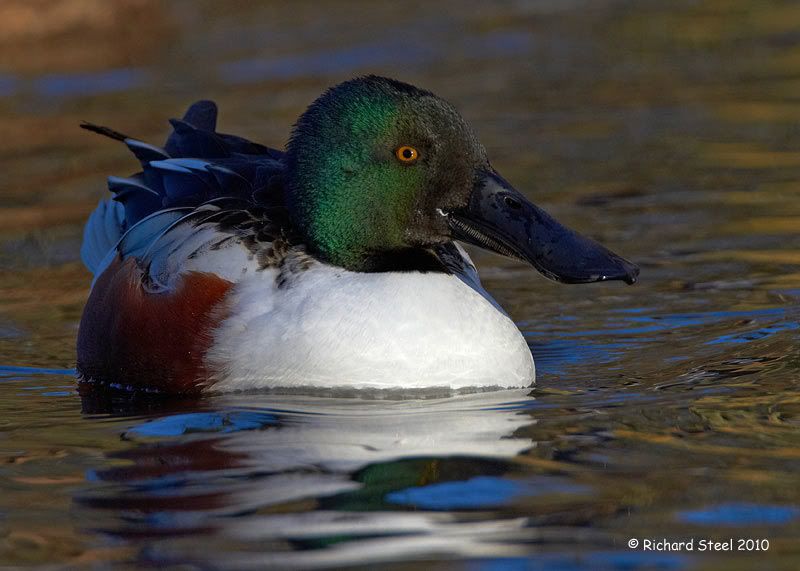
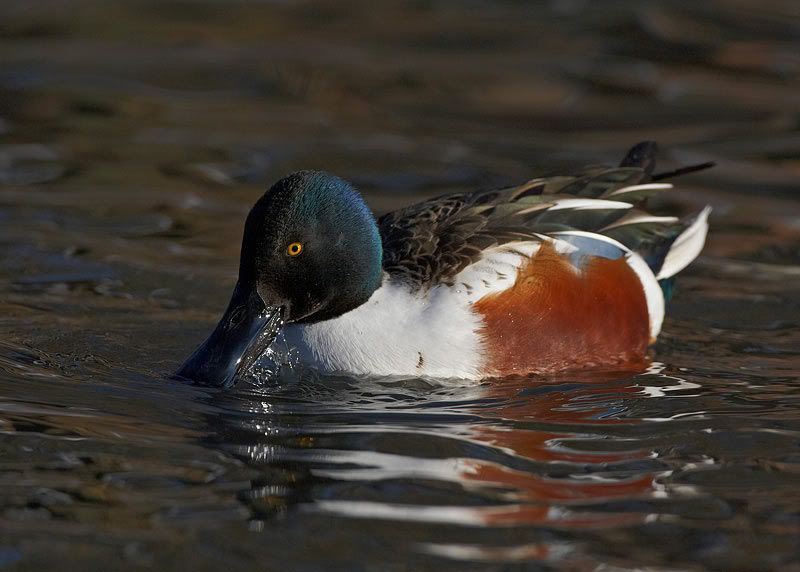
Starting with a Shoveler which always have a slightly comical look with that extended filtering beak. Two male birds appeared on a local pond and were sharing a hole in the ice with a huge number of mallards. I always think of these species as being of similar size but direct comparison shows the Shoveler to be significantly smaller. Getting a clear photo of the birds amongst the birds crowded into the hole in the ice presented some challenges but the usual perseverance got there in the end.
Photobucket

This photograph shows the filtering action of the bill. Water taken in is forced out through the 'combs' at the side. Similar to a whale filtering krill but on a much smaller scale.
Photobucket


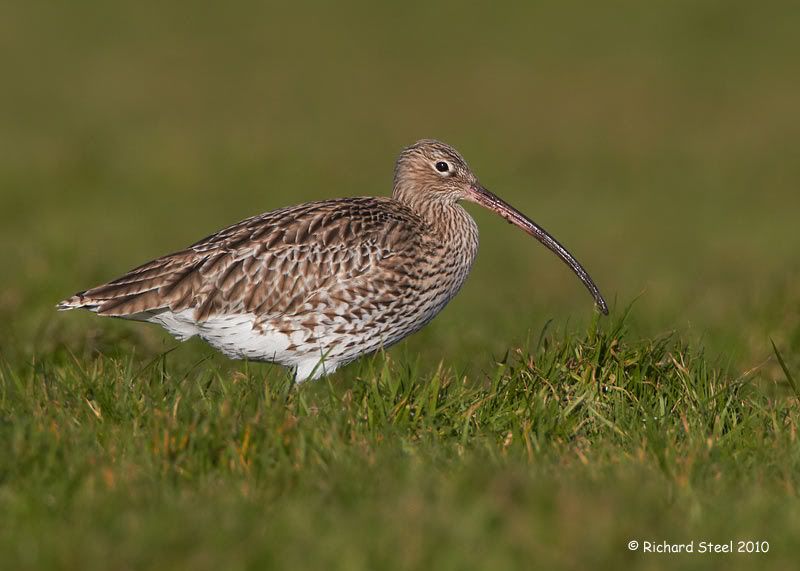
The next image was taken on my way home last weekend from the merganser session in the previous post. I spotted eight Curlew feeding on a field and quickly spotted a potential for a close approach to these shy birds. Anyone watching my antics would have definitely been left wondering. After parking a camo clad figure crept out, sneaked along the side of the car to provide a screen before ducking down into the long roadside vegetation and crawling away. Strange people these wildlife photographers.
Photobucket


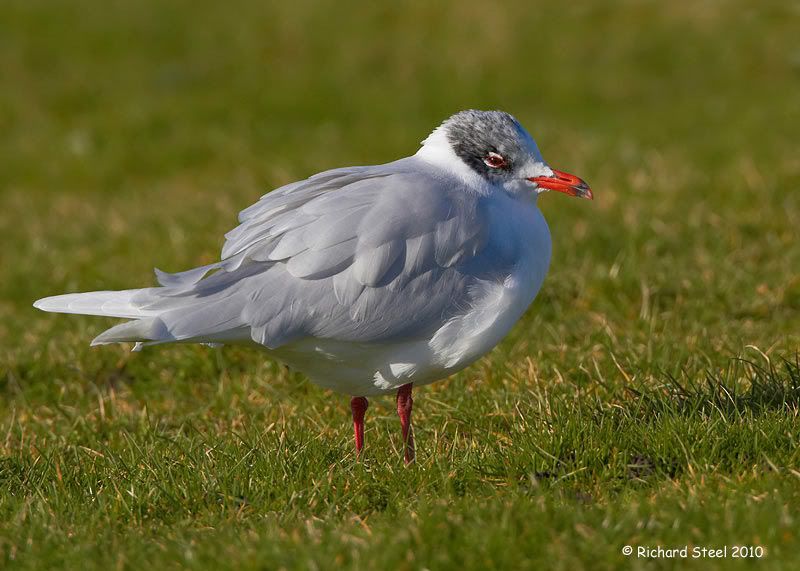
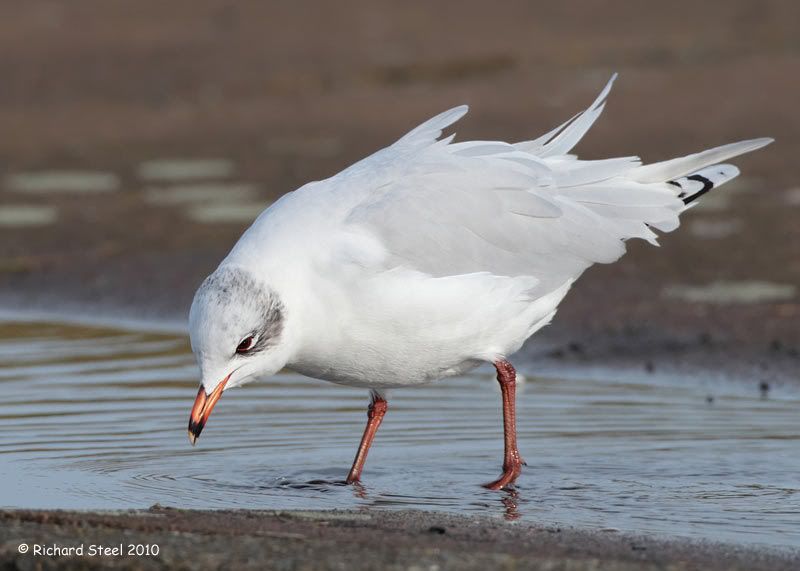
January has usually been a good month to look for the scarce Mediterranean Gulls along my local coast. The main problem is actually spotting one amongst the hundreds of Black-headed Gulls that look very similar in winter plumage. The quickest method is to look at the 'tails' (actually folded wing tips) of the birds on the ground and try and find one that is white instead of black. Once you have found one it is quite obvious the differences between the two species. I have found two birds recently.
An adult bird
Photobucket

A second winter bird which still retains a small amount of black in the wing tips.
Photobucket

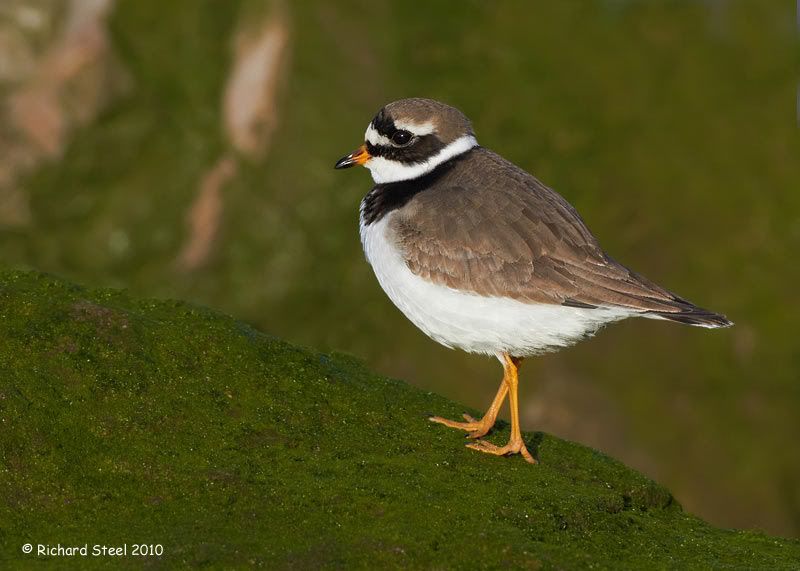
I managed to find this good looking Ringed Plover amongst one the local high tide waders roosts. Photographers and bird watchers should take great care when approaching such roosts to ensure the birds are not disturbed. Remember subject welfare is always the priority.
Photobucket

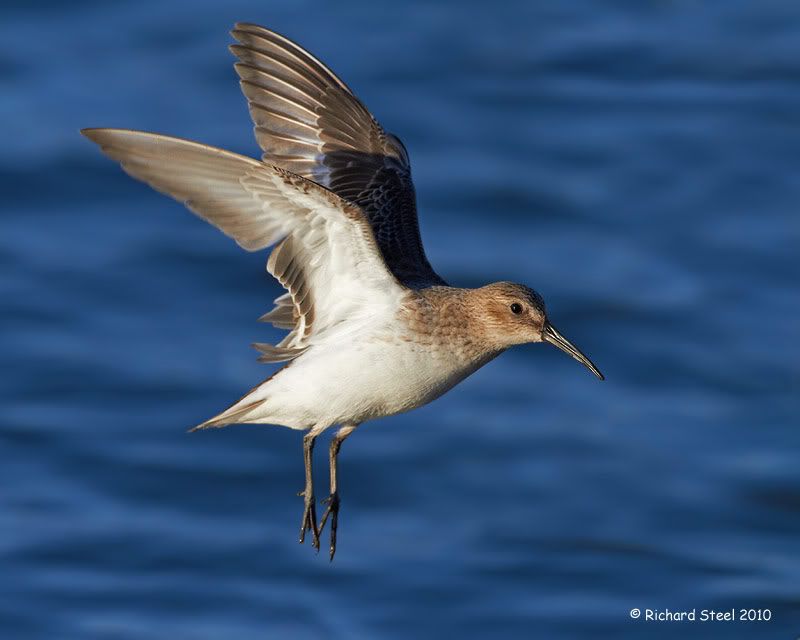
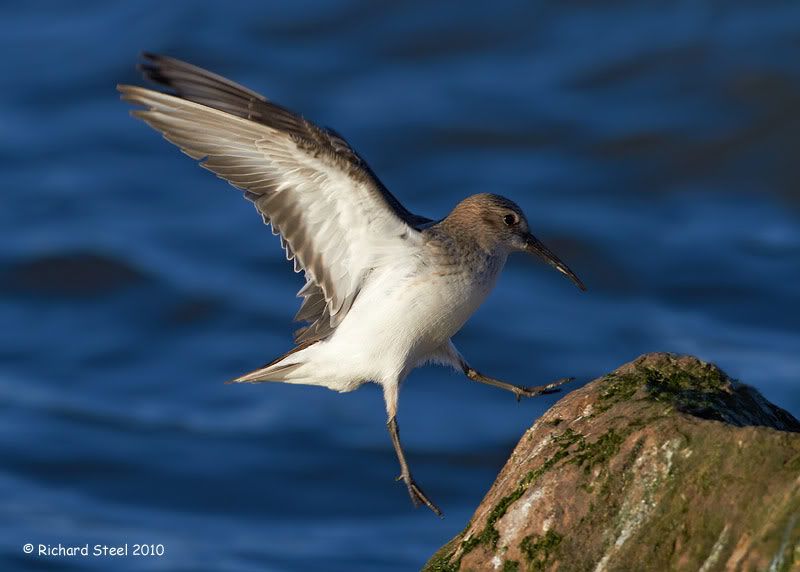
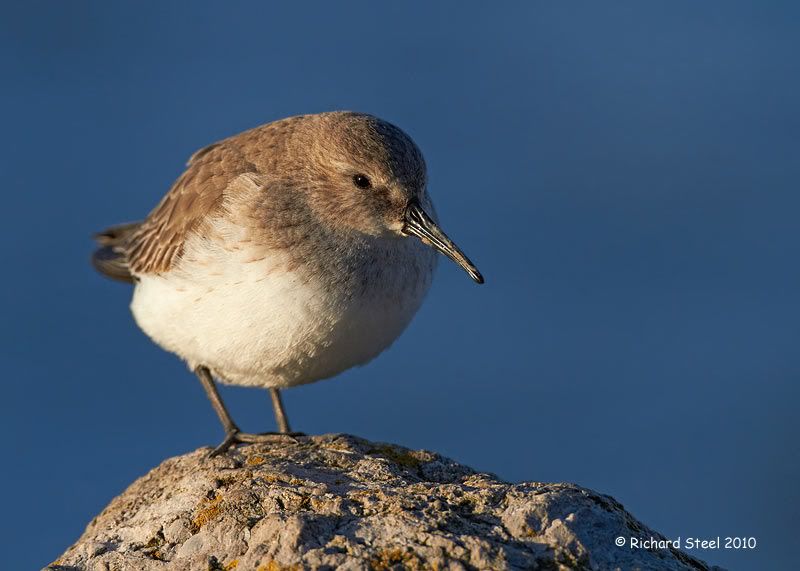
To finish this local selection, a few Dunlin photographs. These tiny fast moving waders are not easy to capture in flight.
Photobucket

The best opportunities are presented when they have slowed to make a landing. The moment before touch down.
Photobucket

Settled for a rest, while the tide is high and covering the muddy feeding grounds.
Photobucket

Time for a piece of birthday cake now. I have put the fire service on standby for the lighting of the all too numerous candles!

LinkWithin

Related Posts with Thumbnails